

A wood sauna outdoor brings authentic Finnish sauna culture into your backyard, combining natural materials, year-round durability and the ritual of löyly. Whether you're planning your first sauna or replacing an aging structure, the choices you make about wood species, construction, heating method and placement determine how well your sauna performs across seasons. In 2026, North American homeowners are choosing outdoor saunas that blend Scandinavian design with the practical realities of local climate, municipal codes and long-term maintenance.
Why Wood Matters for Your Outdoor Sauna
Wood defines the outdoor sauna experience. The species you choose shapes how your sauna looks, smells, ages and performs in high heat and outdoor weather.
Thermowood vs. Nordic Pine
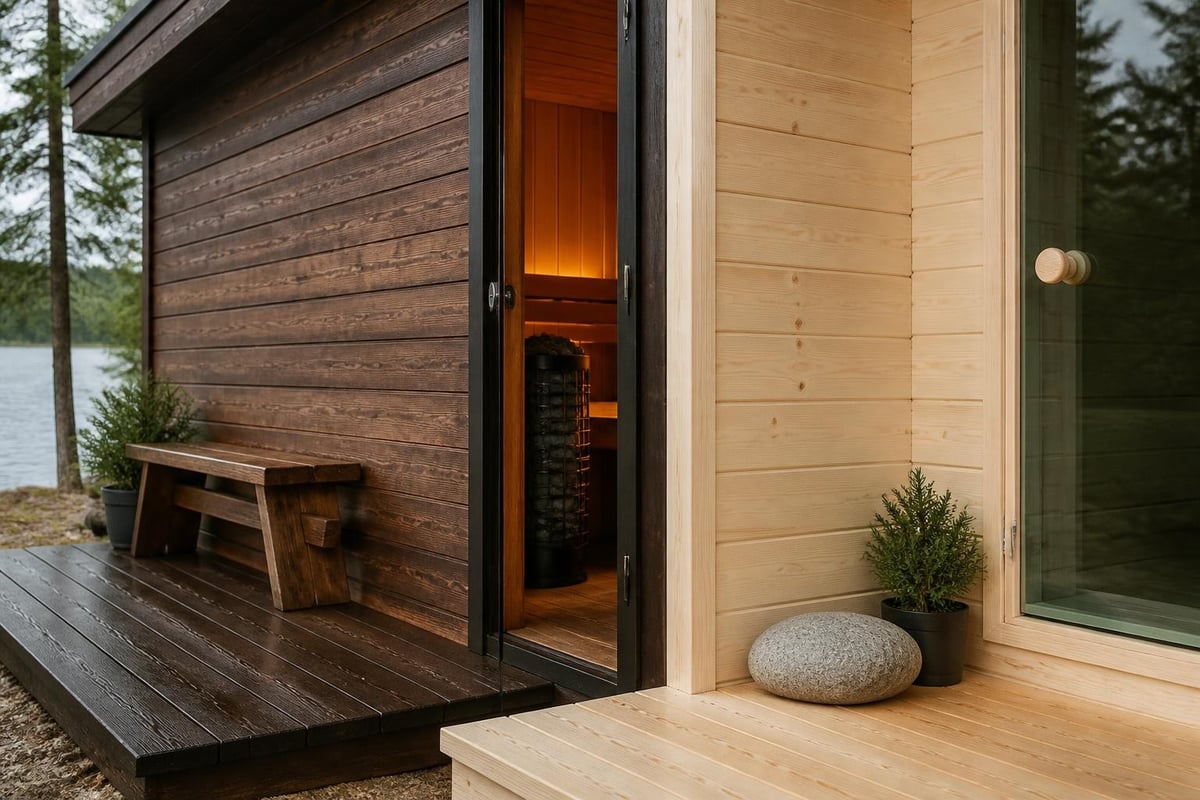
Thermowood is kiln-modified spruce or pine treated at high temperature to increase dimensional stability, decay resistance and weather durability. It holds its shape better than untreated wood, resists moisture movement and weathers to a silver-gray patina without structural compromise. Thermowood is the standard for Finnish outdoor saunas exposed to rain, snow and UV.
Nordic Pine offers a lighter, warmer appearance and a traditional pine scent when heated. It's durable and cost-effective but requires more frequent surface treatment to maintain appearance and prevent UV graying. For buyers prioritizing natural aesthetics and classic sauna aroma, Nordic Pine delivers authentic character.
| Wood Type | Color | Stability | Weather Aging | Maintenance |
|---|---|---|---|---|
| Thermowood | Dark brown | Excellent | Silver-gray | Low |
| Nordic Pine | Light golden | Good | Gray without treatment | Moderate |
| Black Alder (bench) | Reddish-brown | Excellent heat | Interior only | Low |
| Aspen (bench) | Pale white | Cool to touch | Interior only | Low |
Interior bench wood is equally important. Black Alder resists heat, stays relatively cool and develops a rich patina. Aspen remains the coolest to the touch and suits buyers sensitive to hot wood surfaces.
Wall Thickness and Structural Integrity
A 46 mm solid log wall is the minimum for a durable wood sauna outdoor in North America. Thinner walls lack thermal mass, warp more easily and don't provide adequate insulation for winter use. Thicker walls (68 mm or more) improve heat retention and longevity but add cost and weight.
Panel-based modular designs use insulated sandwich construction with exterior and interior cladding. These systems ship more efficiently and can include vapor barriers and roof insulation, making them practical for buyers who prioritize year-round performance and faster assembly.
Choosing the Right Size and Layout
Outdoor sauna sizing is a balance between the number of users, available yard space, heater capacity and how you actually use the sauna.
Compact Models for Smaller Yards
A 2.3 × 2.3 m footprint provides room for 2–4 people on a straight or L-shaped bench. This size suits urban lots, patios and buyers who sauna alone or with a partner. Electric heaters work well in compact spaces, and the smaller interior heats quickly.
Compact doesn't mean cramped. A well-designed wood sauna outdoor at this size delivers authentic löyly and comfortable bench seating. The key is choosing a layout that matches how you'll actually use the space.
Spacious Layouts for Families and Groups
A 3.0 × 2.3 m sauna accommodates 4–6 people and supports both straight and L-shaped bench configurations. The extra depth allows better airflow around the heater, more flexible seating and easier movement. Families, couples who entertain and buyers planning regular group sessions benefit from the added space.
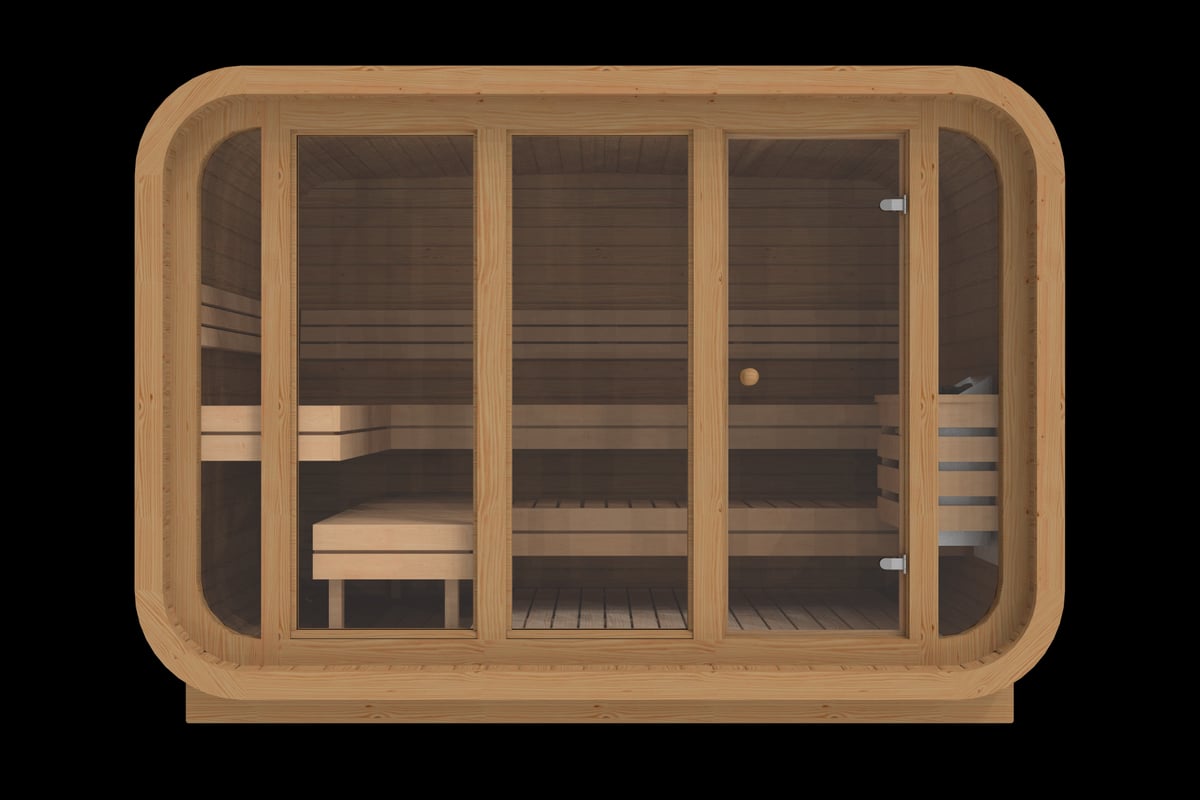
The RecoSauna Sisu Square Sauna 3.0 × 2.3 m in Thermowood offers this layout with four tinted front windows, choice of bench wood and 46 mm Thermowood walls built for year-round outdoor use. Choosing between electric and wood-burning heat comes down to your preference for convenience or traditional fire-tending.
Adding a Changing Room
A changing room adds privacy, storage and a transition space between outdoor temperatures and sauna heat. The dedicated area typically measures 1 m deep, includes a bench and an internal glass door to the sauna chamber.
For buyers who sauna year-round, a changing room is practical. It provides a place to remove winter clothing, store towels and cool down gradually after heat sessions. The separate entry also reduces heat loss when others enter or exit during your session.
Heating Methods: Electric vs. Wood-Burning
Your heating choice affects daily convenience, operating cost, installation complexity and the sensory experience of your wood sauna outdoor.
Electric Heaters
- Fast heat-up (30–45 minutes to operating temperature)
- Thermostat control and timer functions
- No wood storage, ash removal or fire-tending
- Lower installation cost (standard 240V circuit in most cases)
- Consistent, repeatable heat output
Electric heaters suit buyers who sauna frequently, value convenience and want predictable performance. Modern electric sauna heaters produce excellent löyly when paired with the right rock load and ventilation. They're the default choice for urban and suburban installations where wood smoke might be restricted.
Wood-Burning Heaters
- Traditional sauna ritual and ambiance
- No electrical operating cost
- Slower heat-up (60–90 minutes)
- Requires firewood supply and regular ash cleanup
- Smoke stack and clearance requirements
Wood-burning heaters deliver an authentic Finnish sauna experience and work well in rural settings or areas where you already manage firewood. The slower heat-up becomes part of the ritual, and the crackle of fire adds sensory depth.
For a deeper comparison of costs and features across heating options, see our guide to outdoor sauna cost.
Foundations and Site Preparation
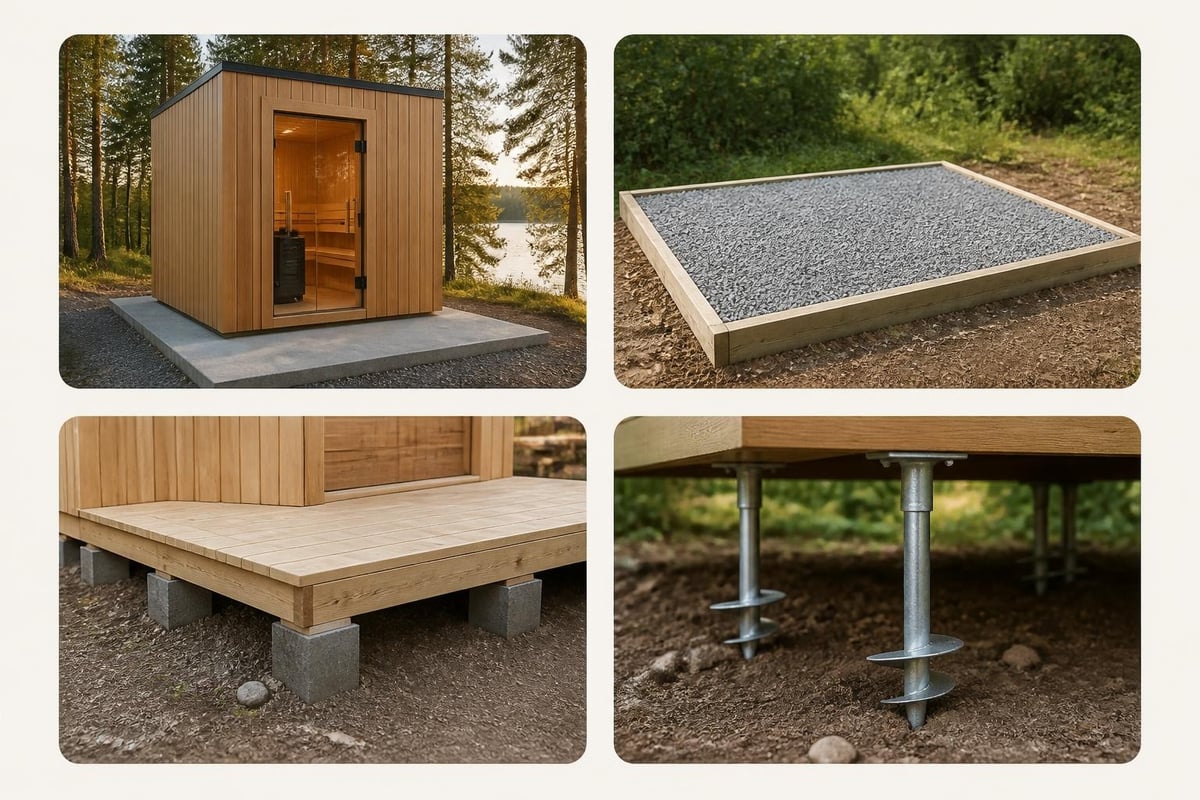
A level, stable foundation is non-negotiable for a wood sauna outdoor. Uneven settling causes walls to shift, doors to bind and seals to fail.
Foundation Options
- Concrete slab (poured or precast pavers): Best for permanent installations, excellent drainage, supports heavy snow loads.
- Gravel pad with concrete footings: Cost-effective, allows minor adjustments, works well on sloped yards.
- Deck-mounted: Verify deck load capacity (consult a structural engineer), ensure proper flashing and drainage.
- Helical piers or sonotube footings: Ideal for uneven terrain, frost-prone climates and areas with poor soil drainage.
Your sauna will likely weigh 1,500–3,000 kg when fully assembled, more when occupied. Plan for adequate load distribution and ensure the foundation extends beyond the sauna footprint to manage runoff and snow melt.
Installation and Assembly
Most wood sauna outdoor kits arrive as pre-cut wall logs, roof panels, door and window assemblies, and hardware packs. Assembly is straightforward for buyers comfortable with basic carpentry, but professional installation ensures proper sealing, leveling and electrical safety.
DIY Assembly
- Plan for 2–3 people over a weekend (compact models) or 3–4 days (larger saunas with changing rooms)
- Follow the manual's sequence: floor frame, wall logs, roof structure, door and windows, interior benches
- Pay close attention to corner joints, door alignment and vapor barrier placement
- Verify local codes for setbacks, electrical work and smoke stack clearance before starting
Professional Installation
Hiring a contractor adds $1,500–$4,000 depending on size, site access and whether you include electrical, foundation or heater setup. Professional installation is worth considering if your site requires grading, if you're unfamiliar with electrical codes or if you want warranty-compliant assembly.
Year-Round Use and Winter Performance
A properly built wood sauna outdoor performs well in sub-zero temperatures. The key factors are wall thickness, roof insulation, door seals and heater capacity.
Cold-Climate Considerations
- Pre-heat time increases in winter; allow an extra 15–30 minutes
- Snow load: Ensure your roof structure meets local snow load requirements (typically 40–60 lbs/sq ft in northern climates)
- Door seals: Magnetic or compression seals prevent drafts and heat loss
- Ventilation: Adjustable vents maintain air exchange without excessive cooling
Thermowood performs particularly well in freeze-thaw cycles. Its dimensional stability means fewer gaps, less warping and better long-term weather resistance. Research from the USDA Forest Products Laboratory confirms that thermally modified wood shows reduced moisture absorption and improved outdoor durability compared to untreated softwoods.
For a focused discussion of square sauna designs and their winter performance, visit our article on square outdoor saunas.
Maintenance and Longevity
Wood sauna outdoor structures require regular but minimal maintenance when built with durable species and protected from standing water.
Routine Care
- Exterior: Rinse with water annually; optionally apply wood oil or stain every 2–3 years to slow UV graying
- Interior: Wipe benches after use; vacuum or sweep floor weekly
- Roof: Inspect shingles or metal seams annually; clear leaves and debris from valleys
- Door and seals: Check magnetic strips and hinges; adjust or replace as needed
Thermowood typically weathers to a uniform silver-gray within 18–24 months. This patina is stable and protective; you can leave it natural or apply a UV-resistant finish to retain the original brown tone.
Long-Term Durability
Expect 15–25 years of solid performance from a well-maintained wood sauna outdoor. Wall logs may outlast benches, which see more wear from heat cycling and perspiration. Black Alder and Aspen benches can be sanded and refinished or replaced without affecting the structure.
The 2024 Hydrothermal Guide from the Hot Springs Association provides industry best practices for wood structures in high-moisture, high-heat environments, much of which applies directly to outdoor sauna care.
Health Benefits and Safe Use
Regular sauna bathing offers well-documented cardiovascular, muscular and mental health benefits. A 2025 systematic review of randomized controlled trials found that passive heating, including sauna use, improves vascular function and cardiometabolic markers.
Evidence-Based Benefits
- Improved circulation and heart rate variability
- Reduced muscle soreness and faster recovery after exercise
- Stress reduction and improved sleep quality
- Temporary relief from joint stiffness and minor pain
A comprehensive 2025 review focusing on Finnish sauna bathing highlights physiological adaptations from regular heat exposure, including enhanced thermoregulation and potential longevity benefits.
Safe Sauna Practice
- Hydrate before and after each session
- Limit sessions to 15–20 minutes at 70–90°C
- Cool down gradually; avoid abrupt temperature changes
- Consult a physician if you have cardiovascular conditions, are pregnant or take medications affecting heat tolerance
Pairing Sauna with Cold Plunge
The contrast between sauna heat and cold immersion amplifies recovery and mental clarity. Many buyers planning a wood sauna outdoor also install a cold plunge tub, stock tank or natural pond access nearby.
The cycle of heat, cold and rest mirrors traditional Finnish practice and fits well into modern wellness routines. Alternating 15 minutes of sauna heat with 2–3 minutes of cold water immersion, repeated 2–3 times, provides a full contrast therapy session.
Regulatory and Environmental Considerations
Municipal Codes and Permits
Most jurisdictions classify outdoor saunas as accessory structures. Common requirements include:
- Setback distances from property lines (typically 3–10 feet)
- Electrical permits for heater installation (240V circuits require licensed electricians in many areas)
- Smoke stack clearances and fire safety setbacks for wood-burning heaters
- Maximum building height and lot coverage limits
Check with your local building department before ordering. Some areas treat saunas as sheds (no permit required under a certain size), while others classify them as habitable structures requiring full plan review.
Wood Combustion and Air Quality
If you choose a wood-burning heater, be aware of local air-quality regulations. Some municipalities restrict wood burning during high-pollution days or require EPA-certified stoves. The Finnish government's 2024 survey on wood combustion practices provides useful context on emissions and best practices for efficient, cleaner burns.
Using dry, seasoned hardwood and operating your heater at the correct temperature reduces smoke and particulate emissions significantly.
Design Integration and Backyard Aesthetics
A wood sauna outdoor becomes a focal point in your yard. Thoughtful placement enhances privacy, views and the overall wellness experience.
Placement Tips
- Privacy: Position the sauna to minimize sightlines from neighbors; use fencing, hedges or natural screening
- Views: Orient windows and benches toward pleasing vistas (garden, trees, water features)
- Access: Ensure a clear, safe path from your home, especially in winter
- Utilities: Minimize electrical runs and water supply distances
Scandinavian design principles favor clean lines, natural materials and integration with the landscape. A Thermowood exterior weathers gracefully and blends into wooded or naturalistic settings, while Nordic Pine suits more manicured, contemporary yards.
For those building comprehensive wellness spaces, integrating high-quality audio or ambient lighting can enhance the post-sauna relaxation area. Custom home cinema and audio specialists offer solutions that extend comfort and design coherence from indoor to outdoor living spaces.
Selecting the Right Model for Your Needs
Choosing a wood sauna outdoor requires matching your space, usage pattern and climate to the right size, material and features.
Decision Framework
| Priority | Recommended Features |
|---|---|
| Compact yard, 1–2 users | 2.3 × 2.3 m, electric heater, Thermowood |
| Family use, 4–6 people | 3.0 × 2.3 m, L-shaped bench, electric or wood heat |
| Year-round cold climate | 46 mm Thermowood, insulated roof, magnetic door seal |
| Privacy and convenience | Changing room, interior glass door, storage bench |
| Traditional experience | Wood-burning heater, Nordic Pine interior, natural materials |
The Thermory sauna materials guide offers technical insight into species selection, thermal behavior and recommended applications for both exterior and interior sauna wood.
Most buyers prioritize durable construction, authentic design and flexibility in heater choice. A sauna that supports both electric and wood-burning heaters gives you the option to start with convenience and add traditional fire later, or vice versa.
Cost and Value Considerations
A quality wood sauna outdoor represents a multi-year investment in home wellness and property value.
Price Ranges (2026)
- Compact models (2–4 person): $8,000–$14,000
- Mid-size models (4–6 person): $12,000–$20,000
- Premium models with changing room or terrace: $18,000–$30,000+
These ranges typically include the sauna structure, benches, door and windows. Heaters, electrical installation, foundation work and delivery are usually separate.
What You're Paying For
- Material quality: Thermowood, solid joinery, tempered glass, durable hardware
- Design and engineering: Scandinavian aesthetics, proven thermal performance, weather resistance
- Longevity: 15–25 year lifespan with routine care
- Resale value: Well-maintained outdoor saunas add appeal and functional value to properties
Comparing upfront cost against years of use, a $15,000 sauna used twice weekly for 20 years costs roughly $7 per session-less than a single gym sauna visit in many North American cities.
A wood sauna outdoor that fits your yard, climate and sauna practice will serve you for decades, bringing the proven health benefits and simple pleasure of authentic Finnish sauna into your daily routine. Whether you prioritize compact footprint, spacious family layout, Thermowood durability or the convenience of electric heat, the right choice balances material quality, thoughtful design and how you'll actually use your sauna. RecoSauna brings Finnish sauna expertise and Thermowood craftsmanship to North American backyards, offering Square Sauna models sized and built for year-round outdoor use, authentic löyly and long-term value.
Share:
Hot Saunas: Temperature Guide for North American Buyers
Sauna Stoves: Complete Guide to Electric and Wood Heaters