

Hot saunas are the cornerstone of authentic Finnish sauna culture, delivering the deep heat and steam that drive cardiovascular benefits, muscle recovery and mental clarity. For North American homeowners investing in a backyard sauna, understanding temperature zones, heat distribution and safe bathing practices makes the difference between an underwhelming session and genuine löyly-the enveloping steam that rises when water meets the rocks. This guide explains what makes a sauna truly hot, how temperature varies by bench height and material, and how to choose an outdoor model built to hold consistent heat across four-season climates.
What Defines a Hot Sauna
A hot sauna typically reaches 70–90 °C (158–194 °F) at bench level, with air near the ceiling often exceeding 100 °C (212 °F). Traditional Finnish practice favors 80–85 °C on the upper bench, paired with brief bursts of steam from water poured over heated rocks.
Temperature is only part of the equation. Humidity, air circulation, bench material and heater placement all shape how heat feels. A well-designed sauna allows you to control intensity by moving between benches or adjusting water throws, not by cranking the heater beyond safe limits.
Temperature Zones by Bench Height
Heat rises, so vertical positioning directly affects perceived intensity:
| Bench Position | Typical Temperature | Best For |
|---|---|---|
| Upper bench (head height) | 80–90 °C (176–194 °F) | Experienced bathers, traditional löyly |
| Mid bench (seated shoulder height) | 70–80 °C (158–176 °F) | Moderate heat, longer sessions |
| Lower bench (foot level) | 60–70 °C (140–158 °F) | Warm-up, children, gradual acclimation |
Moving down one level can drop the temperature by 10–15 °C, giving you flexibility without adjusting the thermostat.
Humidity and Heat Perception
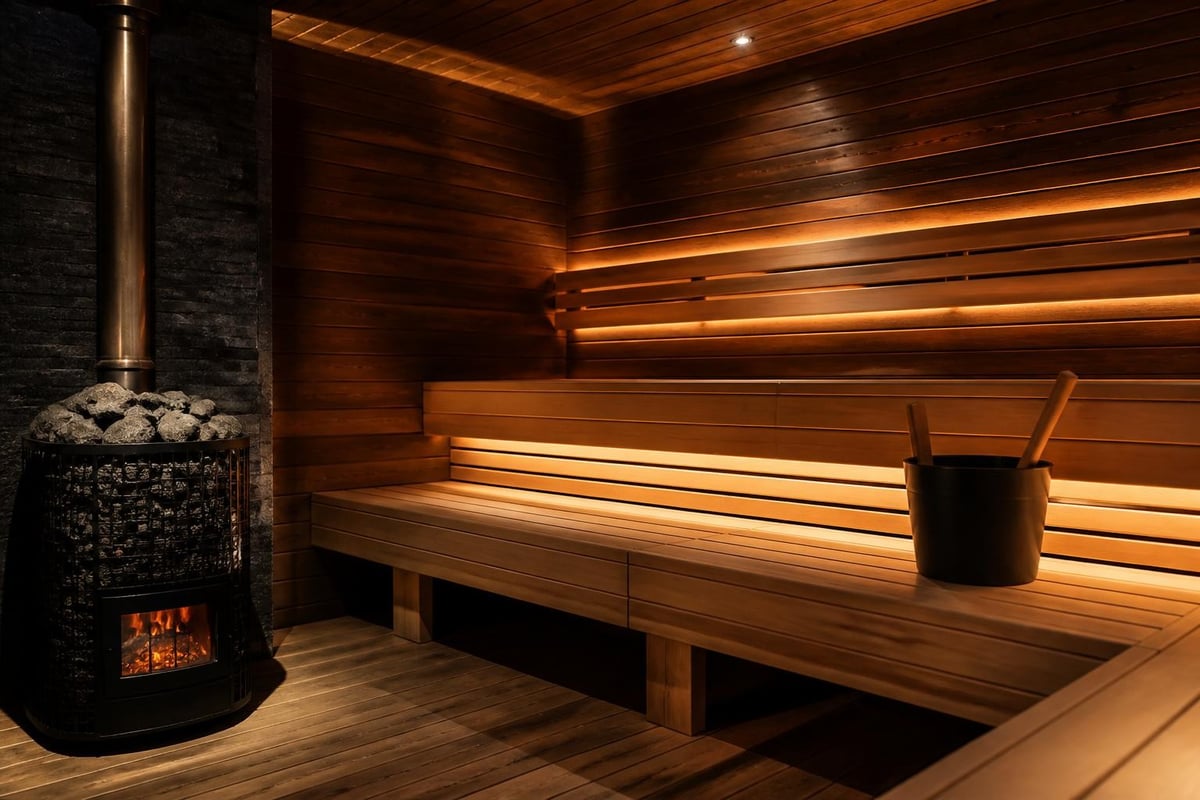
Dry air at 85 °C feels sharp and breathable. Add a ladle of water to the rocks, and the same temperature becomes enveloping and intense. This interplay between dry heat and steam defines authentic Finnish bathing.
- Dry phase: 10–15% relative humidity, clear breathing, gradual warm-up
- Löyly phase: Brief rise to 20–30% humidity, deep heat penetration, shorter tolerable duration
- Recovery: Humidity falls, air clears, you prepare for another round
Controlling humidity through water throws lets you customize each session without overheating the space.
Health and Safety in Hot Saunas
Hot saunas provide measurable benefits when used responsibly. Research on passive heating and cardiometabolic outcomes shows regular sauna bathing supports vascular health, though individual responses vary by baseline fitness and medical history.
Safe Temperature Ranges
Most adults tolerate 70–90 °C comfortably with proper hydration and gradual acclimation. Exceeding 95 °C offers no additional benefit and increases burn risk, especially when combined with high humidity.
Key safety principles:
- Start at 70–75 °C and increase over weeks as your body adapts
- Limit initial sessions to 10–12 minutes; experienced bathers may extend to 15–20 minutes
- Exit immediately if you feel dizzy, nauseous or excessively uncomfortable
- Hydrate before and after; avoid alcohol before or during bathing
- Consult a physician if you have cardiovascular conditions or are pregnant
The American College of Sports Medicine provides guidance on heat exposure and exercise interactions, useful for athletes integrating saunas into recovery routines.
Heat Shock Proteins and Cellular Response
Exposure to hot saunas triggers production of heat shock proteins (HSPs), which support cellular repair and stress resilience. Studies on HSP biological functions explain how these proteins help protect tissues during thermal stress, though translating lab findings to real-world wellness claims requires caution.
What matters practically: Regular sauna use appears to condition your cardiovascular system similarly to moderate exercise, but it does not replace physical activity.
How Outdoor Saunas Hold Heat
Achieving and maintaining hot sauna temperatures outdoors demands insulated construction, airtight assembly and thoughtful heater sizing. Cold-climate buyers in Minnesota, Vermont or Alberta face the greatest challenge-and benefit most from premium materials.
Wall Construction and Insulation
46 mm solid Thermowood or Nordic Pine provides both structure and thermal mass. Thermowood, heat-treated to enhance stability and rot resistance, performs especially well in freeze-thaw cycles and wet climates.
Insulated models add mineral wool or foam between interior and exterior cladding, boosting efficiency in regions with prolonged winters. Non-insulated saunas heat reliably in temperate zones but may struggle to hold 80 °C when outdoor temperatures drop below -15 °C.
Heater Choice and Output
Electric heaters offer precise control and faster heat-up, typically reaching target temperature in 30–45 minutes. Wood-burning stoves take 60–90 minutes but deliver sustained, radiant heat and the traditional experience of tending a fire.
Sizing guideline:
- 1 kW per 1.2–1.5 m³ of interior volume (electric)
- Slightly larger capacity for wood stoves to compensate for heat loss through the chimney
Undersized heaters struggle to reach 80 °C in winter; oversized heaters cycle too quickly, creating uneven heat and dry air.
Glass, Doors and Thermal Bridging
Large glass panels and metal frames conduct heat outward. Tinted tempered glass and insulated door frames reduce losses while preserving natural light. Double-pane glazing is worth the cost in cold climates.
Bench Layout and Material for Hot Saunas
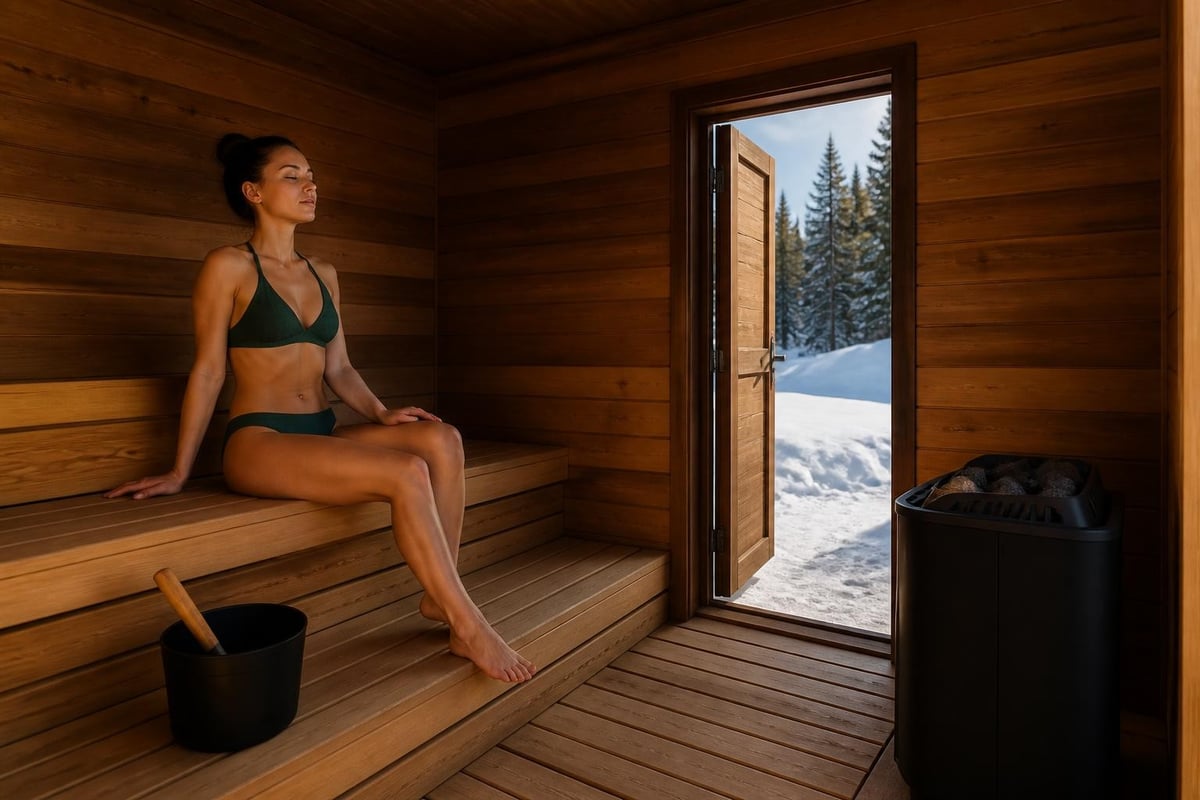
Bench height, depth and wood species affect both comfort and perceived heat. In hot saunas, every detail matters.
Bench Configurations
L-shaped benches maximize seating in compact footprints (under 2.5 m × 2.5 m), allowing two to four bathers to sit perpendicular. Straight benches suit larger saunas, supporting six people side by side and easier movement between levels.
Upper benches should sit at least 100–110 cm from the floor, placing your head in the hottest zone when seated. Lower benches at 40–50 cm height give children and newcomers a gentler introduction.
Bench Wood Species
| Wood | Thermal Conductivity | Texture | Notes |
|---|---|---|---|
| Aspen | Low | Smooth, light | Stays cool to touch, minimal resin |
| Black Alder | Low | Fine grain, warm tone | Slightly denser than aspen, ages to rich amber |
| Cedar | Medium | Aromatic, soft | Popular in North America but can feel warmer |
Aspen and black alder remain comfortable even at 85 °C, while cedar may feel too warm for extended upper-bench sessions. RecoSauna models offer both options, letting you match wood character to your preference.
Choosing an Outdoor Sauna for Consistent Heat
Not all outdoor saunas perform equally when temperatures drop. Buyers in year-round climates should prioritize construction details over marketing claims.
Size and Interior Volume
Smaller saunas heat faster and hold temperature more easily. A 2.3 × 2.3 m footprint (interior volume around 8–9 m³) suits two to four people and reaches 80 °C reliably with a 6–8 kW electric heater or medium wood stove.
Larger models (3.0 × 2.3 m or greater) accommodate six bathers and L-shaped benches but require proportionally more power and longer heat-up. If you plan solo or couple sessions most of the time, a compact model delivers better efficiency.
Comparing outdoor sauna costs helps contextualize the trade-offs between upfront investment and long-term operating expense.
Changing Rooms and Hybrid Layouts
Models with integrated changing rooms add convenience but slightly reduce thermal efficiency. The extra interior door and unheated vestibule create a buffer zone, useful for storing towels and managing snow or rain before entering the hot sauna chamber.
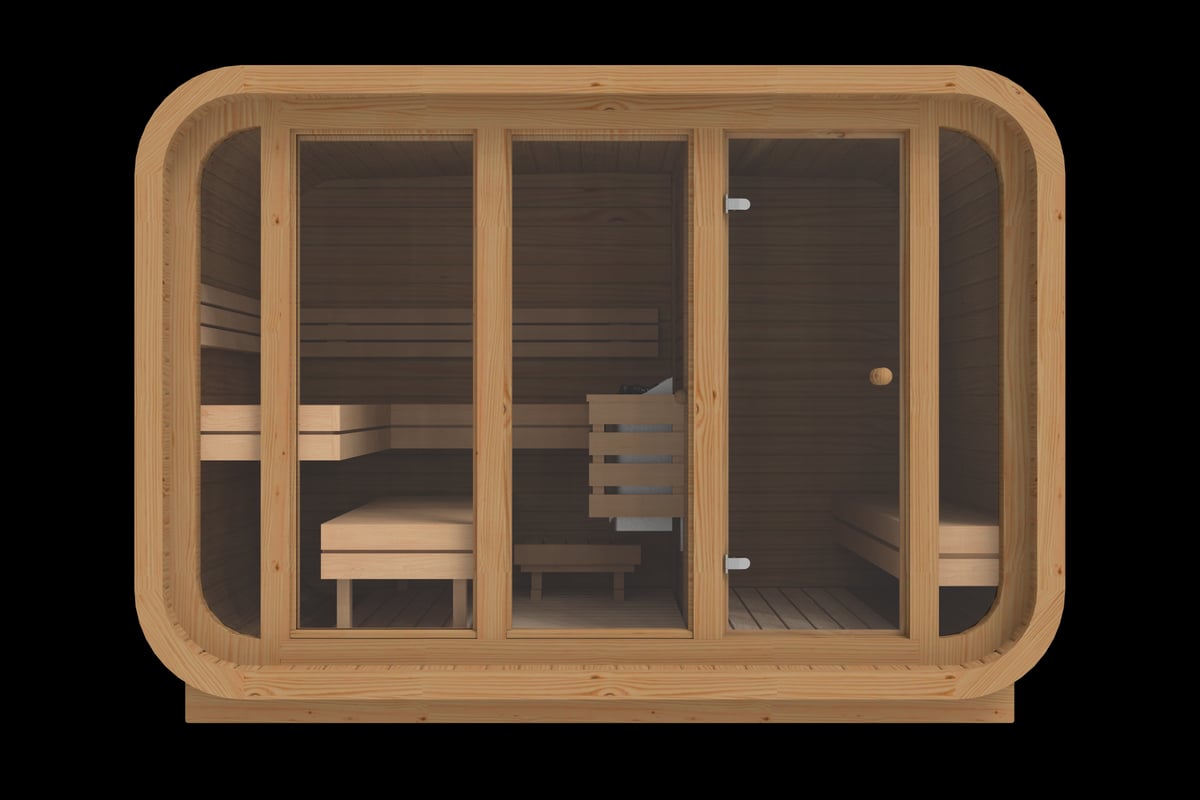
For buyers prioritizing maximum heat retention in severe winters, single-chamber designs concentrate insulation and heater output where it matters most. The RecoSauna Comfort Square Sauna 3.0 × 2.3 m – Thermowood balances both needs with a dedicated 1 m changing room, internal glass door and 46 mm Thermowood walls that maintain 80 °C even in Ontario winters.
Roof Insulation and Ventilation
Heat rises and escapes through the roof if construction is insufficient. Insulated roof panels with mineral wool or foam, combined with a weatherproof membrane, prevent losses and reduce condensation.
Proper ventilation balances air exchange without sacrificing temperature. A passive intake near the heater and an adjustable exhaust vent near the ceiling allow fresh air to circulate while maintaining 80+ °C at bench level.
Electric vs. Wood-Burning Heaters in Hot Saunas
Both heater types can deliver authentic heat, but each suits different priorities.
Electric Heaters
Advantages:
- Precise digital or analog control (set and forget)
- Faster heat-up (30–45 minutes to 80 °C)
- No wood storage, ash removal or chimney maintenance
- Allowed in urban areas with fire restrictions
Considerations:
- Requires 240V dedicated circuit (electrician install)
- Ongoing electricity cost (roughly $1–2 per session depending on local rates)
- Less radiant heat compared to wood stoves
Wood-Burning Heaters
Advantages:
- Traditional crackling fire and radiant warmth
- No electric infrastructure needed (ideal for off-grid)
- Sustained heat once fire is established
- Lower operating cost if you source firewood locally
Considerations:
- Longer heat-up time (60–90 minutes)
- Requires chimney installation and annual cleaning
- Must monitor and refuel during longer sessions
- May not be permitted in urban or high-fire-risk areas
For buyers seeking hot saunas that replicate Finnish tradition, wood heat is unmatched. For convenience and control, electric wins. Many homeowners eventually add a second heater or sauna, recognizing both have merit.
Integrating Cold Plunge with Hot Saunas
Alternating between hot sauna sessions and cold immersion amplifies circulation, endorphin release and mental focus. This contrast therapy is central to Nordic wellness culture.
Practical setup:
- Heat sauna to 80–85 °C
- Sauna session: 10–15 minutes, with one or two water throws for löyly
- Cold plunge: 1–3 minutes in water at 4–10 °C (39–50 °F)
- Rest: 5–10 minutes wrapped in a towel or robe
- Repeat two to three rounds
Outdoor sauna placement near a cold plunge, natural pond or hose-fed shower simplifies this routine. Winter snow offers a no-cost alternative-step outside, roll in fresh powder, return to warmth.
Explore RecoSauna's backyard sauna collection to find models designed for seamless outdoor-to-cold transitions.
Maintenance Tips for Long-Term Performance
Hot saunas demand little maintenance, but neglecting a few basics shortens lifespan and reduces heat efficiency.
Weekly and Monthly Tasks
- Wipe benches with a damp cloth after every few sessions; avoid soap or chemicals
- Check door seals for gaps that let heat escape
- Empty and rinse water bucket to prevent mineral buildup
- Inspect heater rocks for cracks; replace any broken pieces to maintain even heat
Seasonal Care
- Spring: Clean exterior walls, check roof for debris, inspect ventilation openings
- Fall: Apply Thermowood maintenance oil if manufacturer recommends; ensure roof drainage is clear before snow season
- Winter: Brush snow off roof after heavy storms; confirm door and window seals remain tight
Thermowood weathers to silver-gray naturally and requires no staining. If you prefer the original tone, a light oil application every 12–18 months preserves color without affecting interior performance.
Common Questions About Hot Saunas
How hot is too hot for a first-time user?
Start at 70 °C (158 °F) on a lower bench. After three to four sessions, try 75–80 °C on the upper bench. Your body adapts within weeks, making higher temperatures comfortable.
Can I leave the heater on between sessions?
Electric heaters with timers allow scheduled warm-up before you arrive. Leaving them on continuously wastes energy and wears components. Wood stoves must cool completely between uses for safety.
Do outdoor saunas stay hot in winter?
Yes, if built with adequate wall thickness (46 mm minimum), insulated roof and properly sized heater. Expect slightly longer heat-up times when outdoor temperature is below -10 °C, but well-constructed models hold 80–85 °C reliably.
Should I add insulation to a non-insulated sauna?
Only if you experience consistent difficulty reaching target temperature in winter. Adding insulation requires interior or exterior retrofit, often more expensive than choosing an insulated model initially.
Is 90 °C better than 80 °C?
Not necessarily. Most bathers find 80–85 °C optimal when paired with steam. Higher temperatures shorten tolerable session length without increasing wellness benefits and risk discomfort or burns.
Regional Considerations for North American Buyers
Climate shapes sauna performance more than buyers initially expect.
Cold-Winter Regions (Minnesota, Vermont, Alberta, Manitoba)
Prioritize:
- 46 mm Thermowood walls or insulated construction
- Insulated roof with weatherproof membrane
- Electric heater 8 kW or larger (for 2.3 × 2.3 m models)
- Double-pane glass if windows are large
Hot saunas in these regions shine brightest in January, when contrast with outdoor cold creates the most invigorating experience.
Temperate Coastal Zones (Pacific Northwest, British Columbia)
Rain and humidity matter more than extreme cold. Focus on:
- Thermowood or rot-resistant materials
- Proper roof overhang and drainage
- Ventilation to manage moisture during and after sessions
Non-insulated models work well here, saving cost without sacrificing performance.
Hot-Summer Climates (Southern U.S.)
Saunas remain valuable year-round, though summer evening sessions require extra hydration. Shade trees, pergolas or strategic placement reduce solar gain on exterior walls, helping the heater maintain control.
Browse RecoSauna's outdoor sauna options to compare Thermowood and Nordic Pine across climates.
What to Expect During Your First Sessions
First-time hot sauna users often underestimate how quickly heat builds or overestimate their tolerance. Approach gradually.
Session one: 10 minutes at 70 °C, lower bench, no water on rocks. Focus on breathing and relaxation.
Session two: 12 minutes at 75 °C, mid bench, one small water throw. Notice how steam intensifies heat.
Session three: 15 minutes at 80 °C, upper bench, two water throws. This is where authentic löyly begins.
By session five or six, you'll instinctively know your preferred temperature, bench height and water rhythm. Sauna bathing becomes personal and intuitive.
Long-Term Value of Hot Saunas
A well-built outdoor sauna delivers 15–25 years of regular use with minimal intervention. Thermowood construction, quality heaters and thoughtful design justify the upfront investment through durability and consistent performance.
Cost per session over 20 years (assuming three sessions per week):
- Initial cost: $8,000–15,000 (mid-range outdoor model)
- Total sessions: ~3,120
- Amortized cost: $2.50–4.80 per session, plus electricity or firewood
Compare that to gym memberships, spa visits or other wellness subscriptions, and the value becomes clear. You control the environment, timing and experience-no commute, no crowds, no monthly fees.
Hot saunas also increase property appeal. Buyers seeking wellness-focused homes recognize authentic sauna installations as premium features, particularly in markets where outdoor living and Scandinavian design trends remain strong.
Hot saunas combine traditional Finnish heat with modern outdoor construction, offering North American homeowners a practical path to year-round wellness and relaxation. Choosing the right model means balancing size, materials, heater type and climate demands to ensure consistent 80+ °C performance across seasons. RecoSauna brings decades of Finnish sauna expertise to every Square, Havu and Lumi model, helping you find a Thermowood sauna built for authentic löyly in your backyard.
Share:
Hotbox Sauna: Design, Performance & Buying Guide 2026
Wood Sauna Outdoor: A Guide to Authentic Backyard Sauna