
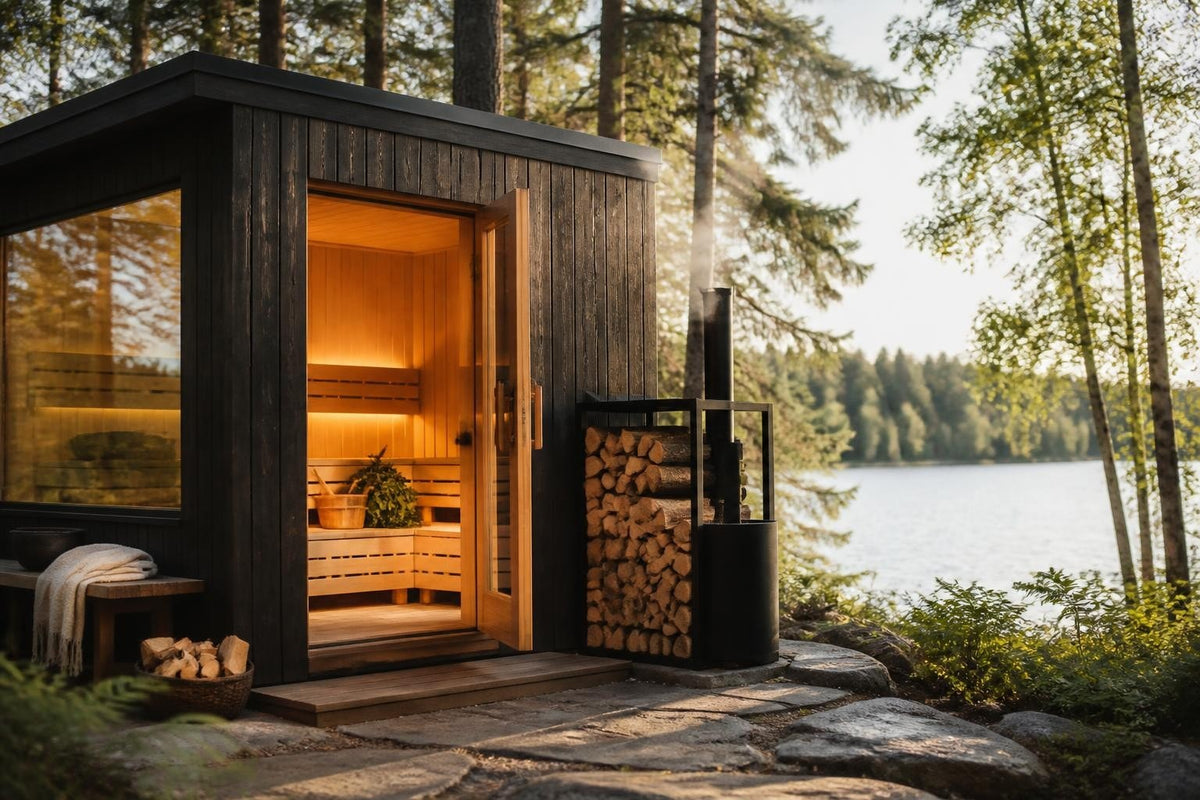
The heart of any sauna is the stove. Whether you call it a heater, a kiuas or simply the stove, this single component determines how quickly your sauna warms, how your löyly feels when you throw water on the stones, and how much ongoing work (or electric power) you're willing to trade for an authentic bathing experience. Choosing between electric and wood-burning models involves real trade-offs in convenience, cost, ambiance and maintenance that every buyer should understand before making a final decision.
How Sauna Stoves Work
Sauna stoves heat a pile of rocks (typically 40 to 150 pounds) that then radiate warmth into the room. The temperature inside a traditional sauna ranges from 150 to 195°F, and the dry air encourages perspiration.
When you throw water onto the hot stones, you create löyly: the soft, enveloping steam that defines a proper sauna bath. The UNESCO inscription of Finnish sauna culture describes löyly as the "spirit of the sauna," and it depends entirely on having enough thermal mass in the stones and enough heat to recover quickly between water tosses.
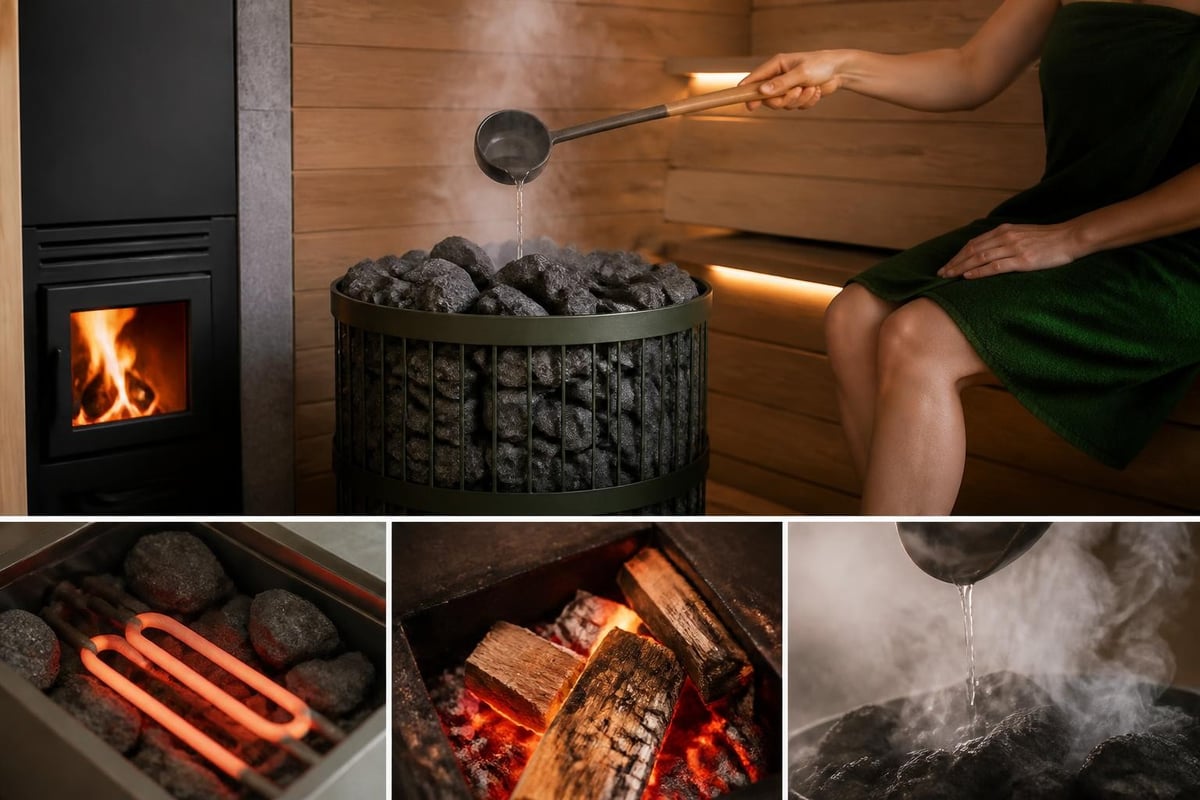
Electric sauna stoves use embedded heating elements to warm the stone pile. A thermostat maintains a set temperature, and modern units often include timers or remote controls.
Wood-burning sauna stoves rely on a firebox and chimney. You regulate temperature by managing airflow and fuel, and the experience is more hands-on but closer to traditional Finnish practice.
Both types produce authentic löyly when sized correctly, but they differ sharply in installation, operation and long-term costs.
Electric Sauna Stoves
Electric models dominate the North American market because they integrate smoothly into residential electrical systems, require no chimney and offer consistent, thermostat-controlled heat.
Sizing and Power
Electric stoves are rated in kilowatts (kW), and the rule of thumb is 1 kW per 45 to 50 cubic feet of sauna interior. A six-person outdoor sauna measuring 10 feet by 8 feet by 7 feet (560 cubic feet) typically requires a 9 to 12 kW heater.
Key sizing factors:
- Interior volume (length × width × ceiling height)
- Wall insulation (outdoor saunas need more power than indoor)
- Window area (each square foot of glass adds load)
- Climate (Canadian winters demand higher wattage than California installations)
Undersized heaters never reach proper temperature. Oversized units cycle on and off too quickly, preventing the stones from fully saturating with heat. The result in both cases is weak löyly.
Electrical Requirements
Most residential electric stoves require 240-volt service and a dedicated circuit breaker. A 9 kW heater draws about 37.5 amps and needs 40- or 50-amp wiring, depending on local code.
Installation checklist:
- Verify main panel capacity (many homes need a subpanel)
- Run appropriate gauge copper wire (typically 8 AWG for 40 A, 6 AWG for 50 A)
- Install a GFCI or AFCI breaker per NEC requirements
- Mount a disconnect switch within sight of the sauna
- Schedule inspection before the first use
The IEC 60335-2-53 standard covers safety testing for electric sauna heating appliances, including insulation, grounding and protection against overheating. Make sure any heater you consider carries a UL or ETL certification mark, which confirms compliance with North American safety codes.
Pros:
- Set-and-forget thermostat control
- No chimney or combustion air venting
- Faster warm-up (30 to 45 minutes)
- Lower insurance premiums in some regions
Cons:
- Higher ongoing energy cost
- Requires professional electrician
- Less romantic than crackling wood fire
- Dependence on grid power during outages
| Feature | Electric | Wood-Burning |
|---|---|---|
| Typical warm-up | 30–45 min | 45–90 min |
| Operating cost (per session) | $1.50–$3.00 | $0.50–$1.50 (wood dependent) |
| Installation complexity | Moderate (electrical) | High (chimney + clearances) |
| Maintenance frequency | Yearly inspection | Monthly ash removal, yearly chimney sweep |
| Thermostat control | Yes | No (manual damper) |
Stone Capacity and Replacement
Electric heaters hold 40 to 120 pounds of stones. Larger capacity smooths out temperature swings and improves löyly quality. Over time, stones crack from repeated heating and cooling cycles. Expect to replace about one-third of your stones each year.
Use only igneous rocks sold specifically for sauna use. River stones and sedimentary rocks can explode when heated, sending sharp fragments across the room.
Wood-Burning Sauna Stoves
Wood stoves deliver the classic sauna experience: the sight and smell of burning logs, the gentle crackle of the fire, and the satisfaction of tending your own heat. They remain the preferred choice in rural settings and for buyers committed to traditional Finnish practice.
Design and Compliance
Modern wood-fired sauna stoves are engineered to balance heat output, fuel efficiency and emissions. The EN 15821:2010 standard governs multi-firing wood sauna stoves in Europe, setting requirements for combustion efficiency, particulate emissions and safe clearances.
In North America, wood-burning appliances fall under local building codes and increasingly under air-quality regulations. The EPA's BurnWise program provides guidance on reducing residential wood smoke, and some municipalities restrict or ban new wood-burning installations in urban areas.
Before purchasing, check:
- Local zoning for outdoor wood-burning appliances
- Chimney height requirements (typically 2 feet above any roof surface within 10 feet)
- Spark arrestor and chimney cap mandates
- Insurance implications (some carriers increase premiums or exclude coverage)
Installation Complexity
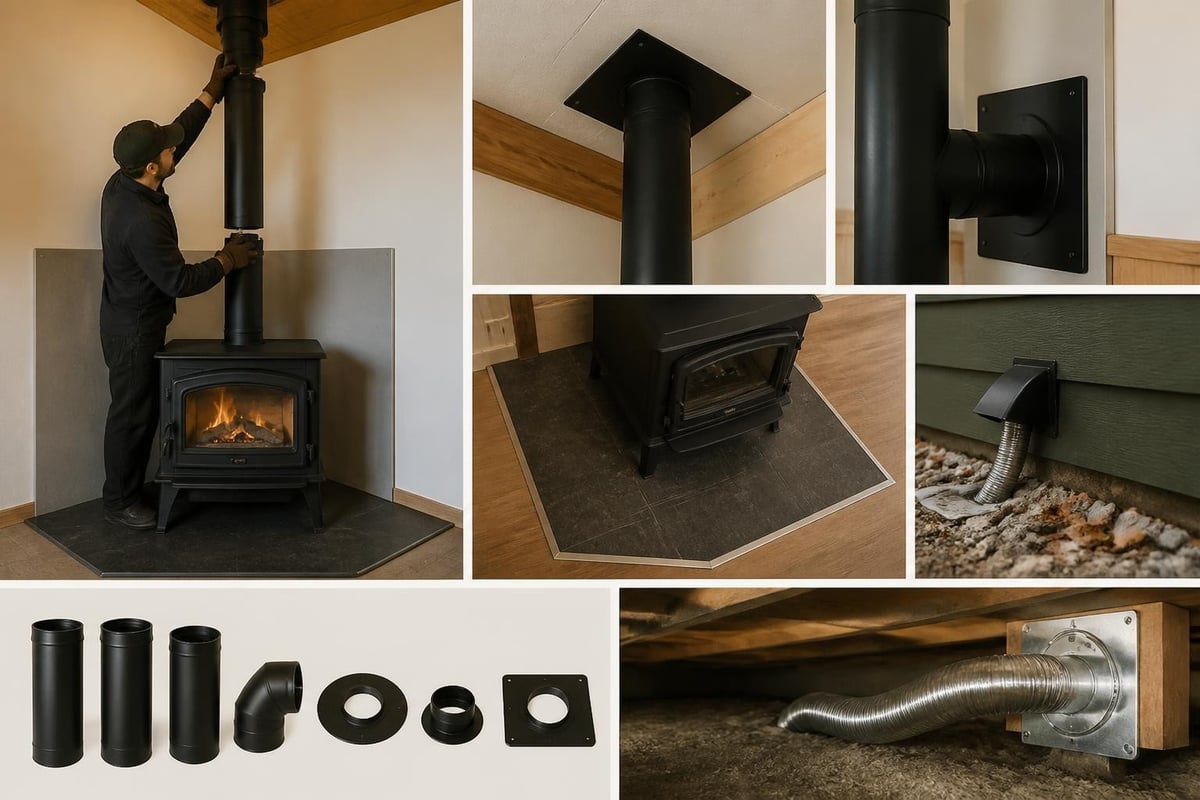
Wood stoves demand more than an electrical hookup. You need a properly sized chimney, safe clearances from combustible walls, a non-combustible floor protector, and often a fresh-air intake to prevent backdrafting.
Typical installation steps:
- Position stove on masonry hearth or metal floor pad
- Assemble double-wall stainless chimney sections
- Pass chimney through ceiling and roof with approved flashing
- Seal roof penetration and install rain cap
- Verify draft (at least 0.05 inches water column)
- Inspect annually and sweep creosote buildup
The NFPA guidance on heating appliances covers clearances, venting and fire-safety considerations. Even experienced DIYers often hire a certified chimney installer to ensure safe, code-compliant work.
Fuel, Maintenance and Operating Cost
A typical two-hour sauna session consumes 15 to 25 pounds of dry firewood. At $200 per cord (128 cubic feet), your per-session fuel cost runs $0.75 to $1.50, depending on wood species and moisture content.
Burn only seasoned hardwood with moisture content below 20 percent. Wet or green wood produces creosote, a flammable tar that accumulates inside the chimney and can ignite, causing a dangerous chimney fire.
Monthly maintenance tasks:
- Remove ash from firebox
- Check door gasket for wear
- Inspect chimney for creosote buildup
- Clear debris from spark arrestor
Annual service:
- Professional chimney sweep
- Inspect chimney flashing and seals
- Replace door gasket if needed
- Check stone pile for cracks
Wood stoves require hands-on involvement. If you view sauna as a meditative retreat and enjoy the ritual of fire-tending, that's a feature. If you want to press a button and walk away, it's a drawback.
Choosing Between Electric and Wood
The choice between electric and wood-burning sauna stoves depends on your site, budget, local regulations and personal priorities. There is no universal "better" option.
Choose electric if:
- Your sauna is close to the house with available 240 V service
- Local codes restrict wood burning
- You value convenience and precise temperature control
- Electrical service upgrade is feasible and affordable
Choose wood if:
- You have space for safe chimney installation
- Local regulations permit outdoor wood burning
- Fuel costs are low (you own woodland or can source inexpensive firewood)
- You prioritize authenticity and enjoy the ritual of fire-tending
Some buyers install both: an electric heater for weeknight convenience and a wood stove for weekend sessions. The RecoSauna Sisu Square Sauna 3.0 × 2.3 m in Thermowood is compatible with electric or wood-burning heaters, giving you flexibility to match your changing needs or to experiment with both fuel types over time.
That compatibility is valuable. As your sauna routine evolves, or as energy prices shift, you can swap heater types without replacing the entire structure.
Heat-Up Time and Session Planning
Electric stoves heat faster. Expect 30 to 45 minutes from cold start to bathing temperature. Wood stoves take 45 to 90 minutes, depending on outdoor temperature, wood quality and how aggressively you manage the fire.
If you sauna daily, heat-up time matters less. The sauna becomes part of your evening routine, and you simply start the heater (or fire) when you get home from work. If you sauna occasionally, quicker warm-up reduces the planning burden and makes spontaneous sessions practical.
Sauna Stones and Löyly Quality
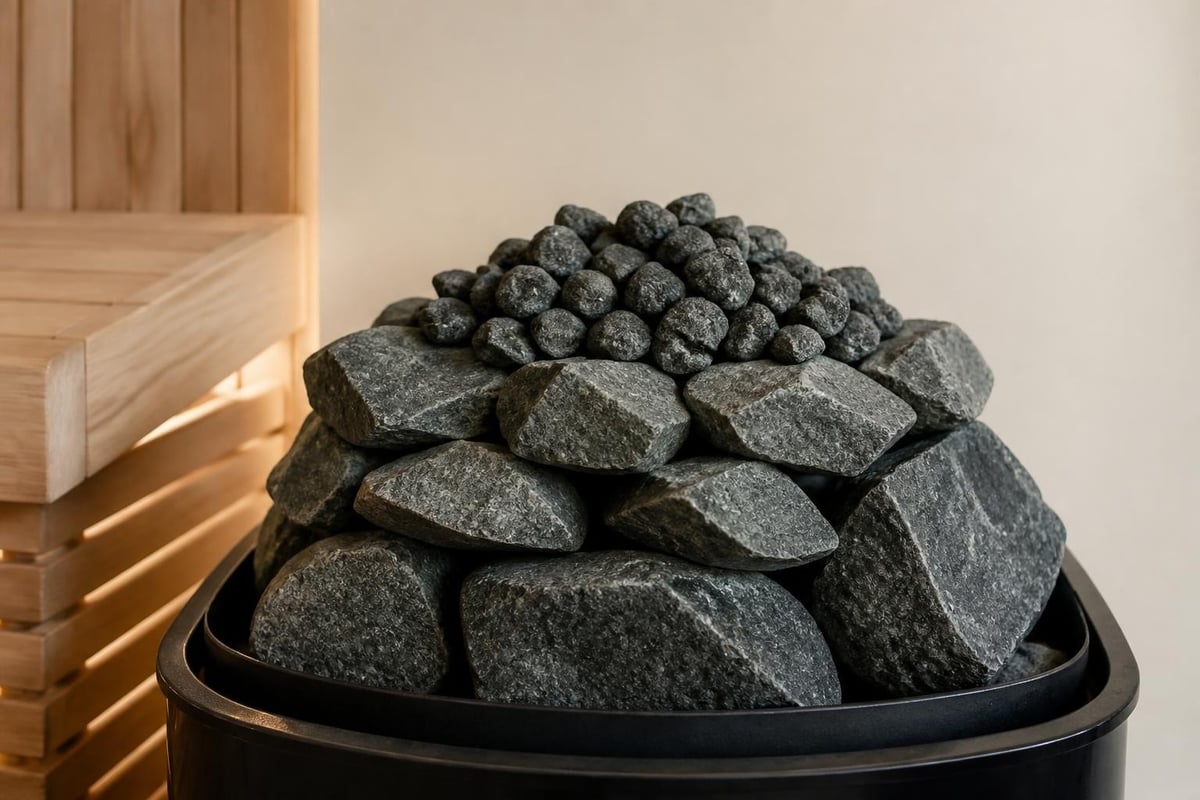
Regardless of fuel type, the stones are what create löyly. Proper stone selection and stacking technique matter as much as the stove itself.
Stone characteristics:
- Material: Peridotite, olivine diabase or high-grade igneous rock
- Size: Mix of 3- to 6-inch diameter stones for airflow and thermal mass
- Density: Denser stones store more heat and recover faster after water tosses
- Surface: Rounded or tumbled stones stack more securely than angular fragments
Stacking technique:
- Place largest stones on the bottom layer for stability
- Fill gaps with medium stones, leaving air channels for convection
- Top with smaller stones to maximize surface area for steam generation
- Avoid stacking so tightly that airflow is blocked
Proper stacking ensures even heating and prevents "dead zones" where stones never reach full temperature. Poor stacking causes weak löyly and premature stone failure.
When you throw water, aim for the hottest stones (usually near the top or center). The water should flash to steam instantly, producing a soft, enveloping wave of heat. If water pools or drips to the floor, either your stones aren't hot enough or your stove is undersized.
Safety Considerations
Sauna stoves operate at extreme temperatures, and both electric and wood models present specific hazards if installed or operated incorrectly.
Electric stove safety:
- Never operate a heater with damaged elements or loose wiring
- Keep the control panel accessible and unobstructed
- Install a high-temperature limit switch to prevent overheating
- Ensure adequate clearance from benches and walls (typically 6 to 8 inches)
Wood stove safety:
- Maintain required clearances from combustible surfaces (often 36 inches or more)
- Use only approved double-wall chimney pipe
- Install a chimney thermometer and monitor flue temperature
- Keep a fire extinguisher rated for wood fires within reach
- Never leave a fire unattended during the warm-up phase
The Building Science Corporation guidance on high-humidity spaces includes considerations for sauna construction, ventilation and moisture control around heaters. Proper assembly prevents rot, mold and structural damage while supporting safe, long-term operation.
Universal precautions:
- Ventilate the sauna with a fresh-air intake and exhaust vent
- Never pour water on electric elements (only on stones)
- Limit session length to 15 to 20 minutes for beginners
- Exit immediately if you feel dizzy, nauseous or short of breath
- Hydrate before and after each session
Long-Term Cost of Ownership
The initial purchase price of a sauna stove is only part of the total cost. Factor in installation, energy or fuel, maintenance and eventual replacement.
Electric Stove Costs (10-year estimate)
| Item | Cost Range |
|---|---|
| Heater unit (9–12 kW) | $800–$2,200 |
| Electrical installation | $600–$1,800 |
| Annual energy (50 sessions/year) | $75–$150 |
| Stone replacement (yearly) | $30–$60 |
| 10-year total | $2,880–$5,860 |
Wood Stove Costs (10-year estimate)
| Item | Cost Range |
|---|---|
| Stove unit | $1,200–$3,500 |
| Chimney and installation | $2,000–$4,500 |
| Annual firewood (50 sessions/year) | $40–$80 |
| Chimney sweep (yearly) | $150–$250 |
| Stone replacement (yearly) | $30–$60 |
| 10-year total | $5,930–$11,160 |
Wood stoves cost more up front and demand higher ongoing maintenance, but fuel costs are lower. If you heat with wood already or can source free or low-cost firewood, the gap narrows significantly. If you pay retail for kiln-dried hardwood, electric may prove cheaper over a decade.
Electricity prices vary widely by region. In the Pacific Northwest, where hydropower keeps rates low, electric sauna operation is inexpensive. In the Northeast, where winter rates spike, wood can be more economical.
Run the numbers for your specific situation. The total cost of outdoor sauna ownership depends on local energy prices, wood availability, labor costs and how often you use the sauna.
Matching Stove to Sauna Size
Stove manufacturers publish sizing charts, but real-world performance depends on insulation quality, window area, door seal and climate. Outdoor saunas need more power than indoor models because heat escapes through walls, roof and floor.
Simplified sizing guide (outdoor, insulated):
- 2–3 person (100–200 cu ft): 4.5–6 kW electric / small wood stove
- 4–6 person (200–400 cu ft): 6–9 kW electric / medium wood stove
- 6+ person (400–600 cu ft): 9–12 kW electric / large wood stove
When in doubt, size up. A slightly oversized stove reaches temperature faster and recovers more quickly after water tosses. An undersized stove struggles in cold weather and produces disappointing löyly.
Thermowood construction, with its low moisture content and stable dimensions, pairs well with both electric and wood stoves. The dry wood doesn't absorb as much heat as untreated pine, so the sauna warms faster and holds temperature more consistently.
Ventilation and Heater Performance
Proper ventilation is essential for comfort, safety and optimal heater performance. Fresh air enters near the floor (often behind or beside the stove), circulates through the room, picks up moisture and exits through a vent near the ceiling on the opposite wall.
Ventilation rules of thumb:
- Intake vent: 4 to 6 square inches per person, positioned low
- Exhaust vent: 1.5× the intake area, positioned high and opposite
- Air changes: 6 to 8 per hour during use
Without adequate ventilation, oxygen levels drop, carbon dioxide accumulates (especially with wood stoves), and the sauna feels stuffy. Proper airflow also helps the stove burn cleanly and prevents backdrafting in wood-fired models.
Some builders hesitate to install vents, fearing heat loss. In practice, controlled ventilation improves comfort and allows the stove to operate more efficiently. The fresh air mixes with the hot air rising from the heater, creating gentle circulation that distributes heat evenly across the benches.
The Saunologia technical resource on Finnish sauna technology explains the historical evolution of the sauna stove and its role in creating the authentic bathing experience. Modern stoves, whether electric or wood, are refinements of designs developed over centuries in Finland.
Integrating the Stove Into Your Sauna Design
Stove placement affects bench layout, clearances and overall usability. In most saunas, the heater sits in a corner or along a short wall, allowing maximum bench space on the remaining walls.
Design considerations:
- Position the stove where bathers won't accidentally brush against it
- Allow easy access for adding wood (wood stoves) or adjusting controls (electric)
- Keep the area around the stove free for ventilation and maintenance
- Route electrical or chimney runs to minimize cost and visual impact
Some sauna owners enclose electric heaters behind a decorative railing, creating a barrier that prevents contact burns while maintaining airflow. Wood stoves often feature integral railings or stone surrounds for the same purpose.
If your sauna includes a changing room, consider placing the stove on the shared wall. The radiant heat helps dry towels and warm the changing area, adding comfort before and after each session.
Where to Go Next
Choosing the right sauna stove is a balance of budget, convenience, authenticity and your local context. Take time to evaluate your electrical capacity, local codes, fuel availability and how much hands-on involvement you want in each session.
Both electric and wood-burning stoves deliver authentic Finnish sauna when properly sized and installed. The best choice is the one that fits your site, matches your routine and brings you back to the sauna week after week.
Once you've settled on a fuel type, match the stove to your sauna's interior volume, insulation and window area. Confirm local permit requirements, line up a qualified installer, and budget for proper chimney or electrical work. A well-chosen stove, paired with quality stones and good ventilation, transforms an insulated wood box into a deeply satisfying backyard retreat.
The right sauna stove transforms your outdoor sauna from a simple structure into a source of year-round wellness and authentic Finnish tradition. Whether you choose the convenience of electric or the ritual of wood, matching heater capacity to your sauna's size and your climate ensures consistent heat and satisfying löyly session after session. At RecoSauna, we help North American homeowners choose the right combination of Thermowood construction, bench layout and heater type for their backyard, budget and bathing style.
Share:
Wood Sauna Outdoor: A Guide to Authentic Backyard Sauna
The Sauna House: How to Choose the Right One for Your Backyard