

When you buy a sauna with heater, you're making two decisions at once: the structure that shapes your backyard wellness space and the heat source that defines how you'll use it. Most outdoor saunas arrive as panel kits or barrel assemblies without a heater included, leaving you to choose between electric convenience and wood-fired tradition. That choice affects installation cost, ongoing energy use, permitting complexity and the character of your sauna experience. In Finland, where one in three people owns a sauna, the heater is never an afterthought. It's the heart of the room, sized to the volume, matched to the bench layout and selected for the kind of löyly (steam burst) you want when water meets the stones.
Electric vs. Wood-Burning Heater Selection
Choosing between electric and wood-burning heat means balancing infrastructure, climate and personal preference.
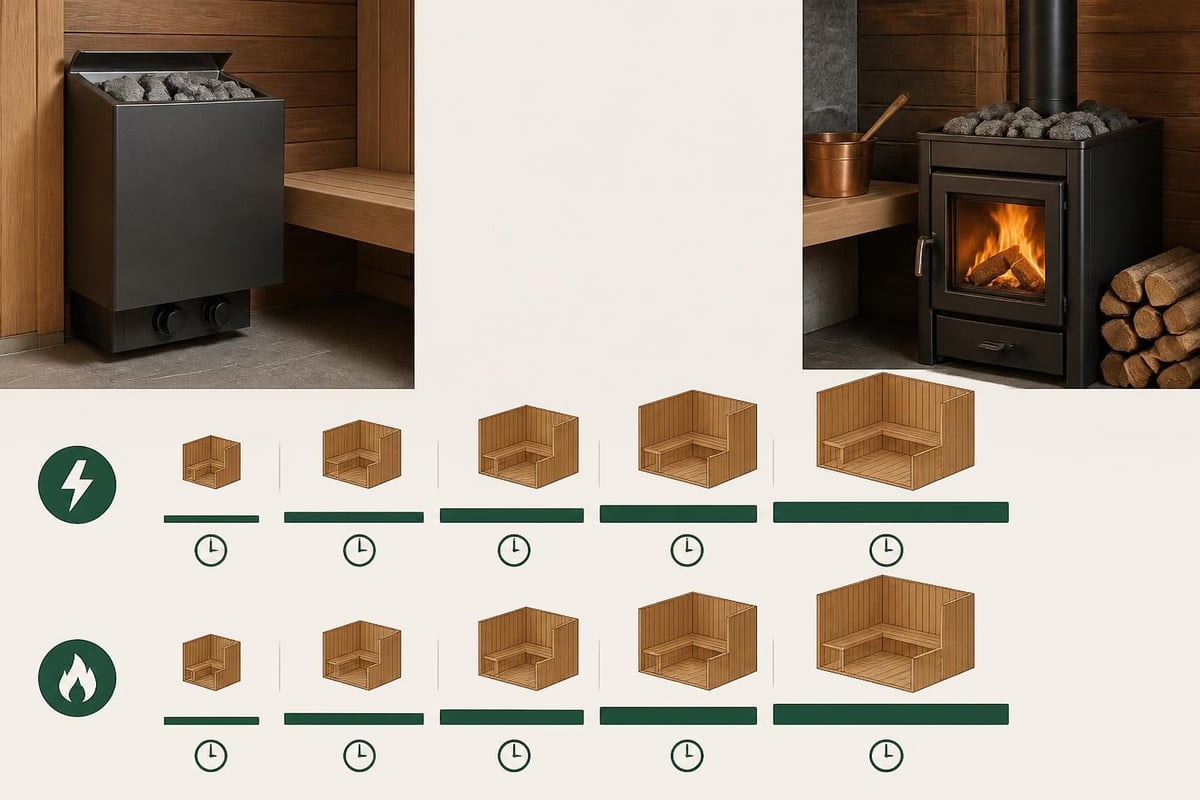
Electric heaters require 240V service, a dedicated circuit breaker and GFCI protection. They heat quickly (20–35 minutes to 170–180°F), maintain steady temperature and suit smaller saunas (under 400 cubic feet). Most North American buyers choose electric for suburban backyards where electrical service already exists. The UL/CSA safety standards governing electric sauna heaters ensure proper sensor placement, overheat protection and construction quality across brands.
Wood-burning heaters need no electrical work but demand chimney installation, spark arrestor, ember guard and ongoing wood supply. They heat more slowly (40–60 minutes) yet produce a broader, softer heat signature that many Finnish traditionalists prefer. Wood stoves work well in rural properties, off-grid locations and Canadian winters where stored firewood offsets propane or electric costs.
| Factor | Electric Heater | Wood-Burning Heater |
|---|---|---|
| Installation cost | $800–1,500 (electrician) | $1,200–2,500 (chimney + masonry) |
| Heat-up time | 20–35 minutes | 40–60 minutes |
| Temperature control | Thermostat precision | Manual stoking |
| Annual maintenance | Minimal (inspect elements) | Moderate (clean chimney, ash removal) |
| Permitting | Electrical permit | Building + fire code permit |
Heater Sizing for Sauna Volume
A sauna with heater performs well only when the unit matches the interior cubic footage.
Calculate sauna volume by multiplying interior length × width × height in feet, then convert to cubic feet. For glass-walled modern saunas or outdoor installations in cold climates, add 15–20% to account for heat loss through glazing and exterior walls. Most heater manufacturers publish capacity ranges in both cubic feet and kilowatt ratings.
Electric heater sizing:
- 4.5 kW: 120–180 cubic feet (compact 2-person saunas)
- 6.0 kW: 180–240 cubic feet (standard 2–4 person)
- 8.0 kW: 240–350 cubic feet (larger 4–6 person)
- 9.0–10.5 kW: 350–450 cubic feet (premium 6-person or high-glass models)
Wood-burning heater sizing:
- Small stove (30–40 lb stone capacity): Up to 250 cubic feet
- Medium stove (50–70 lb stone capacity): 250–400 cubic feet
- Large stove (80+ lb stone capacity): 400–600 cubic feet
Undersized heaters run continuously without reaching target temperature. Oversized units cycle on and off, creating uneven heat and reducing element lifespan. The goal is a heater that reaches 170–180°F in 25–35 minutes (electric) or 45–60 minutes (wood) and holds steady during a 45–60 minute session.
Heater Placement and Safety Clearances
Where you mount the heater affects heat distribution, safety and löyly quality.
Electric heaters mount on the wall or sit floor-mounted, always under the lower bench tier to maximize heat stratification. The International Residential Code and manufacturer guidelines specify minimum clearances: typically 2–4 inches from combustible walls (with proper heat shielding), 6–8 inches from bench edges and a protective railing at least 4–6 inches away to prevent accidental contact. Taller saunas (over 7 feet) may require ceiling guards to prevent head contact with hot surfaces.
Wood-burning stoves demand larger clearances: 16–24 inches from unprotected wood walls, 12 inches from bench fronts and a noncombustible hearth extending 16–18 inches in front of the door. Chimney penetrations through the roof require insulated thimbles, roof jacks and spark arrestors. Many jurisdictions require masonry chimneys or listed Class A insulated flue systems, adding cost but ensuring safe operation in year-round outdoor installations.
Protective barriers around both heater types prevent burns during bathing. In Finnish tradition, the railing should allow easy access for water tossing (löyly) while stopping accidental contact. Black alder or heat-treated pine railings suit the aesthetic and won't scorch skin on brief contact the way metal guards can.
Ventilation and Air Quality
A properly designed sauna with heater includes fresh-air intake and exhaust to maintain oxygen levels and remove moisture.
Fresh air enters low on the wall near the heater, drawn across the stones and rising as it heats. Exhaust vents sit high on the opposite wall or under the upper bench, creating continuous circulation without drafts. The Finnish Sauna Society recommends 5–6 air changes per hour during active use. For electric saunas, passive vents (screened openings) often suffice. Wood-burning installations need dedicated combustion air to prevent backdrafting and support complete combustion, especially in tightly built modern outdoor saunas.
Heater Features That Improve the Sauna Experience
Not all heaters deliver the same quality of löyly or long-term durability.
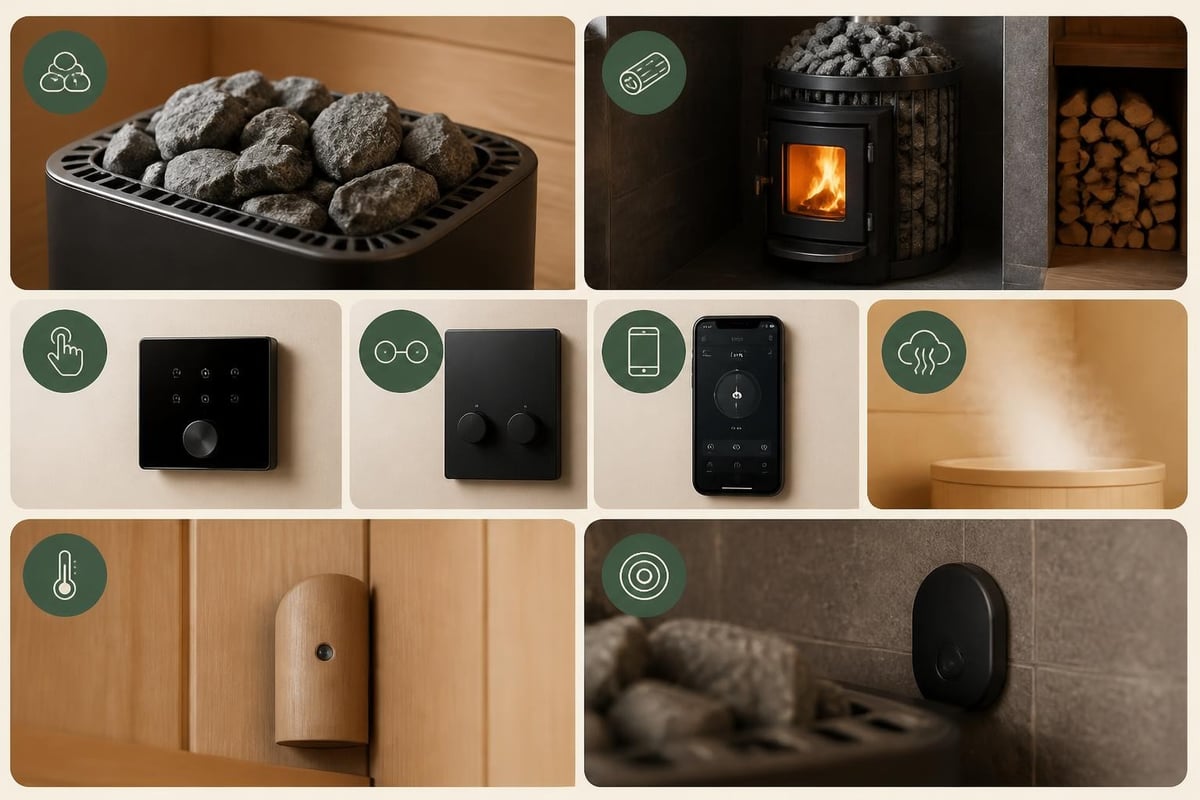
Stone capacity directly affects steam volume and heat retention. Larger stone chambers (40–70 lbs for electric, 50–100 lbs for wood) absorb more thermal mass, releasing softer, longer-lasting steam when you toss water. Finnish buyers prioritize olivine diabase or peridotite stones, which resist fracturing under thermal shock and hold heat better than generic river rock.
Built-in controls vs. external panels: Entry-level electric heaters use wall-mounted analog controls (dial timer, simple thermostat). Mid-tier models add digital timers and remote sensors that measure bench-level temperature, not just heater-cavity heat. Premium units integrate with Wi-Fi controls, letting you preheat the sauna from your phone on the way home from work.
Humidity response: Some wood-burning stoves and high-end electric heaters include water reservoirs or integrated steam generators that maintain background humidity, reducing the harshness of dry heat and improving perceived comfort at 160–170°F.
Installation Realities for North American Buyers
Bringing electrical service or building a chimney system defines the timeline and budget for your sauna with heater.
Electric Heater Installation
Most 6–8 kW heaters require a 240V, 30–40 amp dedicated circuit from your main panel. If your panel sits 50–100 feet from the sauna site, expect $800–1,500 in electrician costs for conduit trenching, wire runs and connection. GFCI protection is mandatory under the UL 60335-2-53 standard, adding a breaker upgrade if your panel lacks capacity.
Permit requirements vary by jurisdiction but typically include an electrical permit, rough-in inspection before wall closure and a final inspection before energizing the heater. Budget 2–4 weeks for permitting and scheduling in suburban markets.
Wood-Burning Heater Installation
Chimney work adds complexity. A basic single-wall stovepipe to insulated Class A chimney transition costs $600–1,200 in materials. Adding the roof jack, flashing, storm collar and termination cap brings total material cost to $1,000–1,800. Labor for chimney installation runs $800–1,500, depending on roof pitch, sauna height and local rates.
Building permits for wood-burning installations require structural review (roof loading), fire-code compliance (clearances, hearth construction) and often a final inspection by the fire marshal. In wildfire-prone regions (California, Colorado, parts of British Columbia), spark arrestors and ember screens are mandatory.
Matching Heater Type to Sauna Design
The sauna structure you choose influences which heater type works best.
Compact 2-person saunas (under 200 cubic feet) pair well with 4.5–6 kW electric heaters. Wood stoves are usually oversized for these small volumes, leading to overheating or inefficient burns. If you're considering a smaller footprint, models like the RecoSauna Sisu Square Sauna 2.3 × 2.3 m in Thermowood offer a balanced interior for 2–6 people and accommodate both electric and wood-burning heaters, giving you flexibility as your preferences evolve.
Mid-size 4–6 person saunas (240–350 cubic feet) work well with either heater type. Electric offers faster heat-up and simpler installation; wood-burning provides traditional ambiance and off-grid capability. The choice often comes down to available infrastructure and personal bathing style.
If you value a dedicated changing area for privacy and convenience, the Comfort series adds a 1 m changing room with bench and internal glass door, creating a complete backyard sauna retreat that integrates seamlessly with both electric and wood-fired heaters.
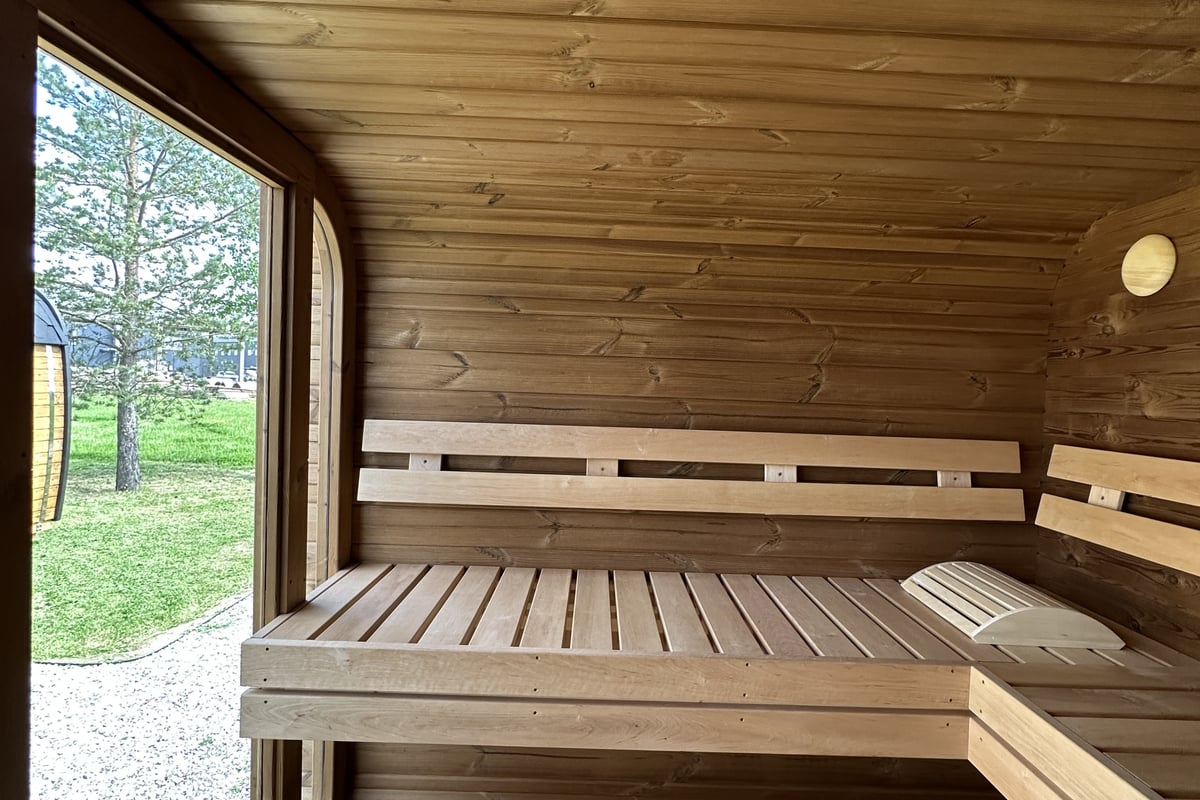
Large saunas with terraces or glazing (over 350 cubic feet, or saunas with extensive glass panels) need 8–10.5 kW electric units or large wood stoves (80+ lb stone capacity) to offset heat loss through windows and exterior walls. Thermowood construction improves thermal performance compared to standard pine, reducing heater cycling and energy costs in winter.
Operating Costs and Energy Efficiency
Understanding the long-term expense of heating your sauna helps you choose the right fuel source.
Electric heaters consume 4.5–10.5 kW per session. At $0.12–0.15/kWh (average North American residential rate), a 6 kW heater running 90 minutes (30-minute heat-up + 60-minute session) costs $0.80–1.00 per use, or roughly $40–50/month for four weekly sessions. In regions with time-of-use rates, preheating during off-peak hours cuts costs 20–30%.
Wood-burning stoves consume 15–25 lbs of seasoned hardwood per session. At $200–300 per cord (128 cubic feet of stacked wood), that's $1.50–2.50 per session, assuming you buy split, seasoned wood. If you cut and season your own, fuel costs drop to nearly zero. However, chimney cleaning (annual or biannual) adds $150–250/year in maintenance expense electric heaters don't require.
Safety, Certification and Code Compliance
Legitimate sauna heaters carry certification marks verifying compliance with electrical and fire safety standards.
Look for UL or CSA listing on electric heaters sold in the USA and Canada. These marks confirm the unit meets UL 60335-2-53 requirements for construction, thermal cutoffs, sensor accuracy and electrical isolation. Unlisted heaters may function but often fail inspection, delaying your project and voiding homeowner's insurance coverage in the event of a fire.
Wood-burning stoves should carry UL 737 or equivalent Canadian certification (ULC-S627), verifying safe construction, door gaskets, air-control systems and clearance-to-combustibles testing. Uncertified "Finnish import" stoves occasionally appear online at attractive prices but rarely pass North American building inspections.
Local building and electrical codes govern installation. Some jurisdictions treat saunas as accessory structures (requiring setback compliance, foundation permits and structural review), while others classify them as recreational equipment (simpler permitting). Always confirm local requirements before ordering a sauna with heater to avoid costly rework or compliance delays.
Heater Upgrades and Accessories
Beyond the base heater, several accessories improve performance and convenience.
- Digital controls and timers: Replace basic analog dials with programmable schedules, remote start and precise temperature holds.
- Rock guards and railings: Upgrade basic wire guards to custom alder or cedar railings that blend with bench design.
- Humidity gauges and thermometers: Analog dial units mounted at eye level (Finnish tradition) or digital displays that track session length and conditions.
- Spare heating elements: For electric heaters, keeping a spare element set reduces downtime if a coil fails mid-winter.
- Chimney cleaning kits: Wire brushes, extension rods and creosote removers for DIY wood-stove maintenance.
For buyers planning a complete wellness setup, pairing your sauna with a cold-plunge tub creates the contrast bathing ritual central to Scandinavian tradition. The thermal shock from sauna heat to cold immersion drives cardiovascular adaptation and post-session relaxation. Many RecoSauna customers sequence sauna sessions with ice baths or natural cold-water swims year-round, extending the benefits well beyond heat alone.
Common Heater Mistakes to Avoid
Even experienced buyers make errors that affect safety, performance or longevity.
Undersizing the heater leads to long heat-up times, failure to reach target temperature in winter and excessive runtime that shortens element life. Always calculate interior volume and add 15–20% for glazing or outdoor installation.
Ignoring clearances risks burns, fire code violations and failed inspections. Measure twice, install once and follow manufacturer specifications exactly. If space is tight, choose a smaller heater model rather than compromise clearances.
Using the wrong stone type reduces heat retention and increases fracturing. Avoid limestone, sandstone and generic river rock. Stick to olivine diabase, peridotite or Finnish-sourced sauna stones sold by reputable retailers.
Skipping ventilation creates stale air, excessive humidity and mold risk in outdoor saunas. Even electric installations need fresh-air intake and exhaust to maintain air quality and prevent moisture damage to bench wood and wall panels.
Delaying electrical upgrades to save money upfront often costs more later. If your main panel lacks capacity for a 40-amp circuit, budget for a subpanel or service upgrade before ordering your sauna.
Maintaining Your Sauna Heater Over Time
Routine care keeps your heater performing safely and efficiently for 10–15 years or more.
Electric heater maintenance is minimal: inspect heating elements annually for cracks or corrosion, vacuum dust and debris from the stone chamber and test the high-limit sensor to confirm proper shutoff. Replace stones every 2–3 years as they fracture and lose thermal mass. Check electrical connections for tightness and oxidation, especially in humid climates.
Wood-burning heater maintenance includes monthly ash removal during active use, annual chimney cleaning (or more often if you burn softwood or unseasoned fuel) and periodic inspection of door gaskets, air dampers and firebox welds. Creosote buildup in the chimney is the leading cause of sauna fires; never skip professional cleaning if you lack the tools or experience to do it safely.
Both heater types benefit from seasonal shutdowns: drain residual water from wood-stove reservoirs before winter freeze cycles and disconnect power to electric units during extended vacancy to prevent electrical surges or thermostat failures from tripping the system on unexpectedly.
Choosing the Right Sauna with Heater for Your Property
Deciding which sauna and heater combination fits your backyard means matching structure, heat source and long-term use patterns.
Start by mapping your electrical service and identifying the nearest 240V panel. If it's within 75 feet of your desired sauna location and has available breaker capacity, electric heat is the practical choice. If you're beyond that range, or if you value the ritual and self-sufficiency of wood fire, plan for chimney work and building permits early.
Next, calculate your interior volume and choose a heater at the upper end of the recommended range if you have extensive glass, live in a cold-winter climate (Canada, northern-tier U.S. states) or plan year-round use. Thermowood construction (common in RecoSauna Square models) improves winter performance by reducing heat loss through walls, making a 6 kW heater perform like a 7 kW unit in a standard pine sauna.
Finally, consider how you'll actually use the sauna. If you want quick midweek sessions after work, electric heat's 25-minute preheat wins. If weekend bathing is your pattern and you enjoy the process of fire-building and wood-tending, a wood-burning stove rewards that slower pace with unmatched ambiance. There's no single correct answer, only the choice that aligns with your property, budget and sauna tradition.
When planning your outdoor sauna project, understanding the full scope of costs-including heater type, installation, permits and ongoing operation-helps you budget accurately and avoid surprises. For a detailed breakdown of what to expect, explore our complete guide on outdoor sauna cost.
A sauna with heater represents a long-term commitment to wellness, design and backyard enjoyment, and the right pairing of structure and heat source sets the foundation for years of authentic bathing. Whether you choose electric convenience or wood-fired tradition, proper sizing, safe installation and routine maintenance ensure your sauna performs as intended across every season. RecoSauna brings Finnish sauna expertise and premium Thermowood construction to North American homeowners, offering clear guidance on heater compatibility, model selection and the details that matter most when building your backyard wellness retreat.
Share:
Modern Outdoor Sauna: Complete 2026 Buyer's Guide
Heavenly Heat Sauna: A Buyer's Review & Comparison