

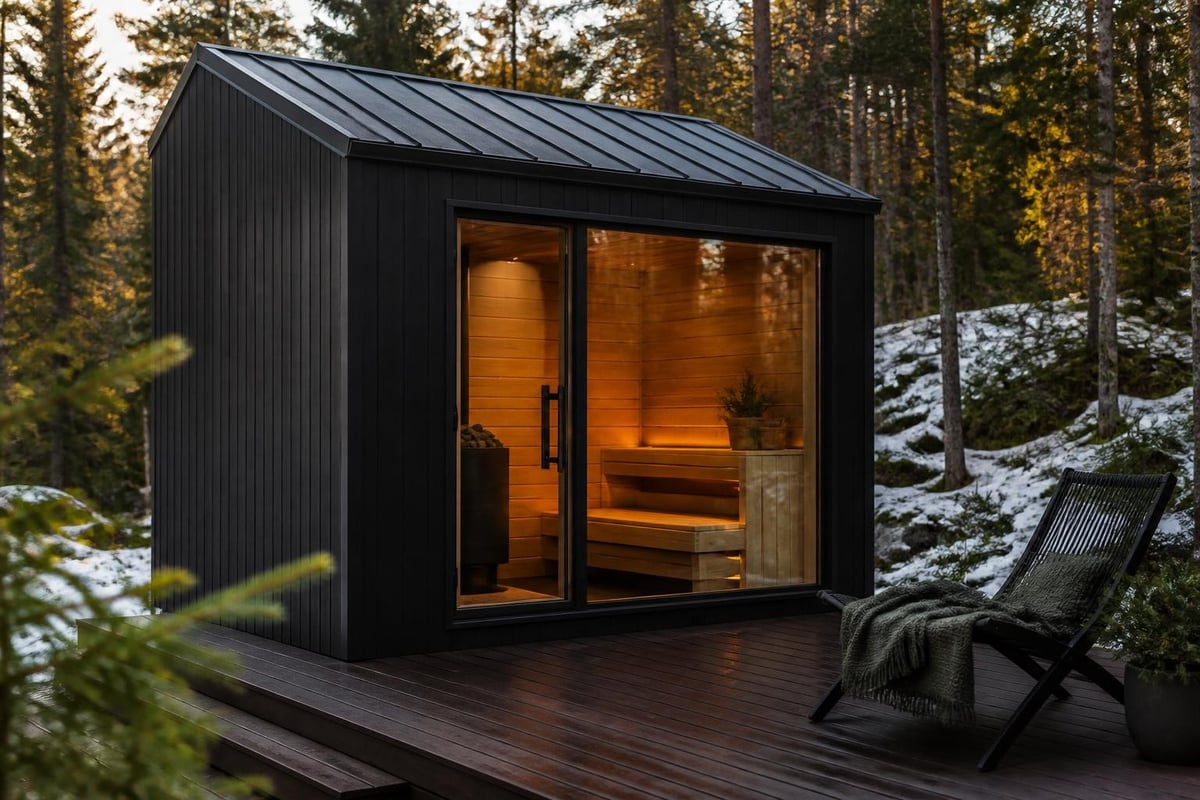
The term "hotbox sauna" describes a sauna designed to reach and maintain high temperatures quickly in a compact, well-insulated enclosure. Unlike sprawling traditional saunas, a hotbox sauna prioritizes efficient heat retention, minimal air leakage and a tight thermal envelope. This approach delivers authentic löyly (the Finnish word for sauna steam and heat) in a smaller footprint, making it a practical choice for North American homeowners who value both wellness and backyard space. Understanding how hotbox design affects heat performance, ventilation and long-term comfort helps you choose a sauna that fits your climate, lifestyle and wellness goals.
What Defines a Hotbox Sauna
A hotbox sauna is built to trap and hold heat efficiently. The design emphasizes thick insulated walls, minimal air gaps, and a compact interior volume that requires less energy to heat and maintain at 160–195°F. In Finnish sauna culture, the goal has always been to create a space where the heater, bench layout and ventilation work together to deliver consistent, comfortable heat and humidity.
Key characteristics include:
- Thick insulated walls (typically 46 mm or more) that resist heat loss
- Tight construction with weatherstripped doors and sealed joints
- Compact interior volume that heats quickly and recovers fast after door openings
- Controlled ventilation that supplies fresh air without wasting heat
The hotbox sauna concept applies to both indoor and outdoor saunas. Outdoor models require additional attention to insulation, roof design and weather resistance to perform year-round in cold climates.
Hotbox vs. Traditional Sauna Layout
Traditional Finnish saunas were often built as separate structures with larger changing rooms, cooling areas and generous interior space. A hotbox sauna condenses that experience into a more efficient footprint without sacrificing the quality of heat or the ritual of sauna bathing.
| Feature | Hotbox Sauna | Traditional Sauna |
|---|---|---|
| Interior volume | 4–7 m² | 8–15 m² |
| Wall thickness | 46–70 mm insulated | 30–50 mm, less insulation |
| Heat-up time | 20–35 minutes | 35–60 minutes |
| Energy efficiency | High | Moderate |
| Footprint | Compact | Larger |
This comparison shows why the hotbox sauna appeals to homeowners with limited backyard space, colder climates or a preference for faster heat-up and lower operating costs.
Heat Retention and Insulation in Hotbox Sauna Design
Heat retention starts with wall construction. A proper hotbox sauna uses solid wood walls (46 mm or thicker) or insulated panel systems that resist heat transfer. Thermowood, a heat-treated timber, is especially effective because it resists moisture, warping and decay while maintaining structural stability in high heat and humidity.
Thermowood advantages for hotbox saunas:
- Reduced moisture absorption compared to untreated pine
- Improved dimensional stability in outdoor conditions
- Enhanced durability in freeze-thaw cycles common in North America
- Natural resistance to mold and rot
Insulated roofs and floors further improve performance. Without a well-insulated roof, heat rises and escapes, forcing the heater to work harder. A proper floor foundation (either a concrete slab or insulated raised platform) prevents ground cold from sapping heat and reduces condensation risk.
Ventilation Without Sacrificing Efficiency
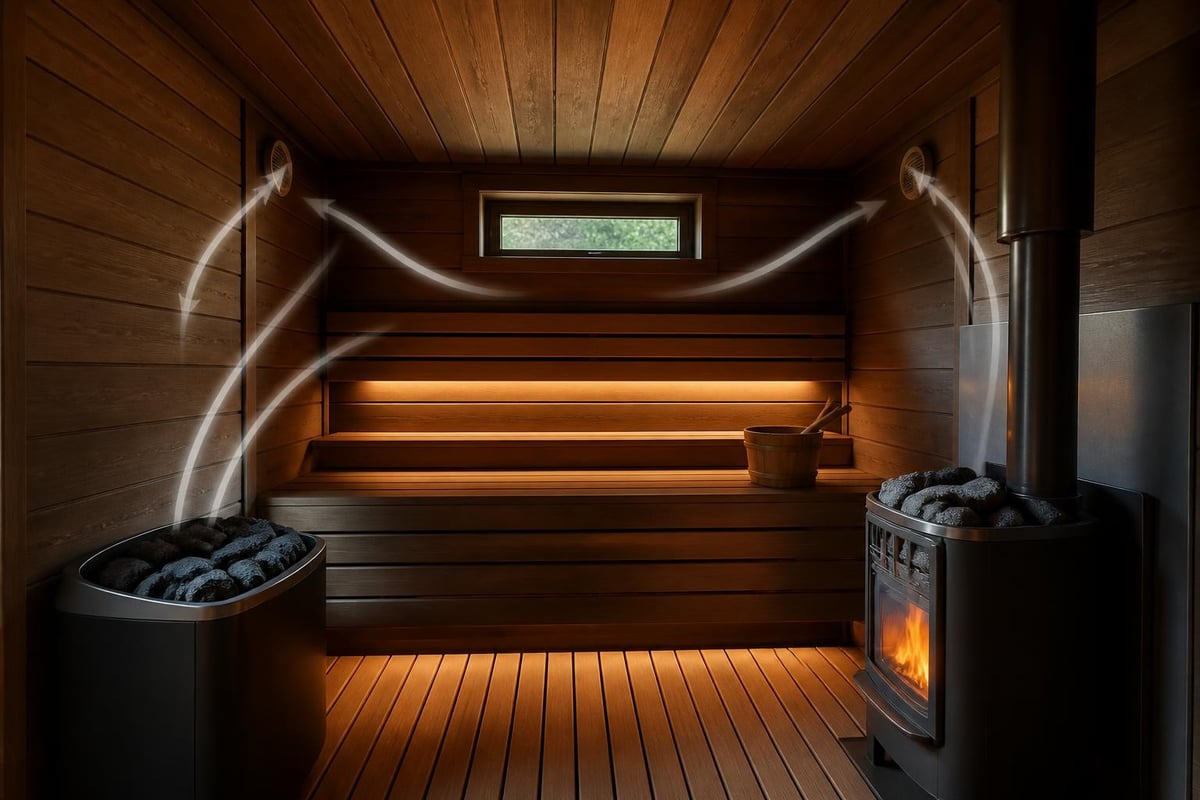
Ventilation is critical in any sauna, but especially in a hotbox sauna where air turnover must balance fresh oxygen with heat retention. Traditional Finnish saunas use passive vents near the floor (intake) and near the ceiling or behind the heater (exhaust) to create gentle convection without drafts.
A well-designed hotbox sauna includes:
- Low intake vent near or below the heater to supply fresh air
- High exhaust vent on the opposite wall to draw stale air out
- Adjustable covers to fine-tune airflow based on outside temperature and session length
The ASHRAE standards for indoor air quality provide useful guidance on ventilation rates, even for saunas. Proper airflow prevents CO₂ buildup and keeps the sauna comfortable during longer sessions, especially when using a wood-burning heater.
Choosing the Right Heater for a Hotbox Sauna
Heater choice directly affects how quickly your hotbox sauna reaches temperature, how evenly heat distributes, and how authentic the steam experience feels. North American buyers typically choose between electric and wood-burning heaters, each with distinct trade-offs.
Electric vs. Wood-Burning Heaters
| Heater Type | Heat-Up Time | Installation | Löyly Quality | Maintenance |
|---|---|---|---|---|
| Electric | 20–30 minutes | Simple (240V required) | Consistent, controllable | Minimal |
| Wood-burning | 30–45 minutes | Moderate (chimney required) | Traditional, dynamic | Regular ash removal |
Electric heaters suit buyers who want convenience, precise temperature control and minimal upkeep. They're ideal for smaller hotbox saunas (under 6 m²) and integrate easily with timers and smart controls. Wood-burning heaters deliver a more traditional experience with visible flame, the scent of wood smoke (outside) and the ritual of fire-tending, but they require chimney installation, clearances and regular cleaning.
When sizing a heater for your hotbox sauna, calculate interior volume (length × width × height in cubic meters) and choose a heater rated for that volume. Undersized heaters struggle to reach temperature; oversized heaters cycle on and off too quickly, reducing sauna rock heat and löyly quality.
Sauna Rocks and Steam
Authentic Finnish sauna heat relies on pouring water over heated sauna rocks to create steam. A proper hotbox sauna heater holds at least 20–30 kg of rocks (for electric models) or more (for wood stoves). Larger rock capacity means better steam, more consistent heat and a gentler experience.
Tips for better löyly in a hotbox sauna:
- Use volcanic or olivine diabase sauna rocks designed for high heat
- Stack rocks loosely to allow airflow and even heating
- Replace rocks every 1–2 years as they crack and deteriorate
- Pour small amounts of water (100–200 ml) at a time to avoid overwhelming the heater
The quality of steam in a hotbox sauna depends on heater temperature, rock mass and ventilation balance. A well-tuned system delivers soft, breathable heat that encourages longer, more comfortable sessions.
Hotbox Sauna Materials and Construction Quality
Material choice affects durability, heat retention, maintenance and long-term value. Thermowood has become the preferred material for premium outdoor hotbox saunas in North America because it performs reliably in cold winters, hot summers and high humidity.
Thermowood vs. Nordic Pine
Nordic Pine is lighter, more affordable and visually warm, but it requires more maintenance and is more susceptible to moisture damage over time. Thermowood, treated at 212°C, undergoes structural changes that reduce moisture absorption by up to 50% and improve dimensional stability.
When to choose Thermowood:
- Year-round outdoor use in cold or humid climates
- Minimal maintenance preference
- Long-term durability and resale value
When Nordic Pine works well:
- Milder climates with seasonal use
- Indoor saunas or covered outdoor installations
- Budget-conscious buyers who accept more upkeep
Bench material also matters. Black Alder and Aspen are both low-density hardwoods that stay cool to the touch even at high temperatures. Alder has a richer, darker color; Aspen is lighter and has a subtle grain. Both perform well in a hotbox sauna environment.
Wall Thickness and Thermal Performance
A 46 mm solid wood wall provides good insulation and structural integrity for most climates. Some manufacturers offer 70 mm walls or insulated panel systems for extreme cold or when installation near property lines requires enhanced fire resistance (consult NFPA guidelines for local code requirements).
Thicker walls reduce heat loss but increase material cost and weight. For most North American buyers, 46 mm Thermowood walls strike the right balance between performance, cost and ease of installation.
Installing a Hotbox Sauna in Your Backyard
Installation begins with site preparation. A level, stable foundation is essential for any outdoor sauna, and especially for a compact hotbox sauna where uneven settling can create gaps and air leaks.
Foundation options:
- Concrete slab: Best for permanent installations; excellent thermal mass and moisture barrier
- Paver base: Good drainage; easier to level; works in most climates
- Raised deck platform: Elevates sauna above snow and drainage issues; requires proper framing and insulation below
Once the foundation is ready, assembly follows the manufacturer's instructions. Most modern hotbox saunas arrive as prefabricated panels or log-style kits that fit together with tongue-and-groove joints. Two people can typically assemble a small hotbox sauna in 6–10 hours.
Electrical and Ventilation Rough-In
If you're installing an electric heater, plan for a dedicated 240V circuit run by a licensed electrician. Heater power requirements range from 4.5 kW (for saunas under 4 m²) to 9 kW (for larger models). Check local electrical codes and ensure the heater is installed with proper clearances from combustible materials.
Ventilation vents should be positioned before final wall assembly. Mark intake and exhaust vent locations based on heater placement and bench layout. Adjustable vent covers allow you to fine-tune airflow once the sauna is in use.
Size and Layout Considerations for Hotbox Saunas
Hotbox sauna sizing depends on how many people you want to accommodate, whether you prefer bench layout flexibility, and how much backyard space you can dedicate. A 2.3 × 2.3 m footprint comfortably seats 2–4 people; a 3.0 × 2.3 m model offers room for 4–6 and supports both straight and L-shaped bench configurations.
Typical hotbox sauna sizes:
| Footprint (m) | Interior Area | Capacity | Bench Layout |
|---|---|---|---|
| 2.0 × 2.0 | 4.0 m² | 2–3 people | Straight or L-shaped |
| 2.3 × 2.3 | 5.3 m² | 2–4 people | Straight or L-shaped |
| 3.0 × 2.3 | 6.9 m² | 4–6 people | Straight or L-shaped |
Larger models also allow for a dedicated changing area, which adds privacy and convenience. A 1 m changing room with a bench and coat hooks keeps wet towels and clothing out of the hot room and makes the sauna more comfortable in winter.
If backyard space is tight, a compact hotbox sauna like the RecoSauna Sisu Square Sauna 2.3 × 2.3 m in Thermowood delivers authentic sauna heat and premium materials without the larger footprint of a 3.0 m model. Its 46 mm Thermowood walls, three tinted front windows and straight Black Alder or Aspen bench create a balanced, efficient sauna suited to modern North American backyards.
Bench Layout and Comfort
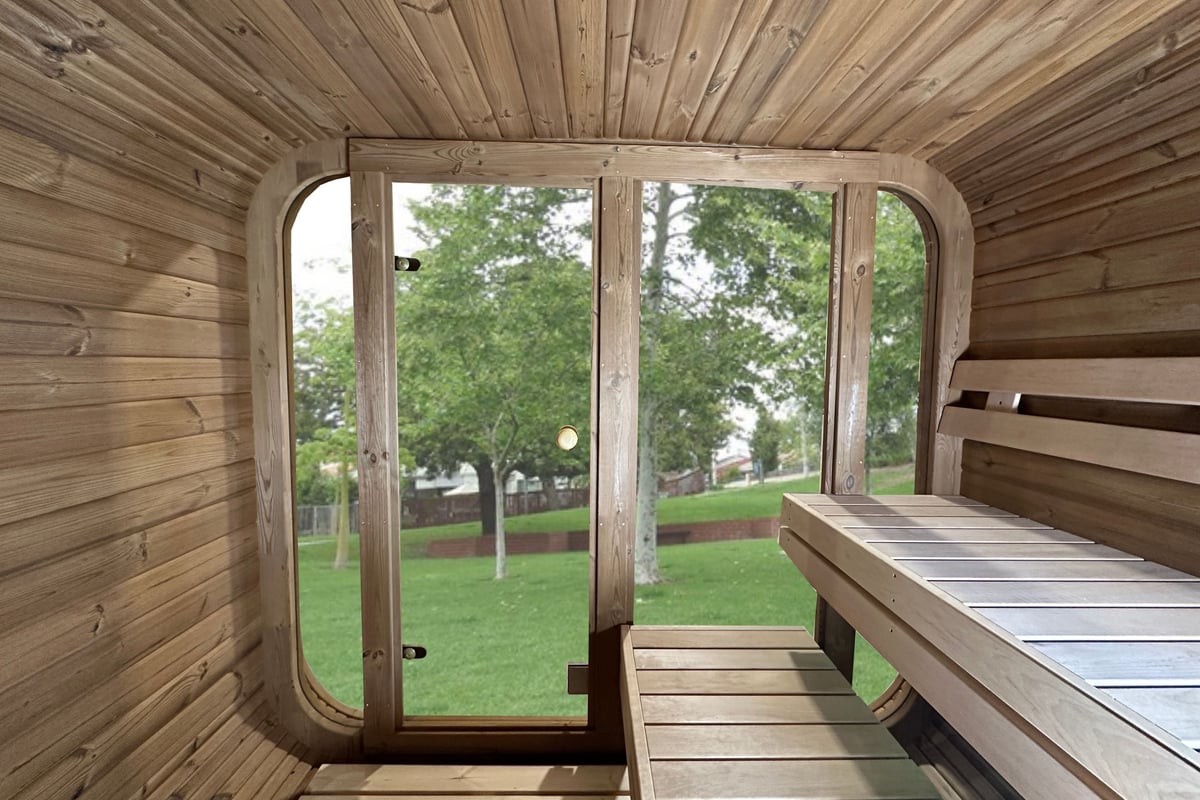
Bench height and depth affect comfort and heat exposure. In a hotbox sauna, the upper bench should sit 90–100 cm above the floor to place bathers in the hottest zone. A lower bench (45–50 cm) offers a cooler option for gradual warm-up or for children and guests who prefer moderate heat.
L-shaped benches maximize seating in compact layouts and create social angles. Straight benches offer simpler construction and a more traditional feel. Both work well; your choice depends on how you plan to use the sauna and how many people you expect to host.
Hotbox Sauna Performance in Cold Climates
Cold-climate performance separates a true hotbox sauna from a seasonal backyard accessory. Proper insulation, weather sealing and roof design determine whether your sauna heats efficiently at -20°C or struggles to reach temperature.
Winter performance checklist:
- Insulated roof with proper slope for snow and rain runoff
- Weatherstripped door with a tight seal and quality hinges
- Sealed wall joints and corner logs to prevent drafts
- Foundation insulation to prevent ground cold from sapping heat
Snow and ice buildup around the sauna door can interfere with sealing. Clear snow regularly and consider a small roof overhang or covered entry to protect the door and reduce ice formation.
Energy Efficiency and Operating Cost
A well-designed hotbox sauna uses less energy per session than a larger, poorly insulated sauna. Heat-up time and energy consumption depend on interior volume, insulation quality, heater size and outside temperature.
Estimated energy use (electric heater):
- Small hotbox sauna (4–5 m²): 4–6 kWh per session
- Medium hotbox sauna (6–7 m²): 6–9 kWh per session
At typical North American electricity rates (12–15¢ per kWh), a 90-minute sauna session costs $0.50–$1.50. Wood-burning heaters eliminate electricity cost but require firewood and more hands-on management.
Health and Wellness Benefits of Regular Sauna Use
Regular sauna bathing supports cardiovascular health, recovery and relaxation. A growing body of research links consistent sauna use to improved heart function, reduced inflammation and better stress management. A systematic review and meta-analysis of heat thermotherapy found that sauna sessions improve cardiovascular and cardiometabolic outcomes when practiced regularly over time.
Documented wellness benefits:
- Improved circulation and blood vessel function
- Reduced muscle soreness and faster recovery after exercise
- Enhanced relaxation and stress reduction
- Better sleep quality when sauna sessions precede bedtime
Athletes increasingly use saunas as part of recovery protocols, though evidence remains mixed. A narrative review of recovery strategies notes that sauna use shows promise for post-exercise recovery but recommends individualized approaches based on training load and personal response.
Combining Sauna and Cold Plunge
Alternating between sauna heat and cold-water immersion creates a contrast therapy routine that many users find invigorating. A hotbox sauna pairs naturally with a cold plunge tub or outdoor shower, creating a backyard wellness circuit that supports both relaxation and recovery.
The contrast between 180°F sauna heat and 50°F cold water triggers cardiovascular responses, improves circulation and enhances the overall sensory experience. Start with shorter cold exposures (30–60 seconds) and build tolerance gradually.
Maintenance and Longevity of a Hotbox Sauna
A well-built hotbox sauna requires minimal maintenance but benefits from regular attention. Thermowood naturally resists decay, but dirt, pollen and organic debris can accumulate on exterior surfaces and roof corners.
Seasonal maintenance tasks:
- Spring: Inspect roof, clean gutters (if present), check door seal and hinges
- Summer: Wash exterior walls with mild soap and water; inspect bench condition
- Fall: Clear leaves and debris from roof and around foundation; test heater and controls
- Winter: Remove snow buildup from roof and door area; ensure ventilation vents are clear
Interior maintenance focuses on the benches, floor and heater. Wipe benches occasionally with a damp cloth; avoid harsh chemicals that can damage wood or leave residue. Vacuum or sweep the floor to remove dirt and sauna rock fragments.
When to Replace Sauna Rocks and Heater Elements
Sauna rocks crack and disintegrate over time, reducing heat retention and steam quality. Inspect rocks every six months and replace any that show significant cracking or have broken into small pieces. Full replacement every 1–2 years keeps performance consistent.
Electric heater elements eventually wear out, though quality heaters last 5–10 years with normal use. If your sauna takes longer to heat or produces less steam, check element condition and consult the manufacturer's service guidelines.
Comparing Hotbox Sauna Options
When comparing hotbox sauna models, focus on wall material, insulation, bench layout, window placement and included features. Some models include changing rooms, terraces or upgraded glass doors; others prioritize compact size and lower cost.
Key comparison factors:
| Factor | Why It Matters |
|---|---|
| Wall material | Affects durability, heat retention and maintenance |
| Insulation | Determines winter performance and energy efficiency |
| Bench layout | Influences capacity, comfort and social use |
| Window placement | Balances natural light with privacy |
| Changing room | Adds convenience and keeps hot room cleaner |
A compact hotbox sauna without a changing room costs less and fits smaller yards, but you'll need to manage wet clothing and towels elsewhere. A larger model with a dedicated changing area offers more comfort and privacy, especially in winter or when hosting guests. For more details on pricing and what drives sauna costs, see our outdoor sauna cost guide.
Prefab vs. Custom Hotbox Saunas
Prefabricated hotbox saunas arrive as engineered kits with precision-cut panels, pre-hung doors and detailed assembly instructions. Custom-built saunas offer unlimited design flexibility but require professional carpentry, longer timelines and higher costs.
For most North American homeowners, a prefab hotbox sauna delivers the best combination of quality, speed and value. You can often customize bench material, window tinting and heater type within a standard footprint, achieving a personalized sauna without the complexity of a full custom build.
Permitting and Code Compliance
Outdoor sauna installation may require a building permit depending on your jurisdiction, sauna size and whether it includes electrical or plumbing connections. Most municipalities treat a hotbox sauna as an accessory structure subject to setback rules, foundation requirements and fire codes.
Typical permit considerations:
- Setback distance from property lines (often 1–3 meters)
- Electrical permit for 240V heater installation
- Foundation type and frost-depth requirements
- Fire-resistance rating if near combustible structures
Check with your local building department early in the planning process. Some areas exempt small structures under a certain size or value; others require full plan review and inspection. The NFPA publishes guidelines for sauna heater clearances and fire safety that inform local codes.
Why Hotbox Sauna Design Suits North American Buyers
The hotbox sauna concept aligns well with North American preferences for efficient, low-maintenance wellness equipment. It delivers authentic Finnish sauna heat in a compact, energy-efficient package that fits modern backyards and busy lifestyles.
North American buyers value clear product information, transparent pricing and long-term durability. A well-designed hotbox sauna built with Thermowood and backed by Finnish sauna expertise offers all three, creating confidence in the buying decision and satisfaction over years of use. To learn more about how traditional Finnish sauna design translates to North American backyards, explore our article on square outdoor saunas.
Long-Term Value and Resale
A quality outdoor sauna adds functional living space and wellness amenity to your property. Real estate agents in wellness-conscious markets report that homes with saunas, cold plunges or outdoor wellness features attract buyer interest and can command premium pricing.
A hotbox sauna built from durable materials with proper installation retains value and continues performing for decades. Thermowood's resistance to rot and decay means the structure maintains its appearance and function with minimal intervention, preserving both utility and resale appeal.
A hotbox sauna delivers efficient, authentic Finnish heat in a compact, well-insulated design suited to North American climates and lifestyles. Choosing the right size, material and heater ensures years of reliable performance and wellness benefits. Whether you're looking for a space-efficient two-person retreat or a larger family sauna with a changing room, RecoSauna offers premium Thermowood models designed for year-round outdoor use, backed by Finnish sauna expertise and clear guidance to help you make a confident choice.
Share:
Contrast Therapy Benefits: Sauna & Cold Plunge
Hot Saunas: Temperature Guide for North American Buyers