

When you're investing in a premium outdoor sauna for your North American backyard, material choice matters more than almost any other decision. A thermowood sauna brings together authentic Finnish building tradition with material science designed specifically for year-round outdoor performance. Thermowood is Nordic timber that has been thermally modified at high temperatures to fundamentally change its cellular structure, making it exceptionally stable, naturally rot-resistant and ideally suited to the temperature swings and moisture exposure that outdoor saunas face in climates from Minnesota winters to California coastal fog.
What Makes Thermowood Different from Ordinary Sauna Timber
Thermowood is not simply kiln-dried lumber. The thermal modification process subjects Nordic spruce or pine to temperatures between 180°C and 230°C in a controlled, oxygen-limited environment. This high-heat treatment permanently alters the wood's hemicellulose structure, reducing its ability to absorb moisture and dramatically improving dimensional stability.
The result is timber that behaves fundamentally differently than untreated wood:
- Moisture content drops from typical 10-12% to a stable 4-6%
- Water absorption decreases by 50-90% depending on treatment intensity
- Dimensional movement reduces by up to 60% across seasonal cycles
- Natural durability improves to Class 1-2 without chemical treatment
- Density decreases slightly, improving thermal insulation
This is not a surface coating or chemical preservative. The transformation happens throughout the entire board, meaning even cut ends maintain the same properties as finished faces.
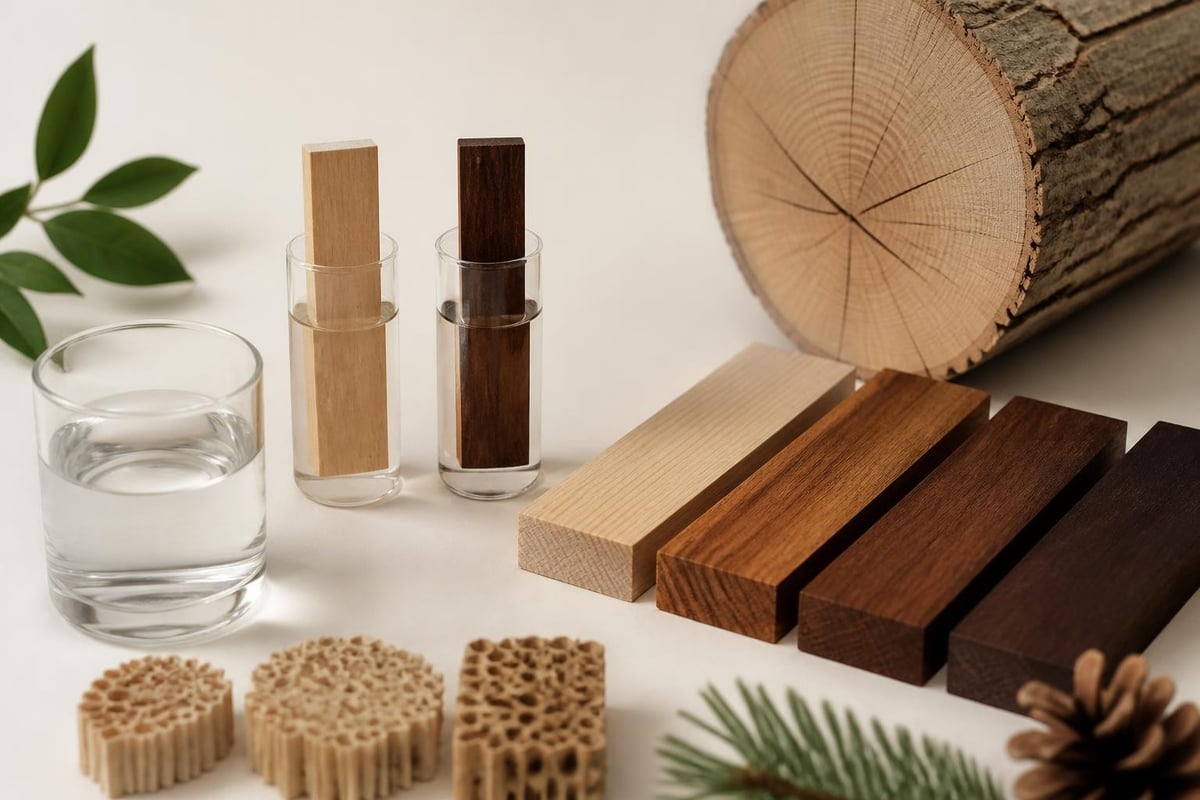
How Thermal Treatment Creates Permanent Stability
The physical changes that occur during thermal modification are irreversible. When hemicelluloses break down under sustained heat, the wood permanently loses much of its hygroscopic nature. The ThermoWood Handbook documents this transformation in detail, showing how different treatment temperatures (Thermo-S at 190°C vs Thermo-D at 212°C) produce different property profiles for specific applications.
For outdoor sauna construction, this means your walls, cladding and trim will expand and contract far less than untreated timber as humidity and temperature cycle through the seasons. Gaps stay consistent. Doors fit properly year-round. The entire structure maintains tighter tolerances.
Performance Benefits for Year-Round Outdoor Sauna Use
A thermowood sauna is engineered to handle the most challenging conditions outdoor saunas face: repeated heating and cooling cycles, exposure to rain and snow, direct sunlight, and the constant moisture vapor pressure from sauna bathing itself.
Weather Resistance and Longevity
Nordic spruce or pine treated to Thermo-D specification achieves durability class 1-2, meaning it performs comparably to naturally durable tropical hardwoods without any chemical treatment. Long-term field trials conducted by the USDA Forest Products Laboratory show thermally modified wood maintaining structural integrity in harsh outdoor exposure for decades.
For North American climates, this translates directly to performance:
| Climate Challenge | Thermowood Response | Untreated Timber Behavior |
|---|---|---|
| Winter freeze-thaw cycles | Minimal movement, stable joints | Significant expansion/contraction |
| Summer humidity swings | Low moisture uptake | Swelling, cupping, warping |
| UV exposure | Graying similar to cedar | Graying plus checking, splitting |
| Ground moisture | Natural decay resistance | Requires chemical treatment |
| Sauna humidity cycling | Dimensional stability | Seasonal gap changes |
The reduced moisture movement is particularly important for square outdoor sauna designs where precise joinery and tight corner construction are essential for heat retention and weather sealing.
Thermal Performance and Heat Retention
Thermowood's slightly lower density compared to untreated timber creates a marginal improvement in thermal insulation. More importantly, the dimensional stability maintains consistent wall assembly performance. When boards don't shrink and swell with seasonal changes, insulation layers stay in full contact, air gaps don't develop, and the entire sauna envelope performs as designed year after year.
This stability matters most during the heating phase. A well-built thermowood sauna reaches optimal bathing temperature efficiently and holds heat predictably, making both electric and wood-burning heater performance more consistent.
Material Properties That Matter for Sauna Construction
Understanding the specific characteristics of thermally modified timber helps you evaluate whether a thermowood sauna is the right choice for your project.
Dimensional Stability in Numbers
Standard Nordic pine or spruce can move 3-5% across the grain as moisture content changes from dry to saturated. Thermowood reduces this movement to 1-2%, a practical difference of 50-70% depending on treatment intensity.
What this means for a 3-meter wide sauna:
- Untreated timber: potential 30-50mm seasonal movement
- Thermowood: 10-20mm seasonal movement
- Practical result: tighter construction, better weather sealing, consistent door and window operation
Surface Characteristics and Appearance
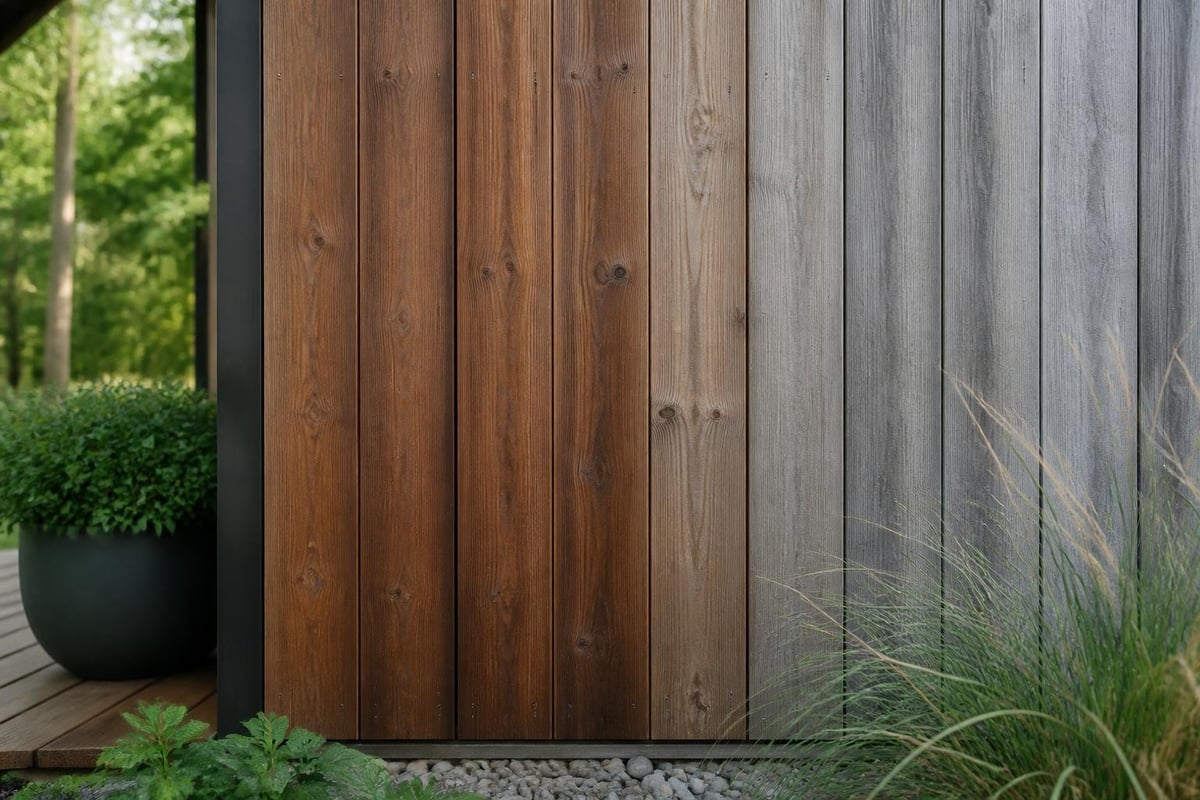
Fresh thermowood has a distinctive warm brown color ranging from light caramel to deep chocolate depending on treatment temperature and species. This color is not a stain - it's the result of sugar caramelization during thermal treatment.
Like all exterior wood, thermowood will gray naturally when exposed to UV and weather. The graying process is purely cosmetic and does not affect durability or performance. Many sauna owners prefer the natural silver-gray patina that develops, while others maintain the brown tones with periodic oil treatment.
The wood surface is smooth but slightly less resinous than untreated pine, giving it a dry, matte character that feels pleasant to the touch.
Thermowood vs Nordic Pine: Choosing the Right Material
Both thermowood and untreated Nordic pine are legitimate choices for premium outdoor sauna construction. The decision comes down to your climate, maintenance preferences and performance priorities.
Direct Comparison for Outdoor Sauna Buyers
| Factor | Thermowood | Nordic Pine |
|---|---|---|
| Initial appearance | Rich brown tones | Natural light amber |
| Weather resistance | Excellent (Class 1-2) | Good (requires treatment) |
| Dimensional stability | Exceptional | Moderate |
| Maintenance requirement | Minimal | Regular sealing recommended |
| Price premium | 15-25% higher | Base option |
| Best climate fit | Harsh winters, high humidity | Moderate, stable climates |
| Longevity untreated | 25+ years documented | 15-20 years with maintenance |
RecoSauna offers both material choices across the Square Sauna collection because each serves different buyer priorities. Nordic pine delivers authentic Scandinavian character at a lower entry cost, while thermowood provides maximum performance for challenging climates and buyers who value low-maintenance ownership.
When Thermowood Makes the Most Sense
Choose a thermowood sauna if you face any of these conditions:
- Harsh winter climates with significant freeze-thaw cycling
- High humidity regions where wood movement causes maintenance issues
- Limited maintenance time or preference for hands-off ownership
- Challenging sites with ground moisture, poor drainage or weather exposure
- Long-term investment mindset where upfront cost is less important than lifecycle value
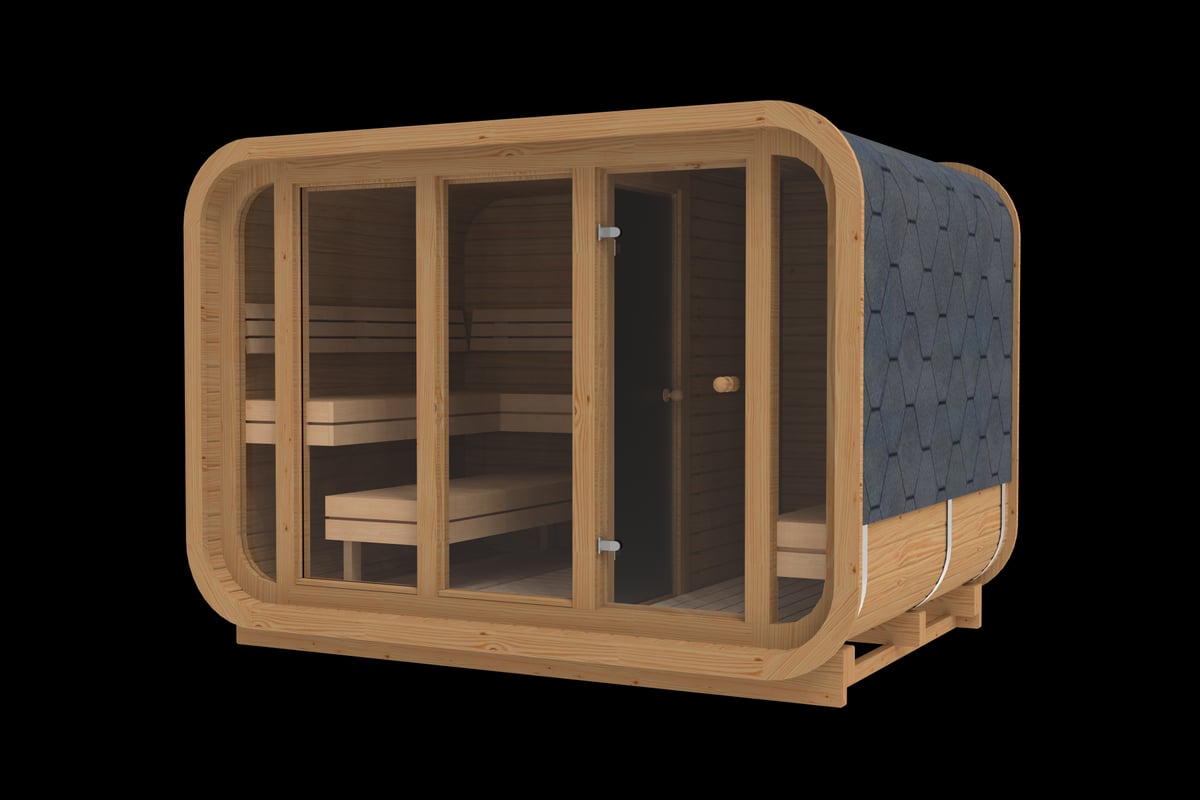
The RecoSauna Comfort Square Sauna 3.0 × 2.3 m in Thermowood demonstrates how premium material choice combines with thoughtful design - the dedicated changing room with internal glass door and four tinted windows creates a complete backyard retreat while the 46mm solid Thermowood walls ensure stable, low-maintenance performance for decades.
When Nordic Pine Is the Better Choice
Untreated Nordic pine remains the traditional choice for sauna construction throughout Finland, and it's an excellent material when properly maintained. Consider pine if:
- Budget is a primary concern and you're comfortable with periodic maintenance
- You prefer lighter, natural wood tones in your backyard aesthetic
- Your climate is moderate without extreme seasonal swings
- You enjoy the ritual of annual timber maintenance and preservation
Both materials deliver authentic Finnish sauna performance when built and maintained properly.
Installation Considerations for Thermowood Saunas
Thermowood's stability actually simplifies certain aspects of outdoor sauna installation, though some specific handling practices ensure optimal results.
Foundation and Site Preparation
Like any outdoor sauna, a thermowood sauna requires a solid, level foundation that provides drainage and prevents ground moisture contact. The most common approaches:
- Concrete paver foundation with gravel base and sand leveling layer
- Concrete slab with slight slope for drainage
- Timber frame platform on concrete piers or blocks
- Gravel pad with timber base rails (budget option for stable sites)
Thermowood's natural decay resistance provides additional insurance against moisture contact at the foundation interface, but proper drainage remains essential for any outdoor sauna structure.
Assembly and Fastening
Thermowood can be worked with standard tools but requires a few specific practices:
- Pre-drill all fastener holes to prevent splitting (the material is denser than untreated timber)
- Use stainless steel or coated fasteners to prevent corrosion staining
- Allow small expansion gaps despite thermowood's stability (recommended 1-2mm per meter)
- Avoid over-tightening which can cause surface compression
The wall systems in RecoSauna Square models arrive pre-cut and numbered for straightforward assembly. The 46mm solid timber construction creates inherently strong, stable walls that maintain their geometry through the assembly process.
Heater Selection and Capacity
Thermowood's thermal properties work well with both electric and wood-burning heaters. The key consideration is ensuring your heater capacity matches your sauna's interior volume, not the wall material itself.
For a typical 3.0 × 2.3 m sauna with 2.0 m ceiling height:
- Interior volume: approximately 14-16 m³ depending on bench and changing room configuration
- Electric heater requirement: 6-9 kW for efficient heating
- Wood-burning requirement: firebox sized for sustained output, not peak volume
The dimensional stability of thermowood means your sauna maintains consistent insulation value and air tightness, allowing your heater to perform efficiently year-round.
Maintenance and Long-Term Care
One of the primary appeals of a thermowood sauna is the minimal maintenance requirement compared to untreated timber construction.
What Maintenance Is Actually Required
Essential (always required):
- Keep exterior surfaces clean of debris, leaves and organic matter
- Ensure drainage remains clear around foundation perimeter
- Check and maintain door and window seals annually
- Inspect roof and flashings for weather tightness
Optional (appearance maintenance):
- Apply UV-protective oil annually to maintain brown tones
- Allow natural graying for zero-maintenance silver patina
- Clean exterior with soft brush and water if desired
- Touch up any surface damage or scratches with fine sanding
Never required:
- Chemical preservative treatment
- Rot prevention measures (beyond basic drainage)
- Structural reinforcement due to wood degradation
Indoor Air Quality and VOC Emissions
Some sauna buyers express concern about VOCs (volatile organic compounds) from thermally treated wood, particularly in high-heat sauna environments. Peer-reviewed research on thermally treated spruce shows that while fresh thermowood emits some organic compounds during initial heating, these emissions decrease rapidly and stabilize at low levels comparable to or below untreated wood within the first dozen sauna sessions.
The thermal modification process itself drives off many of the volatile compounds present in fresh timber, and the finished material contains no added chemicals, resins or preservatives that could off-gas during sauna use.
For interior benches and contact surfaces, traditional Finnish sauna practice recommends aspen, alder or heat-treated aspen regardless of wall material choice. RecoSauna follows this guidance, offering Black Alder or Aspen bench options across the Square Sauna collection.
Fire Safety and Building Code Considerations
Thermowood's behavior in fire conditions requires clear, fact-based explanation because the material's properties differ from both untreated timber and chemically treated lumber.
Reaction to Fire Performance
Thermal modification does not make wood fire-resistant or fire-retardant. Thermowood is combustible and will ignite when exposed to sufficient heat. However, the modification process does alter some fire-technical characteristics:
- Ignition temperature increases slightly compared to untreated wood
- Heat release rate during combustion can be higher due to reduced moisture content and some property changes
- Flame spread performance varies with treatment intensity
Research on fire-technical characteristics of thermally modified spruce shows these effects are temperature-dependent. Wood treated at higher temperatures (Thermo-D) shows different fire behavior than wood treated at lower temperatures (Thermo-S).
Safe Installation Practices
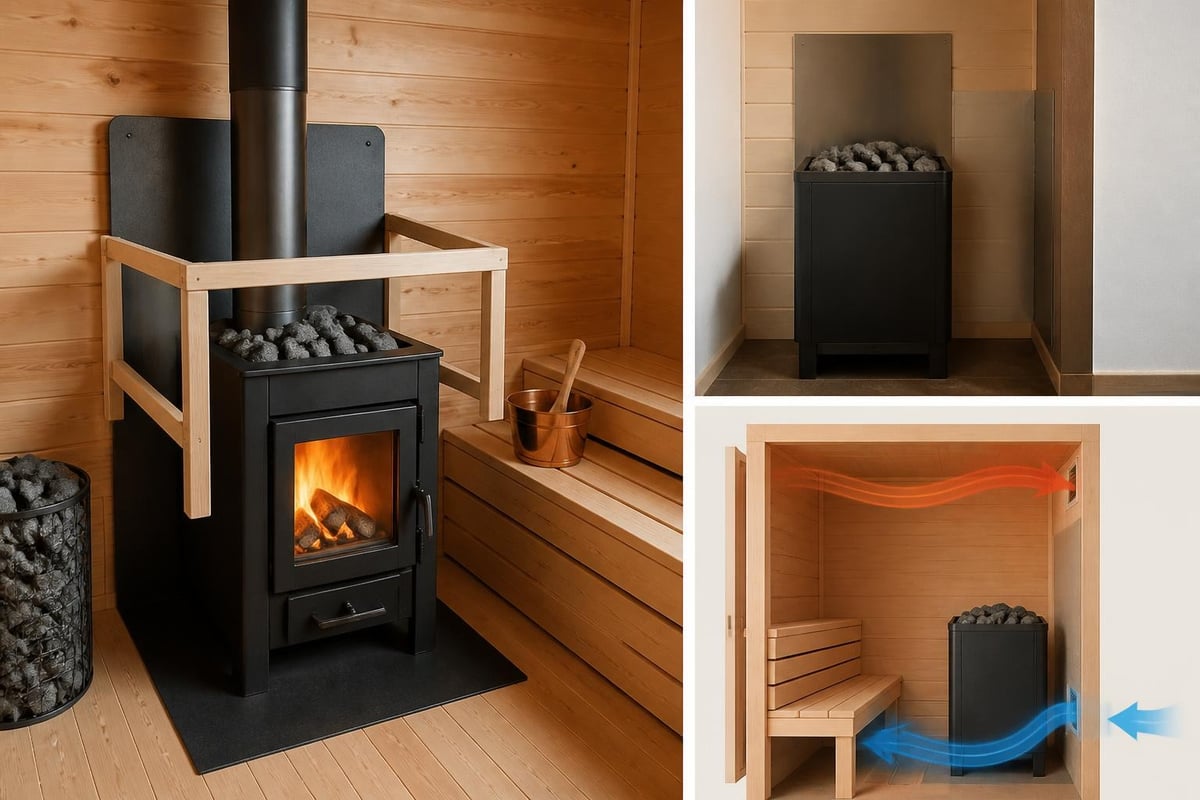
For outdoor sauna installation, follow the same fire safety clearances you would for any wood-burning or electric sauna:
- Maintain required clearances from heater to combustible walls (typically 100-150mm minimum)
- Install proper heat shielding behind and above wood-burning stoves
- Ensure adequate ventilation for both combustion air and heat dissipation
- Follow local building codes and manufacturer specifications for all heater installations
- Consider proximity to property lines, structures and vegetation
Safety incident analysis involving thermally modified wood emphasizes that proper installation practices, appropriate clearances and correct heater specification are far more important than material choice in preventing sauna-related fire incidents.
Electric sauna heaters designed for residential use include internal safeties and typically require less clearance than wood-burning units, making them simpler for homeowner installation while still delivering authentic Finnish sauna experience.
Why Finnish Builders Choose Thermowood for Export Saunas
Finnish sauna manufacturers building for North American export have increasingly standardized on thermowood for good practical reasons. The material's stability during ocean shipping, tolerance for varying installation conditions and predictable long-term performance reduce warranty claims and service issues.
When a sauna ships from Finland to a Calgary backyard or a coastal Maine property, it may experience dramatic humidity and temperature changes during transport and storage. Thermowood's low equilibrium moisture content and minimal dimensional response to these changes mean the sauna arrives on-site in the same condition it left the factory.
This stability continues through the installation and ownership lifecycle. A thermowood sauna installed in October in Minnesota will fit the same in April as it did at completion. Doors operate smoothly year-round. Windows seal properly through all seasons. The structure maintains its geometry without the periodic adjustments often needed with traditional timber construction.
For North American buyers, this translates to a more predictable ownership experience and fewer service calls or maintenance interventions over the life of the sauna.
Making Your Material Decision
Choosing between thermowood and Nordic pine for your outdoor sauna comes down to a clear cost-versus-performance equation. Thermowood delivers measurably better dimensional stability, natural weather resistance and lower maintenance requirements at a 15-25% material premium. For buyers in challenging climates or those who value hands-off ownership, that premium pays back through reduced lifetime maintenance cost and effort.
Nordic pine remains an authentic, proven choice when budget is constrained or when you appreciate the ritual of periodic timber maintenance. Either material, when properly constructed and installed, will deliver decades of reliable sauna performance.
The quality of construction, wall thickness, heater selection and foundation preparation matter more than material choice for overall sauna performance. A well-built pine sauna will outperform a poorly installed thermowood structure every time.
Focus first on getting the fundamentals right: proper sizing for your intended use, adequate heater capacity, solid foundation and weather-tight construction. Material choice is an important decision, but it's one factor within a larger system that must work together to deliver authentic Finnish sauna experience in your North American backyard.
Choosing the right material for your outdoor sauna is a decision that affects performance, maintenance and enjoyment for decades to come. Thermowood offers exceptional stability and durability for year-round North American climates, while Nordic pine provides authentic Finnish character at accessible cost. At RecoSauna, we bring Finnish expertise and transparent guidance to help you select the sauna, material and features that match your climate, space and lifestyle - whether that's a compact 2-person retreat or a spacious family sauna with changing room.
Share:
Outdoor Sauna with Changing Room: Guide (2026)
Outdoor Sauna Installation: Expert Planning & Setup Guide