

If you're searching for information about the sauna at Planet Fitness, you're likely trying to decide whether a gym membership offers enough sauna access to meet your wellness goals, or whether you'd benefit from a dedicated sauna at home. Planet Fitness locations often include saunas as part of their Black Card membership tier, but availability varies by location, and the experience differs significantly from the traditional Finnish sauna culture that many wellness-focused homeowners seek. Understanding what Planet Fitness offers, how it compares to authentic sauna bathing, and when a personal outdoor sauna makes more sense will help you make a confident choice aligned with your lifestyle, schedule and long-term health priorities.
What Type of Sauna Does Planet Fitness Offer?
The sauna at Planet Fitness is typically a dry sauna, sometimes referred to as a traditional sauna, though the term can be misleading. Most Planet Fitness saunas use electric heaters to warm a small, tile or wood-paneled room to temperatures around 160–180°F (71–82°C). These spaces are designed for quick post-workout relaxation rather than the deliberate, ritual-focused experience central to Finnish sauna culture.
Key characteristics include:
- Dry heat with low humidity unless water is added to rocks (not always available)
- Shared space with other gym members, often crowded during peak hours
- Preset temperature controls managed by facility staff
- Limited session time based on gym policies and other users waiting
The sauna at Planet Fitness is not available at every location. Black Card members (the premium tier) typically have access where saunas exist, but standard memberships do not include sauna privileges. Before committing to a membership for sauna access, verify that your local Planet Fitness has a functioning sauna and confirm its hours of operation.
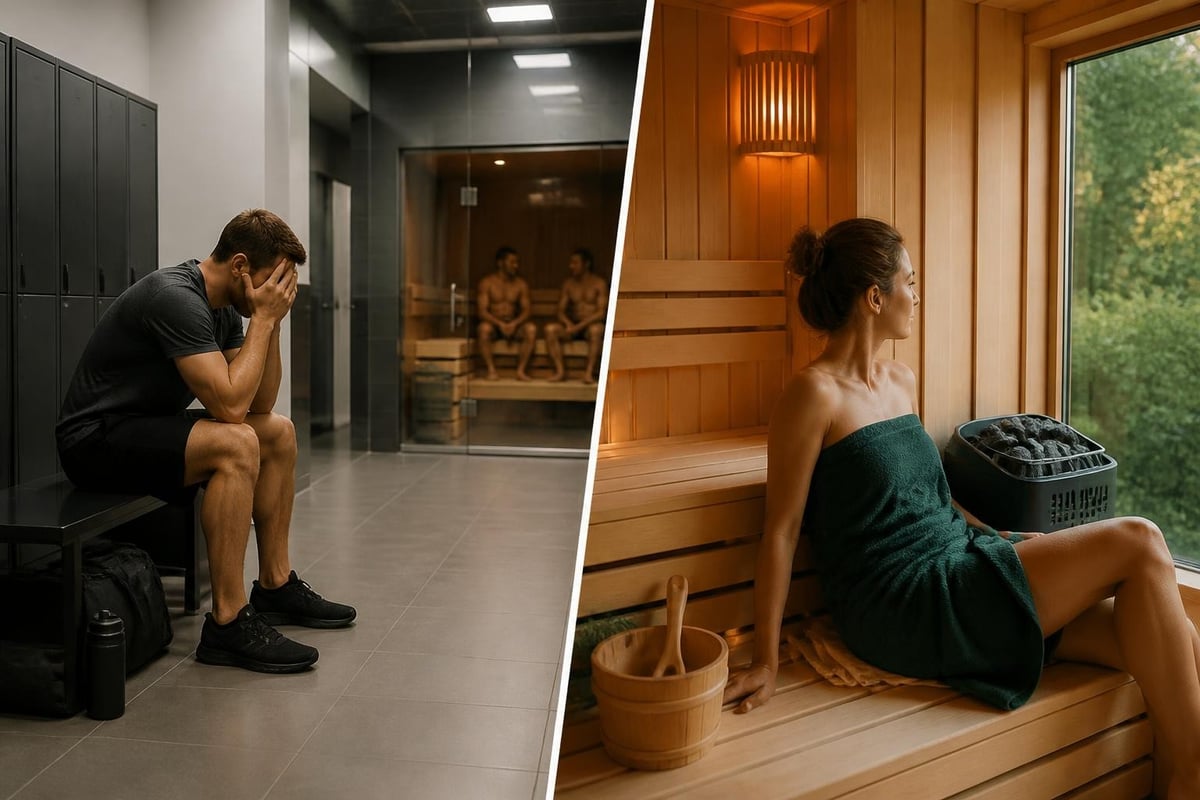
Differences Between Gym Saunas and Authentic Finnish Saunas
A Planet Fitness sauna is a convenient amenity, but it's fundamentally different from a traditional Finnish sauna designed for authentic löyly (the steam created when water meets hot stones). In Finland, sauna bathing is a private, contemplative practice involving multiple rounds of heat, cooling, and hydration over an hour or more. You control the temperature, the humidity, the timing, and the environment.
Gym saunas prioritize throughput and simplicity. You'll rarely find the deep bench seating, proper ventilation, high-quality wood interiors, or the option to throw water on stones to create steam. The experience is typically a 10–15 minute add-on after a workout rather than a dedicated wellness session.
| Feature | Planet Fitness Sauna | Authentic Outdoor Finnish Sauna |
|---|---|---|
| Privacy | Shared, public space | Private, household use |
| Temperature control | Preset by facility | Full user control, 150–195°F |
| Löyly (steam) | Rare or unavailable | Central to the experience |
| Session length | 10–20 min (often rushed) | 30–90+ min, multiple rounds |
| Availability | Gym hours, membership required | 24/7 access at home |
| Ambiance | Fluorescent-lit gym setting | Backyard retreat, Scandinavian design |
If your goal is occasional post-exercise heat exposure, a gym sauna works. But if you're drawn to sauna bathing as a restorative practice, the limitations become frustrating quickly.
Health Benefits: Does a Gym Sauna Deliver the Same Results?
The cardiovascular and stress-relief benefits of sauna bathing are well documented in medical research, but those benefits are dose-dependent. Studies showing reduced risk of cardiovascular events and improved mental health typically involve sauna sessions of 15–20 minutes at high temperatures, repeated 4–7 times per week. That frequency and duration are difficult to achieve when the sauna at Planet Fitness is a 15-minute drive away, open only during staffed hours, and often occupied.
Proven sauna health benefits include:
- Lower blood pressure and improved circulation
- Reduced inflammation and muscle soreness
- Enhanced mood and stress reduction
- Improved sleep quality when done in the evening
- Cardiovascular conditioning similar to moderate exercise
These outcomes depend on consistency and quality. A rushed 10-minute session in a crowded gym sauna offers some benefit, but falls short of the protocol followed in the Finnish studies. Harvard Health recommends regular sauna use for heart health, noting that higher frequency correlates with better outcomes.
Can You Build a Real Sauna Routine at a Gym?
Building a sustainable sauna routine around gym access is challenging. You're limited by:
- Gym hours (often closing by 9–10 PM)
- Travel time and the friction of getting in the car
- Crowding during peak evening and weekend hours
- Hygiene concerns in shared facilities
- Lack of control over temperature, timing, and ambiance
Many people start with good intentions, but gym sauna use drops off after the first few months. The logistical barriers and lack of privacy undermine the ritual that makes sauna bathing restorative rather than just another task.

When Does It Make Sense to Choose a Home Outdoor Sauna?
If you're considering the sauna at Planet Fitness primarily for convenience, it's worth comparing the total cost and experience over time. A Black Card membership runs roughly $25–30/month, or $300–360/year. Over five years, that's $1,500–1,800 with no ownership, no privacy, and no ability to sauna on your own schedule.
A quality outdoor sauna becomes the better investment when:
- You want daily or near-daily access without driving
- You value privacy and a calm, intentional environment
- You're serious about year-round wellness routines (sauna + cold plunge)
- You want authentic löyly with full control over heat and steam
- Your household includes multiple people who will use the sauna regularly
- You're investing in your property and long-term lifestyle
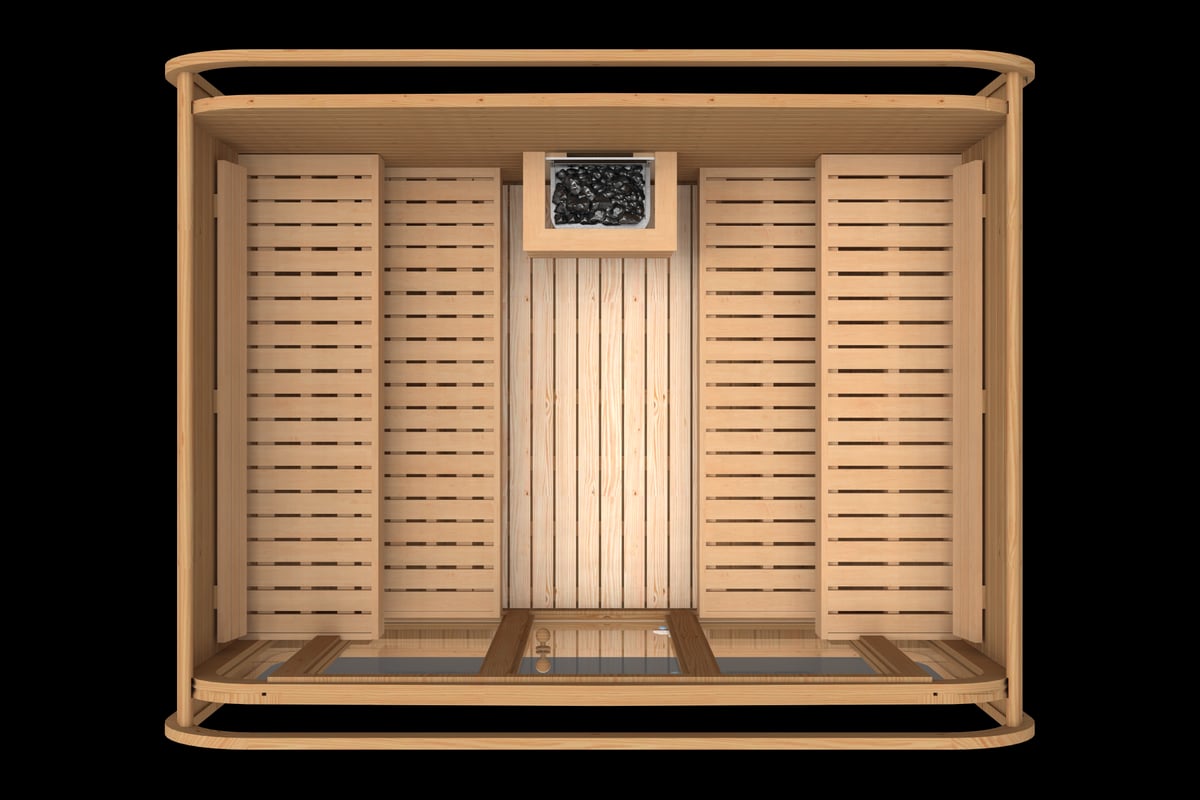
For buyers who fit this profile, a premium outdoor sauna like the RecoSauna Sisu Square Sauna 3.0 × 2.3 m in Thermowood offers room for 2–6 people, four tinted windows for natural light, solid 46 mm Thermowood construction for year-round durability, and full control over your sauna environment. The spacious layout supports authentic Finnish sauna sessions with friends and family, and the Thermowood exterior requires no staining or chemical treatment, even in harsh North American winters.
Comparing Costs: Membership vs. Ownership
Let's look at the financial trade-off clearly:
| Item | Year 1 | Year 3 | Year 5 | Year 10 |
|---|---|---|---|---|
| Planet Fitness Black Card ($27/mo) | $324 | $972 | $1,620 | $3,240 |
| Home outdoor sauna (one-time investment) | Cost of sauna | Same | Same | Same |
| Ownership equity | Asset in your backyard | Appreciating value | Appreciating value | Significant asset |
| Convenience | Drive + gym hours | Same | Same | Same |
| Privacy | Shared | Shared | Shared | Shared |
A well-built outdoor sauna adds value to your property, eliminates the friction of gym visits, and becomes more economical within 3–5 years depending on the model. More importantly, it removes the barriers that prevent consistent use.
Electric vs. Infrared: What's the Difference?
Some Planet Fitness locations offer infrared saunas instead of traditional dry saunas. Infrared saunas use panels that emit infrared light to heat your body directly rather than heating the air. They operate at lower temperatures (120–150°F) and are popular for their perceived gentleness and lower energy use.
Research comparing infrared and traditional saunas shows both offer cardiovascular benefits, but traditional Finnish saunas have a much larger evidence base. Infrared saunas skip the high-heat, high-humidity löyly experience that defines authentic sauna culture. Many sauna enthusiasts find infrared warmth less satisfying and less effective for deep muscle relaxation.
Key differences:
- Traditional sauna: High heat (160–195°F), optional steam, evidence-backed cardiovascular benefits
- Infrared sauna: Lower heat (120–150°F), dry only, less research, marketed for detox claims
If the sauna at Planet Fitness near you is infrared, you're getting a different experience entirely. It may feel pleasant, but it won't replicate the heat stress and steam that drive the health outcomes documented in Finnish studies.
Wood-Burning vs. Electric Heaters for Home Saunas
When you own a sauna, you choose the heat source. Electric heaters are the most common choice in North America for their ease of use, fast heat-up, and compatibility with residential electrical systems (usually 240V, 30–60 amp). They're ideal for buyers who want a turn-key experience with digital controls.
Wood-burning heaters offer a more traditional experience with visible flame, the aroma of burning wood, and no electrical operating cost. They take longer to heat and require chimney installation and ongoing wood supply, but many sauna purists prefer the ambiance and the ritual of tending the fire.
Both heater types work with RecoSauna outdoor models. Your choice depends on your property, electrical capacity, and how much you value the traditional wood-fire experience.
Building a Sauna Routine That Actually Lasts
Consistency is the foundation of sauna's health benefits. A sauna at Planet Fitness can support a routine, but only if you're disciplined about going several times per week despite the logistical friction. For most people, that discipline fades.
A home sauna removes the barriers:
- No commute - Walk out your back door, no excuses
- No time restrictions - Sauna at 6 AM or 10 PM, your choice
- No strangers - Invite friends or enjoy solitude
- No waiting - Your sauna is always available
- Full control - Dial in your ideal temperature, add steam as you like
These factors don't just make sauna more pleasant; they make it sustainable. When sauna is effortless and private, it becomes part of your daily wind-down rather than a weekend chore.
Pairing Sauna with Cold Exposure
One of the most powerful wellness practices emerging in North America is the sauna-cold plunge cycle: alternating between high heat and cold immersion to stimulate circulation, reduce inflammation, and build mental resilience. This practice is central to Scandinavian and Russian banya traditions.
You can't do this at Planet Fitness. A home outdoor sauna lets you step directly from heat into a cold shower, garden hose, or dedicated cold plunge tub. The contrast is invigorating and amplifies many of sauna's benefits. Homeowners serious about this routine often install both a sauna and a cold plunge in the same backyard zone.

What to Consider Before Buying a Home Sauna
If the limitations of the sauna at Planet Fitness have you thinking about ownership, take time to clarify your priorities. Not all outdoor saunas are equal, and the right choice depends on your household size, climate, yard space, and aesthetic preferences.
Key buying considerations:
- Capacity: 2-person, 4-person, or 6-person layouts
- Material: Thermowood (no maintenance, rot-resistant) vs. Nordic Pine (lighter color, requires staining)
- Foundation: Concrete pad, gravel base, or deck installation
- Heater: Electric (turn-key, fast) or wood-burning (traditional, no electrical cost)
- Insulation: Essential for year-round use in cold climates
- Extras: Changing room, terrace, tinted windows, interior lighting
Thermowood is the premium choice for outdoor saunas in North America. It's thermally modified for dimensional stability, naturally resistant to rot and insects, and requires no staining or chemical treatment. It holds up through freeze-thaw cycles and high humidity, making it ideal for Canadian winters and Pacific Northwest rain.
Sizing Your Sauna for Your Household
A common mistake is buying too small. A 2-person sauna feels cramped for couples who want to lie down or bring friends. If you have kids or plan to host, a 4–6 person model offers much more flexibility without a large footprint increase.
General sizing guide:
- 2 people, sitting only: 1.5 × 1.5 m minimum
- 2–4 people, sitting and occasional lying: 2.3 × 2.3 m
- 4–6 people, sitting and lying comfortably: 3.0 × 2.3 m or larger
- Add a changing room if you want a dedicated space to undress, store towels, and transition in privacy
Larger saunas take slightly longer to heat but offer vastly better usability. Plan for the sauna you'll use in five years, not just today.
Installation and Permitting for Backyard Saunas
Outdoor saunas in the USA and Canada are typically classified as accessory structures. Permitting requirements vary by municipality, but most areas require a permit for permanent structures over a certain size (often 100–120 sq ft). Your sauna will also need to meet setback requirements (distance from property lines), electrical code (for electric heaters), and potentially HOA design guidelines.
Typical installation steps:
- Check local codes and apply for permits if required
- Prepare foundation (level concrete pad, paver base, or deck)
- Assemble sauna (panel-based kits go up in 1–2 days with 2–3 people)
- Install heater (hire a licensed electrician for electric; certified installer for wood chimney)
- Inspect and approve (final inspection if permitted)
Panel-based sauna kits from RecoSauna arrive as pre-cut wall, roof, and floor sections with detailed instructions. Assembly is straightforward for anyone comfortable with basic carpentry. Electrical work must be done by a licensed professional to code.
Why Homeowners Choose Outdoor Saunas Over Gym Access
After years of hearing from buyers who tried gym saunas first, a pattern emerges. The sauna at Planet Fitness works as an introduction, a way to test whether you enjoy heat bathing. But it rarely satisfies buyers who fall in love with the practice.
What drives the shift to ownership:
- Frustration with crowding and lack of privacy
- Desire for a dedicated wellness space at home
- Commitment to daily or near-daily sauna sessions
- Interest in authentic Finnish sauna culture and löyly
- Family or social use (partners, kids, hosting friends)
- Integration with cold plunge, meditation, or evening wind-down routines
Owning a sauna transforms it from an occasional treat into a foundational wellness habit. It's the difference between wanting to sauna and actually doing it, week after week, year after year.
The sauna at Planet Fitness offers a low-commitment introduction to heat bathing, but it's no substitute for the privacy, control, and consistency of a home outdoor sauna if you're serious about building a long-term wellness routine. When you're ready to make that step, RecoSauna brings authentic Finnish sauna culture and premium Thermowood construction to backyards across the USA and Canada, helping you choose the right size, layout, and heater for your home, climate, and lifestyle.
Share:
Portable Steam Room: What Buyers Should Know in 2026
Alchemy Saunas: What North American Buyers Should Know