

When North American homeowners research outdoor saunas, they typically encounter Finnish and German traditions. Both are authentic and health-focused, yet they reflect different cultural priorities. German saunas emphasize public wellness facilities, strict hygiene protocols, elaborate Aufguss ceremonies and social bathing culture. Finnish saunas, by contrast, center on private family use, simple rituals and the personal pursuit of löyly in a quiet, often rustic setting. Understanding these differences helps you choose the right sauna design, experience and installation for your backyard.
What Defines German Sauna Culture
German saunas developed primarily in commercial wellness centers, spas and thermal baths during the 20th century. The tradition emphasizes communal wellness in public facilities where strangers gather, relax and follow shared etiquette. This public character shapes every aspect of the experience.
Public Facilities and Social Bathing
Most Germans experience sauna in mixed-gender, textile-free public facilities. These venues range from urban day spas to large thermal complexes with multiple sauna cabins, steam rooms, cold plunges and relaxation lounges. The social aspect is central: you share the space, follow unwritten rules and participate in scheduled Aufguss sessions.
Key features of German public sauna facilities include:
- Multiple sauna cabins with varying temperatures (60–100°C) and humidity levels
- Scheduled Aufguss sessions led by trained attendants who pour scented water over hot stones
- Strict hygiene rules including mandatory showers before entry and sitting on personal towels
- Designated relaxation areas with loungers, reading materials and quiet zones
- Integration with pools, steam baths and cold-water features in comprehensive wellness complexes
This structure contrasts with the Finnish home sauna, which is typically a private wooden cabin in a backyard or cottage, used by family and close friends without formal schedules or attendants.
Aufguss: The Signature German Ritual
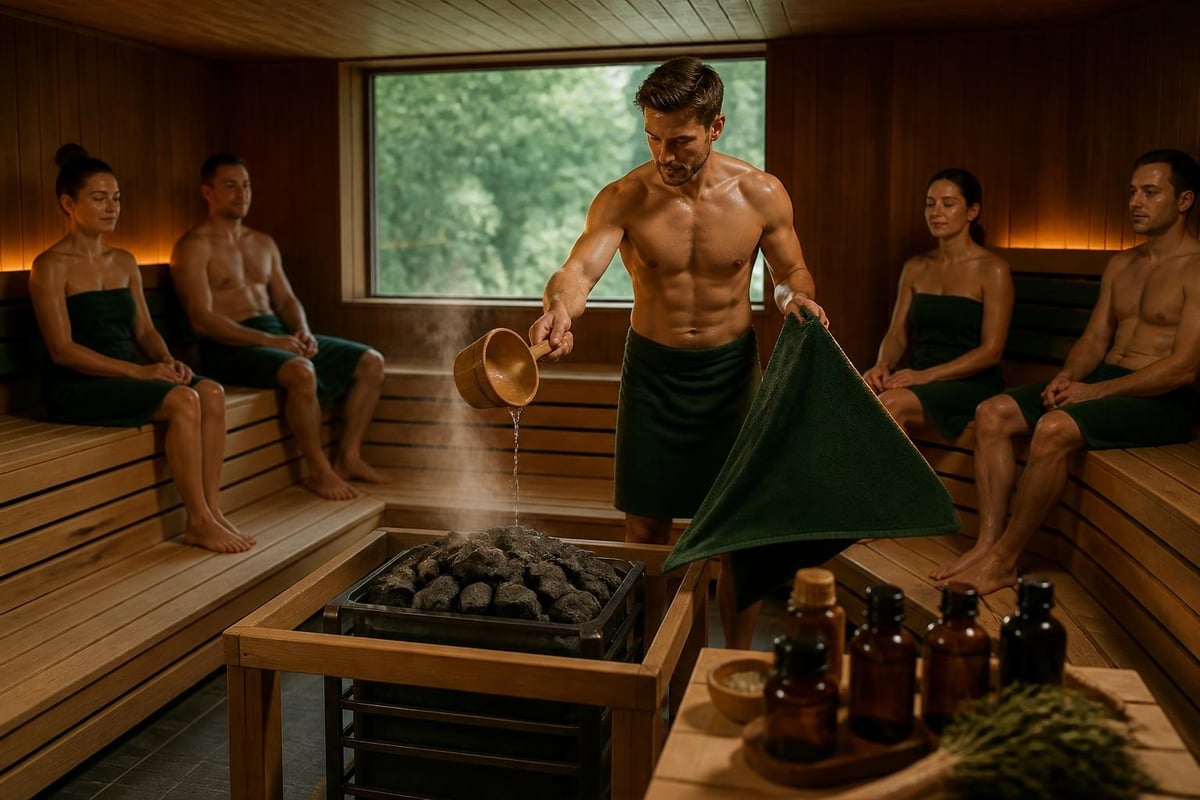
The Aufguss ceremony is the most distinctive element of German sauna culture. An attendant pours water infused with essential oils onto the sauna stove, then uses a towel to distribute the steam and heat throughout the cabin. The ritual combines theater, aromatherapy and controlled heat waves.
Professional Aufguss attendants follow standardized guidelines. Sessions last 10–15 minutes, often with music, choreographed towel movements and thematic scents (eucalyptus, mint, honey). Participants remain seated and quiet, focusing on the heat and breathing.
In Finnish sauna culture, löyly (the steam from water thrown on stones) is a personal, spontaneous act. Each bather controls their own experience, adding water when they wish. There is no performance or schedule.
German Sauna Design and Construction Standards
German saunas in public facilities prioritize durability, hygiene and regulatory compliance. Design choices reflect commercial operation rather than residential aesthetics.
Material and Ventilation Requirements
Public sauna cabins in Germany use heat-treated softwoods (similar to Thermowood), stainless-steel fixtures and non-porous surfaces for easy cleaning. Ventilation systems are engineered to meet strict air-exchange rates, and hygiene protocols govern every surface and procedure.
Benches are often made from Abachi wood (a tropical hardwood that stays cool to the touch) or heat-treated Nordic spruce. Floors are tiled or slatted wood over drains. Glass doors and windows are common, both for safety and to create a more open, less claustrophobic feeling in communal spaces.
For North American homeowners, these commercial features are less relevant. Your backyard sauna will be a private structure, so you can choose materials and layout based on personal preference, aesthetics and climate rather than public-facility regulations.
| Feature | German Public Sauna | Finnish Home Sauna |
|---|---|---|
| Primary use | Communal, public facilities | Private, family use |
| Bench material | Abachi, heat-treated spruce | Alder, aspen, heat-treated pine |
| Ventilation | Mechanical, regulated air exchange | Natural or simple mechanical |
| Hygiene focus | Strict protocols, professional cleaning | Personal responsibility, simple maintenance |
| Ritual | Scheduled Aufguss with attendant | Spontaneous löyly, personal control |
Electric Heaters and Temperature Control
German public saunas almost exclusively use electric heaters with precise thermostats and timers. This allows facility operators to maintain consistent temperatures, schedule sessions and comply with safety standards. Wood-burning heaters are rare in German commercial settings due to emissions, insurance and operational complexity.
For a backyard sauna in North America, you have the freedom to choose. Electric heaters offer convenience, quick heat-up and simple controls. Wood-burning heaters deliver authentic character, off-grid capability and the ritual of fire-tending. Your choice depends on your property, local codes and personal preference, not on German public-facility norms.
Health Benefits and Medical Perspective
Both German and Finnish sauna traditions emphasize wellness, cardiovascular health and stress relief. The scientific evidence for regular sauna bathing is strong, with studies showing improved heart function, reduced blood pressure and lower risk of cardiovascular events.
German medical literature often highlights therapeutic applications of sauna, positioning it as part of a broader wellness regimen that includes hydrotherapy, massage and nutrition. Finnish research, by contrast, focuses on population-level health outcomes from habitual home sauna use over decades.
Harvard Medical School notes that regular sauna sessions (4–7 times per week) correlate with better cardiovascular outcomes, though individual responses vary. Both German and Finnish protocols achieve these benefits; the key is consistency, proper hydration and listening to your body.
Practical Considerations for North American Buyers
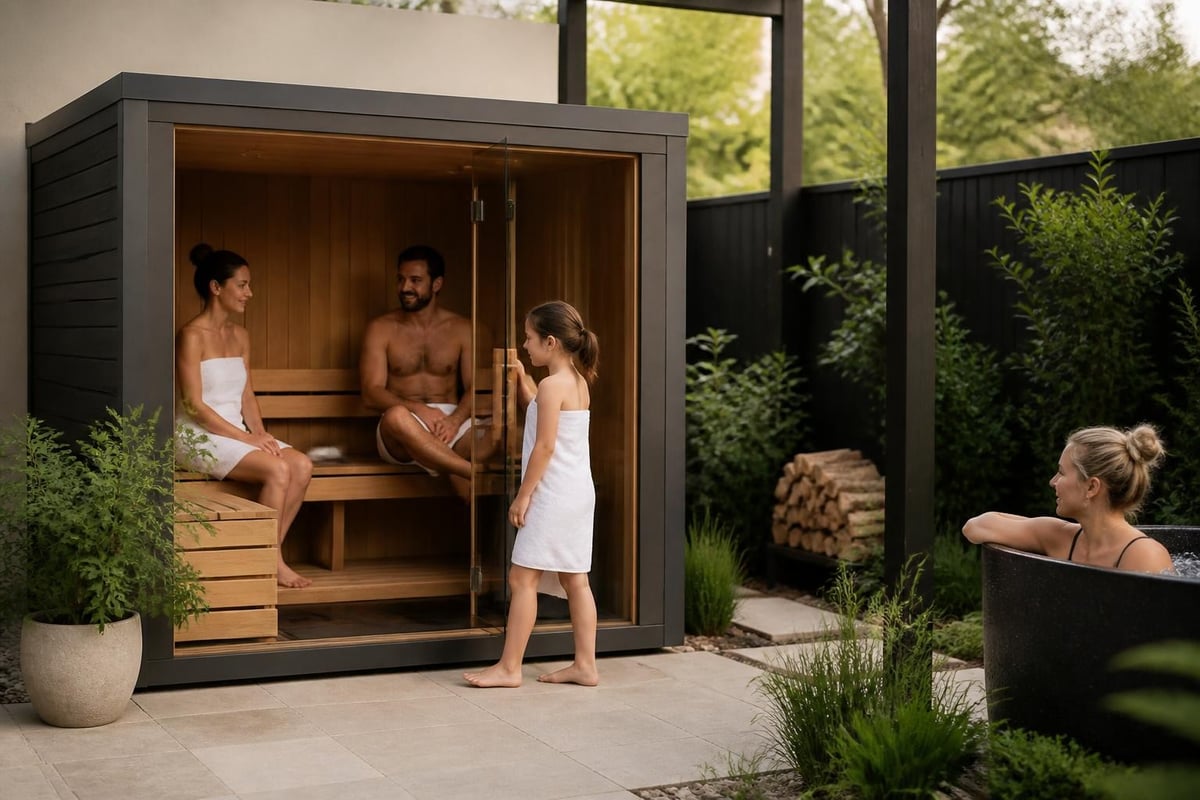
When you install an outdoor sauna in your backyard, you are creating a private wellness space. You control the temperature, duration, frequency and social dynamics. Whether you adopt German-style scheduled sessions or Finnish-style spontaneous bathing is entirely up to you.
Most North American homeowners prefer:
- Flexible, unscheduled use rather than formal rituals
- Family and close-friend bathing rather than communal public sessions
- Simple maintenance without professional cleaning protocols
- Integration with cold plunge or outdoor shower for contrast therapy
- Natural materials and Scandinavian design that complement modern outdoor living spaces
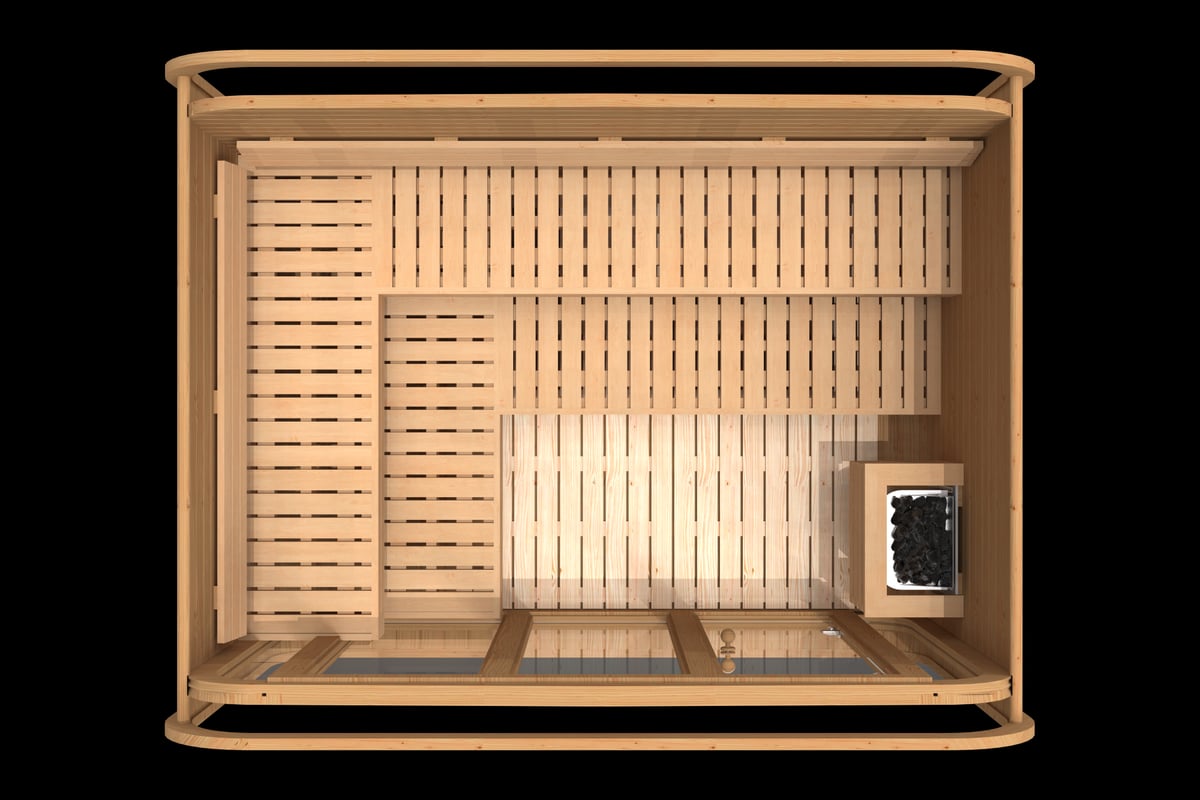
The RecoSauna Sisu Square Sauna 3.0 × 2.3 m in Thermowood offers a spacious layout for family use, durable heat-treated construction and the flexibility to choose electric or wood-burning heat. Its clean Scandinavian design fits naturally into North American backyards while supporting an authentic sauna experience without the rigid structure of German public facilities.
Etiquette and Cultural Norms in German Saunas
German sauna etiquette is well-documented and strictly observed in public facilities. DER SPIEGEL's practical sauna guide outlines the most important rules, many of which feel formal to North Americans.
The Unwritten Rules
- Shower thoroughly before entering any sauna cabin.
- Always bring a large towel and sit or lie completely on it (no skin contact with wood).
- Enter and exit quickly to minimize heat loss; close the door firmly.
- Do not speak during Aufguss sessions; applaud quietly at the end.
- Leave the sauna if you feel dizzy or uncomfortable; there is no shame in exiting early.
- Cool down gradually with fresh air, then cold water; never reverse the order.
- Hydrate between rounds with water or diluted juice, not during the heat session.
These norms exist because German saunas are shared public spaces. In your backyard sauna, you set your own rules. You can talk, adjust the temperature mid-session, wear a towel or bathing suit if you prefer, and take breaks whenever you like.
Textile-Free Tradition
German public saunas are nearly always textile-free. Clothing and swimwear are considered unhygienic because they trap sweat and bacteria. This cultural norm is non-negotiable in German facilities but often surprises North American visitors.
In North America, backyard sauna culture is more relaxed. Many homeowners use their sauna nude, following Finnish tradition, while others wear towels or swimwear. Your private sauna is your space; comfort and hygiene are what matter.
Choosing Between German and Finnish Approaches for Your Backyard
When you invest in an outdoor sauna, you are not choosing between Germany and Finland as nations. You are choosing between public, ritual-focused wellness and private, flexible home bathing. Most North American buyers prefer the latter.
Key Decision Factors
| Factor | German-Inspired | Finnish-Inspired |
|---|---|---|
| Use pattern | Scheduled sessions, social groups | Spontaneous, daily family use |
| Ritual | Formal Aufguss, essential oils | Simple löyly, personal control |
| Design | Modern, glass elements, commercial feel | Traditional or modern, natural wood, cozy |
| Heater | Electric only | Electric or wood-burning |
| Atmosphere | Structured, performance-oriented | Relaxed, meditative |
If you enjoy structure, essential oils and theatrical steam sessions, you can bring German Aufguss elements into your backyard sauna. Simply heat your sauna to 80–90°C, prepare a bowl of water with essential oil (eucalyptus, birch or mint), pour it slowly over the stones and use a towel or fan to distribute the steam. You create the ritual on your own terms.
If you prefer quiet, simple heat and the freedom to bathe whenever the mood strikes, a Finnish-style approach fits better. Heat the sauna, throw water on the stones, sit quietly and let the heat work on your body. No schedule, no performance, no rules beyond your own comfort.
Installation and Climate Considerations
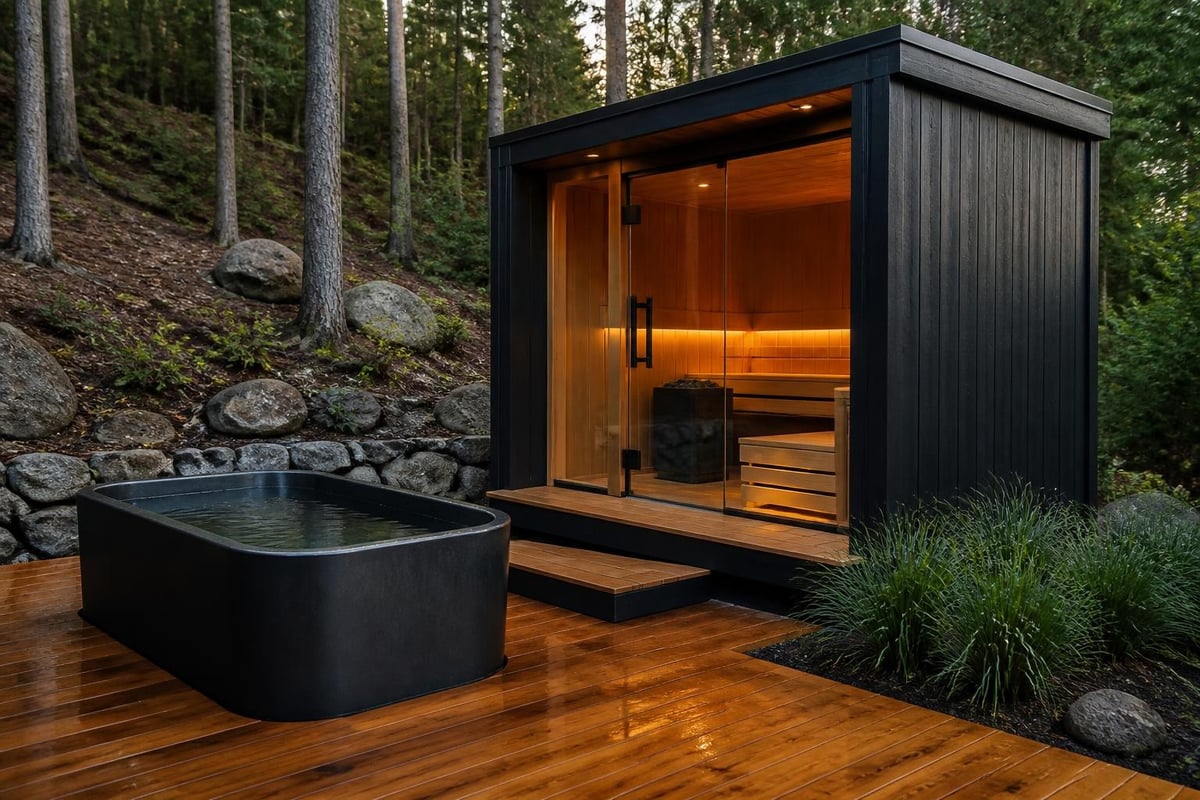
Both German and Finnish saunas operate in cold climates. German facilities are indoors, while Finnish home saunas are often outdoors. For North American homeowners, outdoor installation is practical and attractive, especially in northern states and Canada.
Your outdoor sauna needs:
- Solid foundation (gravel, pavers, concrete slab or deck)
- Weather-resistant materials such as Thermowood or heat-treated softwood
- Proper drainage for snowmelt and rain runoff
- Electrical service for an electric heater, or clearance and ventilation for wood-burning
- Proximity to cold-water source for rinsing or plunge after sauna
German sauna operators rely on comprehensive hygiene guidance for public facilities, but your backyard sauna requires only basic cleaning: wipe benches after use, sweep the floor and ventilate the cabin. Thermowood and heat-treated materials resist mold and decay naturally, even in damp climates.
Health, Safety and Practical Tips
Whether you follow German or Finnish sauna traditions, the health benefits and safety principles are the same. Research on passive heat therapies confirms that regular sauna bathing improves cardiovascular function, supports immune health and reduces stress markers.
Safe Bathing Practices
- Start with moderate heat (70–80°C) and shorter sessions (10–15 minutes) if you are new to sauna.
- Hydrate before and after each session; avoid alcohol before or during sauna.
- Cool down gradually: step outside for fresh air, then rinse with cool water or take a cold plunge.
- Listen to your body: exit immediately if you feel faint, nauseous or uncomfortable.
- Consult your doctor if you have cardiovascular conditions, are pregnant or take medications that affect circulation.
German public facilities post these guidelines prominently and staff monitor bathers. In your backyard, you are responsible for your own safety and that of your family. Common sense and moderation prevent nearly all sauna-related issues.
Maintenance and Longevity
German public saunas undergo daily professional cleaning and periodic deep sanitation. Your backyard sauna needs far less:
- Wipe benches with a damp cloth after each use
- Sweep or vacuum the floor weekly
- Ventilate the cabin by leaving the door open after bathing
- Inspect heater stones annually; replace cracked or crumbling stones
- Check door seals and hinges for wear; adjust as needed
Thermowood and Nordic pine saunas age gracefully outdoors with minimal intervention. Rain and snow wash the exterior; UV exposure causes light silvering, which many owners find attractive. If you prefer to maintain the original color, apply a wood-treatment oil every 2–3 years.
German Saunas vs. North American Backyard Sauna Ownership
The term "german saunas" often refers to the public wellness tradition, not a specific product or construction style available for home buyers. If you are shopping for an outdoor sauna in the USA or Canada, you will find saunas built by Finnish, Canadian, American and other manufacturers, but rarely German-made residential models. The cultural influence of german saunas lies in the ritual, etiquette and health perspective, not in the hardware.
When you visit RecoSauna's collection, you are choosing Finnish-designed saunas built for private home use. You can adopt German Aufguss rituals, Finnish löyly simplicity or your own hybrid approach. The sauna itself is a neutral tool; the experience you create is yours.
Bringing Aufguss Home
If you enjoy the theatrical, aromatic Aufguss sessions common in german saunas, you can recreate the experience in your backyard:
- Heat your sauna to 80–90°C (higher than typical Finnish bathing).
- Prepare a water-and-oil mixture: 5–10 drops of essential oil per liter of water.
- Pour slowly over the sauna stones in small increments.
- Use a towel to wave and distribute the steam toward bathers.
- Focus on breathing and the aromatic heat; complete the session in 10–15 minutes.
This approach requires an electric or wood-burning heater capable of higher temperatures and a generous stone mass to absorb the water without cooling excessively. Finnish-style saunas handle Aufguss perfectly well; the key is heater capacity and stone volume, not the sauna's cultural origin.
German saunas offer a rich tradition of communal wellness, structured ritual and aromatic Aufguss sessions that complement the quieter, private Finnish approach. For North American homeowners, the best choice is a flexible outdoor sauna that supports your preferred bathing style, fits your backyard and climate, and grows with your wellness routine over the years. RecoSauna brings authentic Finnish sauna design, premium Thermowood construction and practical guidance to help you build the right backyard wellness space, whether you favor German structure, Finnish simplicity, or your own personal ritual.
Share:
Best Sauna for Your Backyard: 2026 Buyer's Guide
Portable Steam Room: What Buyers Should Know in 2026