

Choosing the best sauna for your backyard means matching construction, size, materials and heating to your climate, space and how you'll actually use it. There's no single winner. A compact two-person model works perfectly for daily solo sessions, while a family of four needs bench space and headroom. Thermowood stands up to harsh winters better than untreated pine, but costs more. Electric heaters simplify installation; wood-burning heaters deliver traditional löyly but require venting and fuel. The best sauna is the one that fits your yard, budget and routine without compromise on the fundamentals: solid construction, proper ventilation and authentic heat.
What Makes a Sauna the Best Choice
The best sauna combines durable materials, appropriate size and reliable heating for your climate and household. Start with wall construction. Premium outdoor saunas use 46 mm or thicker solid wood walls for insulation and longevity. Thermowood (heat-treated Nordic softwood) resists moisture, warping and decay better than untreated pine, making it the strongest choice for year-round North American climates with freeze-thaw cycles and high humidity.
Next, evaluate size and capacity honestly. A 2.3 × 2.3 m footprint suits two to four people comfortably with a straight bench. A 3.0 × 2.3 m layout adds the option for L-shaped benches, more headroom on the upper tier and space for guests. Don't oversize. A smaller sauna heats faster, uses less energy and feels more intimate.
Key factors for the best sauna:
- Wall thickness: 46 mm minimum for outdoor use
- Material: Thermowood for durability, Nordic Pine for lighter aesthetics
- Bench layout: Straight for compact spaces, L-shaped for groups
- Heater compatibility: Electric for simplicity, wood-burning for traditional experience
- Foundation requirements: Level gravel, concrete pads or treated wood frames
- Climate readiness: Insulated roof, tinted glass, weather-resistant exterior
Heating matters as much as construction. Electric sauna heaters require a 240V circuit and professional installation, but they're clean, fast and thermostat-controlled. Wood-burning heaters need a chimney, clearances and a steady supply of dry firewood, but they produce the rolling, layered heat Finns call löyly. Both work. The best sauna heater is the one you'll use consistently.
Comparing Outdoor Sauna Models and Materials
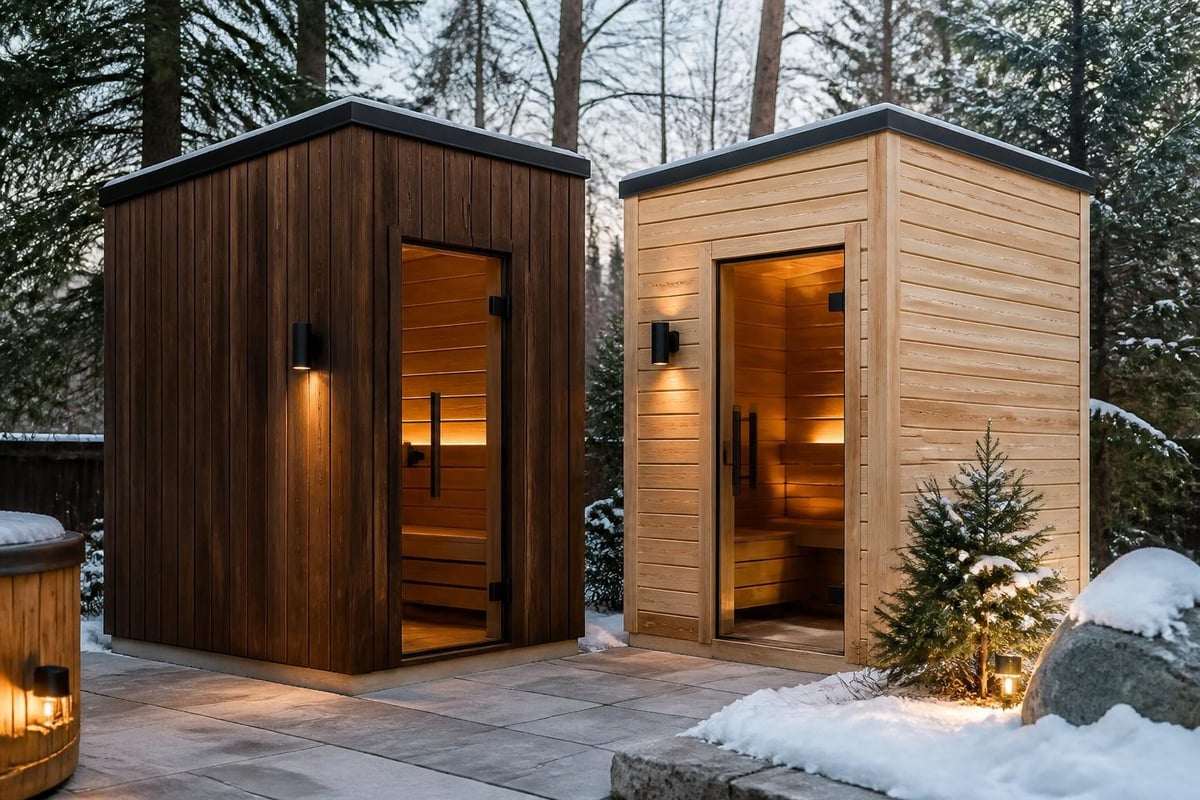
Not all outdoor saunas are built the same. The best sauna for a Chicago winter differs from the best choice for a mild Portland climate. Construction quality, material selection and design details separate premium models from budget kits.
| Feature | Thermowood Model | Nordic Pine Model | Insulated Modern Sauna |
|---|---|---|---|
| Wall material | Heat-treated softwood | Untreated Nordic Pine | Thermowood + insulation |
| Climate suitability | All climates, harsh winters | Mild to moderate climates | Year-round, extreme cold |
| Maintenance | Minimal, no treatment needed | Annual oil or stain | Minimal exterior, check seals |
| Aesthetic | Dark honey to gray patina | Light blonde, ages to silver | Contemporary, glazed elements |
| Price range | Mid to high | Entry to mid | High to premium |
| Longevity | 20+ years | 15–20 years with care | 20+ years |
Thermowood models are the best sauna choice for climates with snow, ice and temperature swings. The heat-treatment process (superheating wood in controlled conditions) removes moisture, stabilizes dimensions and naturally resists rot without chemicals. Thermowood darkens over time to a rich gray-brown patina that many buyers prefer for its Nordic character.
Nordic Pine models offer a lighter, golden appearance and cost less upfront. Pine is a proven sauna material in Finland, but it requires more attention in North America. Expect to apply exterior wood oil or UV-protective stain every 12–18 months if your sauna sits in direct sun or experiences high moisture. Pine works well in covered locations or temperate zones.
Insulated modern saunas add thermal layers in walls, floors and roofs for maximum efficiency and year-round comfort. These models often feature larger glazed sections, terraces and contemporary design. They're the best sauna for buyers who prioritize aesthetics, energy savings and extended-season use in extreme climates. Insulated construction keeps heat loss low, reduces energy costs and maintains comfort in subzero conditions. According to research on sauna energy efficiency and operating strategies, insulation significantly reduces heat-up time and running costs in residential settings.
Sauna Size and Layout: Matching Capacity to Space
Size directly affects comfort, cost and heating efficiency. The best sauna size depends on how many people use it at once, your available yard space and whether you want a changing area.
Compact Two-Person Saunas
A 2.3 × 2.3 m footprint or smaller serves one to two people comfortably. These models fit tight urban backyards, patios and side yards. Bench layouts are typically straight with two tiers. Heating is fast (20–30 minutes to reach 80°C), and energy use stays low. Compact saunas work best for solo daily routines, couples and buyers who value quick sessions over social gatherings.
Mid-Size Four to Six-Person Saunas
A 3.0 × 2.3 m layout is the sweet spot for families and regular entertaining. You gain enough width for an L-shaped bench, which lets four to six people sit without crowding. The extra space also accommodates a larger heater for faster recovery after throwing water on the stones. Mid-size saunas balance footprint, cost and usability. They're the best sauna for households that host friends, rotate family members through sessions or want flexibility for growth.
Saunas with Changing Rooms
Adding a 1.0 m changing room to a 3.0 × 2.3 m sauna creates a complete backyard retreat. The changing area provides privacy, storage for towels and robes, and a buffer zone that keeps outdoor elements out of the hot room. The RecoSauna Comfort Square Sauna 3.0 × 2.3 m – Thermowood includes a dedicated changing room with a bench and an internal glass door, adding convenience and comfort before and after each session.
Changing rooms work especially well in climates with snow, rain or high winds. They extend the usable season by giving you a dry, sheltered place to transition. The trade-off: slightly larger footprint and higher cost.
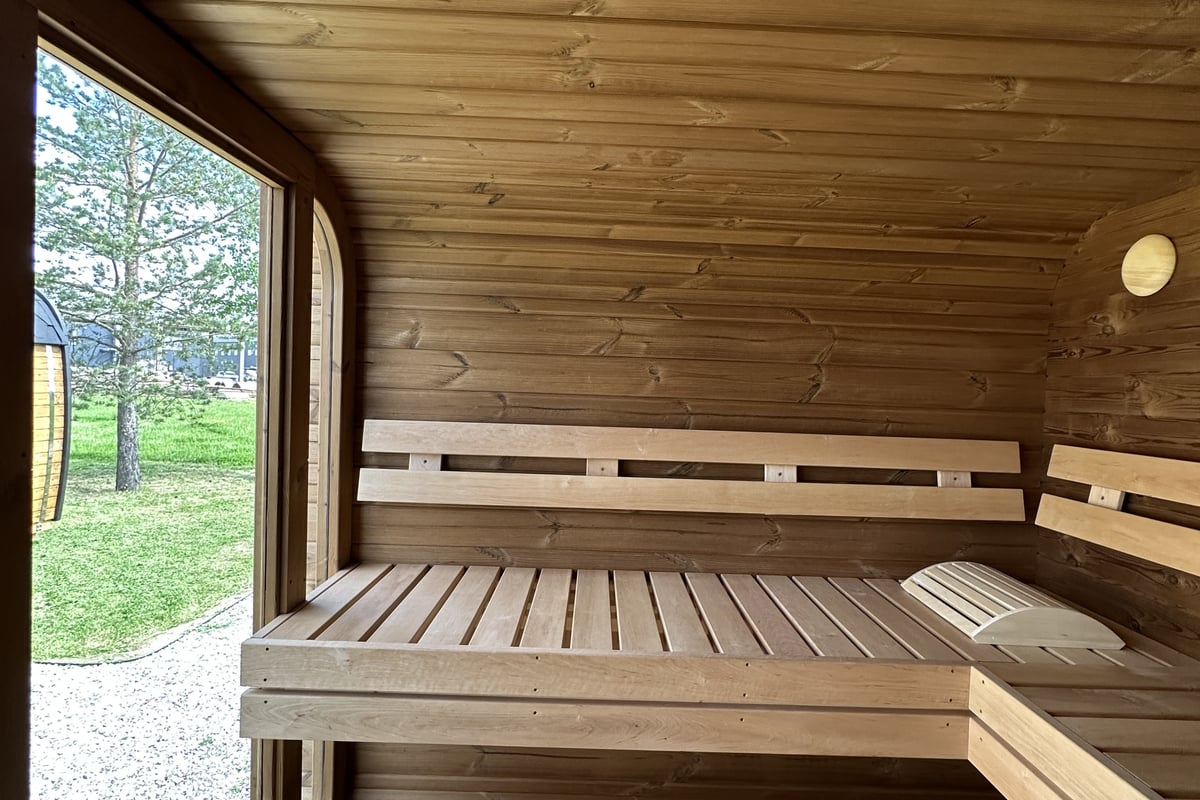
Common sauna dimensions and uses:
- Mini (under 2.0 × 2.0 m): Solo or couple, tight urban lots
- Compact (2.3 × 2.3 m): Two to four people, standard residential yards
- Mid-size (3.0 × 2.3 m): Four to six people, families, entertaining
- With changing room (4.0+ m total length): Privacy, storage, year-round comfort
Electric vs Wood-Burning Heaters: Which Is Best
Heater choice shapes your sauna experience, installation complexity and operating cost. The best sauna heater aligns with your electrical capacity, local regulations and personal preference for convenience versus tradition.
Electric Sauna Heaters
Electric heaters plug into a 240V circuit (same voltage as a dryer or oven). Most models for home saunas range from 6 kW to 9 kW depending on room volume. Installation requires a licensed electrician, a dedicated breaker and proper wire gauge. Once installed, electric heaters are effortless: flip a switch, wait 30–40 minutes and you're ready. Temperature control is precise, and there's no ash, smoke or firewood to manage.
Electric heater advantages:
- Fast, predictable heat-up
- Thermostat control for consistent temperature
- No chimney, venting or clearances
- Low maintenance (replace stones every few years)
- Safe for urban and suburban settings
Electric heater considerations:
- Requires 240V service and electrician
- Higher upfront installation cost
- Ongoing electricity cost (roughly $1–$2 per session depending on local rates)
- Less traditional löyly compared to wood-fired heat
Wood-Burning Sauna Heaters
Wood-burning heaters produce the layered, radiant heat that defines traditional Finnish sauna culture. Fire creates a dynamic temperature gradient: hotter near the stove, cooler farther away. The ritual of splitting wood, lighting the fire and tending the flames adds a meditative element many users prefer. Wood heat also works in off-grid locations or properties without sufficient electrical service.
Wood-burning heater advantages:
- Authentic löyly and radiant warmth
- No electrical service required
- Renewable fuel source (dry hardwood)
- Traditional Finnish sauna experience
- Works off-grid or in remote locations
Wood-burning heater considerations:
- Requires chimney, flashing and roof penetration
- Needs clearances from walls and combustibles (check NFPA safety guidelines)
- Longer heat-up time (45–75 minutes)
- Regular ash removal and chimney cleaning
- Local fire regulations and permits may apply
The best sauna heater is the one you'll enjoy using three to four times a week. If convenience and quick sessions matter most, choose electric. If you value ritual, off-grid capability or traditional heat, go wood-burning. Both deliver the health benefits of regular sauna bathing documented in large Finnish cohort studies.
Year-Round Use and Winter Performance
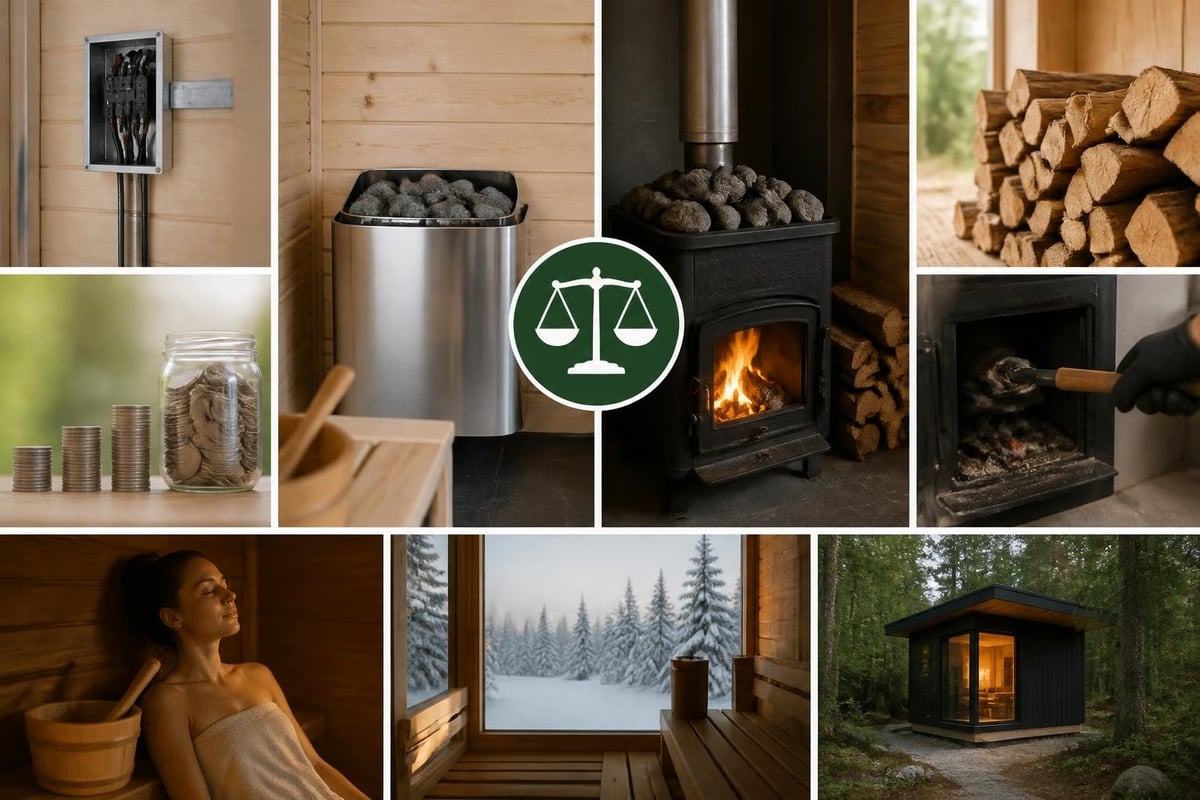
The best sauna for North America must handle winter. Snow, ice and subzero temperatures test construction quality, insulation and heater capacity. Finnish sauna culture has always embraced winter bathing, and modern outdoor saunas built to proper standards perform beautifully in cold climates.
Thermowood construction is the foundation. Heat-treated wood expands and contracts less than untreated pine, reducing gaps and air leaks that develop over freeze-thaw cycles. Thick walls (46 mm minimum) provide natural insulation. Tinted or double-glazed glass reduces heat loss through windows. An insulated roof prevents warmth from escaping through the ceiling.
Heater sizing matters in winter. A sauna that heats comfortably in 30 minutes during summer may take 50 minutes when outdoor temps drop below freezing. Size your heater to the upper end of the manufacturer's recommended range for your sauna volume. A 9 kW heater in a mid-size sauna ensures quick recovery and consistent heat even in January.
Winter sauna tips:
- Clear snow from the roof and entrance before heating
- Pre-heat for an extra 10–15 minutes in extreme cold
- Check door seals annually and replace if gaps appear
- Use a sauna thermometer to verify bench-level temperature
- Store firewood (if wood-burning) in a dry, covered location
- Plan a path from sauna to cold plunge or snow for contrast bathing
Foundation and drainage also affect winter performance. A gravel base with landscape fabric allows snowmelt and rain to drain away from the sauna floor, preventing ice buildup and rot. Concrete pads work well but may require slight grading to avoid pooling. Treated wood frames should sit above grade on piers or blocks to allow airflow underneath.
Regular sauna bathing in winter brings measurable health benefits. Cardiovascular research shows that frequent sauna use supports circulation, reduces inflammation and may improve cold-weather resilience. Pairing your sauna with a cold plunge setup amplifies these effects through contrast therapy.
Bench Layout, Material and Comfort
Bench design directly affects comfort during longer sessions. The best sauna includes benches made from low-density hardwoods that stay cool to the touch and resist moisture damage.
Black Alder and Aspen are the two standard choices. Both are light, low-resin woods that don't splinter or retain heat. Black Alder has a subtle grain and a pale blonde color that darkens slightly with use. Aspen is even lighter, with a clean, almost white appearance. Neither requires sealing or finishing. Simply wipe down after each session and let air-dry.
Straight Bench Layouts
A straight bench runs along one wall, typically in two tiers: a lower bench at sitting height (around 45 cm) and an upper bench at reclining height (around 75–80 cm). Straight layouts maximize floor space in compact saunas and work well for one to three users. They're the default in smaller models and the best sauna bench layout for daily solo or couple use.
L-Shaped Bench Layouts
An L-shaped bench wraps two walls, creating more sitting and reclining surface. This layout suits mid-size and larger saunas where four to six people gather. L-benches also let you move around the room to find your preferred temperature zone. The upper tier is hotter; the lower tier and corners are cooler. L-layouts are the best sauna bench choice for families and entertaining.
Bench material comparison:
| Wood Type | Color | Density | Heat Retention | Durability | Cost |
|---|---|---|---|---|---|
| Black Alder | Pale blonde to light tan | Low | Very low | High | Mid |
| Aspen | White to pale cream | Very low | Extremely low | High | Mid |
| Cedar | Reddish-brown | Medium | Medium | High | Mid to high |
Cedar is less common in Finnish-style saunas because its oils and aroma can be overpowering in a small, hot space. Alder and Aspen remain the best sauna bench materials for authentic, comfortable sessions.
Foundation and Installation Basics
A level, stable foundation is essential. The best sauna sits on a base that drains water, supports the structure evenly and keeps wood off direct ground contact.
Foundation options:
- Gravel pad: 10–15 cm of compacted gravel over landscape fabric; affordable, drains well, easy to adjust
- Concrete slab: Permanent, level, durable; requires formwork and curing time; may need slight slope for drainage
- Concrete pavers: Modular, adjustable, good drainage; easier than a full slab but less stable for larger saunas
- Treated wood frame: Elevated platform on concrete piers or deck blocks; excellent drainage and airflow; suits sloped or uneven sites
Most outdoor saunas arrive as prefabricated panels or log-style kits. Assembly typically takes one to two days with two people and basic tools. Electricians handle heater wiring. Plumbers aren't usually needed unless you're adding a shower or water supply for steam.
Check local building codes before starting. Some jurisdictions classify outdoor saunas as accessory structures and require setbacks from property lines, permits or inspections. Others treat them like sheds and have minimal requirements. Verify rules for:
- Setback distances from property lines and structures
- Electrical permits for 240V heater circuits
- Chimney and venting permits for wood-burning heaters
- Foundation and frost-depth requirements in cold climates
Working with your municipality early prevents delays and ensures your sauna meets safety and zoning standards.
Health, Wellness and Sauna Frequency
The best sauna is one you use regularly. Frequency matters more than session length for long-term health benefits. Finnish research tracking thousands of participants over decades found that sauna bathing four to seven times per week was associated with significantly lower cardiovascular and all-cause mortality compared to once-weekly use.
Evidence-based health benefits:
- Improved cardiovascular function and blood pressure regulation
- Reduced inflammation markers
- Enhanced recovery and reduced muscle soreness (supported by athletic recovery research)
- Stress reduction and improved sleep quality
- Detoxification through sweating (though less significant than often claimed)
Sessions typically last 10–20 minutes, with one or two rounds separated by cooling-off periods. The Finnish Sauna Society recommends sitting quietly, hydrating before and after, and cooling gradually with fresh air, a cold shower or a plunge in cold water.
The best sauna routine is sustainable. Start with two to three sessions per week and build from there. Consistency beats intensity. A 15-minute session every other day delivers more benefit than an occasional hour-long marathon.
Premium Features: Changing Rooms, Terraces and Windows
Beyond the basics, premium features add comfort, privacy and aesthetic appeal. The best sauna for your needs may include one or more of these elements.
Changing rooms provide a sheltered space to undress, store towels and transition comfortably between hot and cold. They're especially valuable in winter or rainy climates. A 1.0 m changing area adds roughly 20–30% to the total footprint and cost but transforms the experience by keeping outdoor elements separate from the hot room.
Terraces extend the sauna into an outdoor living space. A covered or open deck gives you a place to cool down, socialize and enjoy the backyard between rounds. Terraces work well in temperate climates and add significant lifestyle value. Expect to add 1.0–2.0 m to the overall length.
Tinted windows balance natural light with privacy. Clear glass saunas feel open and airy but may require curtains or strategic placement. Tinted or frosted glass offers discretion without blocking daylight. Larger glazed sections suit modern designs and buyers who want a visual connection to the yard.
Glass doors are standard on premium models. Tempered glass handles temperature swings and humidity. Full-glass doors (rather than wood doors with small windows) make the sauna feel more spacious and allow better airflow when propped open during cooling.
Choosing the Best Sauna for Your Home
Bringing it all together: the best sauna matches your household size, climate, installation capacity and long-term habits. Start by answering a few key questions.
How many people will use it at once? If it's typically you or you and a partner, a compact 2.3 × 2.3 m model is ideal. Families or hosts need 3.0 × 2.3 m or larger.
What's your climate? Harsh winters, heavy snow or high humidity point toward Thermowood construction and insulated models. Mild, dry climates allow Nordic Pine or even uninsulated designs.
Do you have 240V electrical service? If yes, an electric heater simplifies installation. If not, or if you prefer traditional heat, choose a wood-burning model and plan for chimney work.
How much yard space do you have? Measure your available footprint, accounting for door swing, clearances and future landscaping. Compact models fit tight lots; mid-size saunas need at least 4 × 3 m of clear space.
Will you use it year-round? If yes, prioritize insulation, Thermowood and proper foundation drainage. Seasonal users can relax some specs and focus on summer performance.
Do you want a changing area or terrace? These features add cost and footprint but significantly improve comfort and usability, especially in variable weather.
The best sauna is the one that fits your answers without compromise. It's better to buy a well-built smaller model than stretch for a larger sauna that sits unused because it's too slow to heat or too complicated to maintain. Quality construction, appropriate sizing and a heater you'll actually use matter more than features you think sound nice but won't use regularly. If you're comparing specific models, browse RecoSauna's square sauna collection for detailed specifications and layouts.
Choosing the best sauna comes down to matching construction quality, size and heating to your household, climate and routine. Thermowood models, appropriately sized benches and the right heater type ensure you'll use your sauna for decades. RecoSauna brings authentic Finnish sauna expertise to North American backyards, helping you select the right outdoor sauna for your home, climate and lifestyle with clear product information and practical guidance rooted in Lake Saimaa traditions.
Share:
Sauna Carpe Diem: Seize the Day with Authentic Heat
German Saunas: Design, Aufguss Ritual & What North Americans Should Know