

Walking into a sauna store for the first time, whether in person or online, can feel overwhelming. You'll see barrel saunas, cabin models, prefab kits, and custom builds. Materials range from red cedar to thermally modified wood. Heater choices span electric, wood-burning, and infrared. The best sauna store doesn't push you toward a single model. Instead, it walks you through your climate, space, budget, and sauna goals, then matches you to a product that will perform reliably for 15 to 20 years. This guide explains what to expect, what questions to ask, and how to compare outdoor saunas when you're ready to buy.
What Separates a Good Sauna Store from a Generic Retailer
A good sauna store carries more than saunas. It carries knowledge.
You should be able to ask about vapor barriers in cold climates, ventilation standards, bench height for authentic löyly, and heater output for your ceiling height. The answers should be specific, not generic. A retailer that only lists dimensions and prices is a catalog. A sauna store helps you understand trade-offs.
Expertise You Should Expect
- Climate-specific guidance: How the sauna performs in Minnesota winters or coastal humidity
- Material knowledge: Why Thermowood resists rot better than untreated pine
- Heater compatibility: Which models accept wood-burning stoves and which are electric-only
- Foundation and drainage: What you'll need under the sauna before delivery
- Installation support: Whether assembly is DIY-friendly or requires a contractor
The best sauna store will also ask you questions. How many people will use it regularly? Do you want a changing room? Are you near neighbors who might object to smoke? These aren't upsell tactics. They're signs the retailer knows what matters.
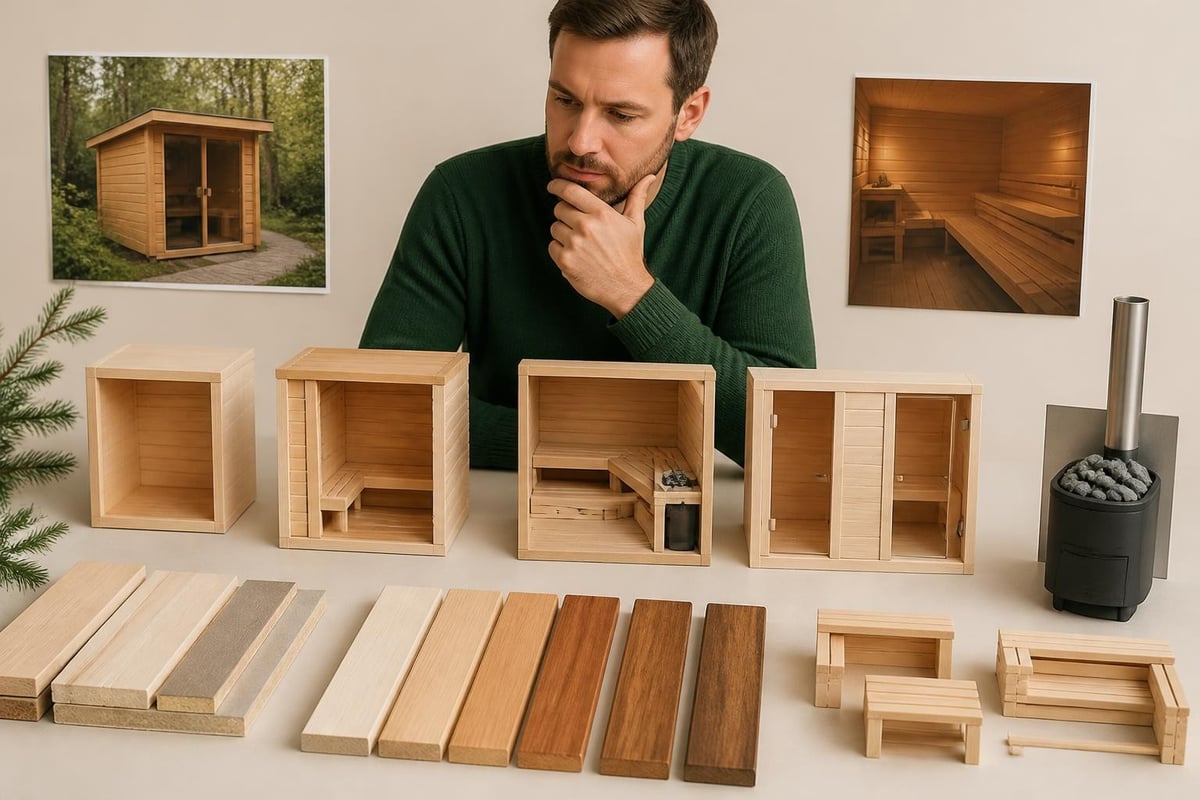
Outdoor Sauna Models: What You'll See at a Sauna Store
Most North American sauna stores stock three broad categories.
| Category | Best For | Typical Capacity | Price Range |
|---|---|---|---|
| Barrel sauna | Compact spaces, fast heat-up | 2–4 people | Mid-range |
| Cabin sauna (no changing room) | Dedicated sauna experience, flexible heater choice | 2–6 people | Mid to premium |
| Cabin sauna with changing room | Privacy, all-season comfort, turnkey retreat | 2–6 people | Premium |
Barrel saunas heat quickly because of their curved shape and smaller interior volume. They're a strong choice if you have limited yard space or want a faster sauna session. But benches are often shorter, and headroom can feel tight for taller bathers.
Cabin saunas without a changing room maximize interior sauna space. You step directly into the hot room. This works well if you have a nearby patio door or covered deck where you can leave towels and robes. Models like the RecoSauna Sisu Square Sauna offer generous bench layouts and large windows without adding the footprint of a separate changing area.
Cabin saunas with a changing room add a dedicated vestibule with a bench and storage. You enter the changing room first, undress in a sheltered space, then step through an interior glass door into the hot room. This layout is especially practical in winter or if your sauna sits away from the house. It also creates a more complete wellness retreat.
Why Wall Thickness and Material Matter
Most quality outdoor saunas use 46 mm solid wood walls. This thickness provides thermal mass, structural stability, and better heat retention than thinner panels. In a cold climate, it also reduces the workload on your heater.
Material choice shapes durability and maintenance:
- Thermowood (thermally modified spruce or pine) resists moisture, rot, and insect damage without chemical treatment. It ages to a warm brown-gray and requires no staining.
- Nordic Pine is lighter in color and more affordable. It will weather to silver-gray unless you apply exterior oil regularly.
- Red Cedar is common in North America but can split in dry climates and needs periodic sealing.
A sauna store that stocks Thermowood models is serving buyers who want low-maintenance performance in year-round outdoor conditions.
How to Compare Saunas When You Visit a Sauna Store
Start with these five questions. They'll reveal whether a model fits your needs.
1. What Is the Interior Height and Bench Configuration?
Standard ceiling height in a quality outdoor sauna is around 195–205 cm (77–81 inches). Benches should sit at two levels: a lower step around 45 cm and an upper bench at 90–95 cm. This layout lets you choose heat intensity. Hotter air rises, so sitting on the upper bench delivers the classic Finnish sauna experience.
L-shaped benches work well for couples or small groups. Straight benches maximize seating in a compact footprint.
2. Is the Sauna Compatible with Both Electric and Wood-Burning Heaters?
Many buyers start with an electric heater for convenience, then later wish they could burn wood. A good sauna store will clarify compatibility up front. Models designed for both options include a roof vent for smoke exhaust and additional clearance around the heater platform. If a model is electric-only, you'll know before you buy.
Wood-burning heaters deliver authentic löyly and work during power outages, but they require more frequent cleaning and local code compliance. Electric heaters offer push-button convenience and faster warm-up in a smaller footprint.
3. Are Windows Tinted, and Where Are They Positioned?
Tinted windows reduce glare, preserve privacy, and protect wood benches from UV fading. Most Scandinavian-style saunas place windows on the front wall, creating a clean sightline to your yard without exposing the interior to neighbors. Avoid saunas with clear glass facing a property line unless you plan to add curtains or frosted film.
4. What Foundation Does the Sauna Require?
Outdoor saunas need a level, stable, well-drained base. Common options include:
- Concrete slab (permanent, code-compliant in most areas)
- Paver patio with compacted gravel base
- Wooden deck (requires structural assessment for load)
- Gravel pad with pressure-treated timber frame
A sauna store should provide clear foundation specs, including minimum dimensions and drainage slope. If the retailer can't answer this, you're not getting the support you need.
5. What Is Included, and What Must You Buy Separately?
Most outdoor saunas are sold as structural kits. They include walls, roof, door, windows, benches, and vent covers. Heaters, heater guards, stones, lighting, and accessories are typically separate. A transparent sauna store lists exactly what's in the box and what you'll need to budget for separately.
Choosing the Right Size for Your Household
Size decisions are emotional and practical. Most buyers start by counting heads, then adjust for how they actually use the sauna.
| Sauna Footprint | Stated Capacity | Comfortable Capacity | Best Use Case |
|---|---|---|---|
| 2.3 × 2.3 m | 2–6 people | 2–4 adults | Couples, small families |
| 3.0 × 2.3 m | 2–6 people | 4–6 adults | Households that entertain, larger families |
| 2.4 × 2.4 m (with terrace) | 2–4 people | 2–3 adults | Compact wellness retreat with outdoor transition space |
If you plan to host friends or extended family, choose the larger model. A sauna that feels spacious for two will feel crowded with four once everyone is seated. If you primarily sauna solo or with one other person, a compact footprint heats faster and uses less energy.
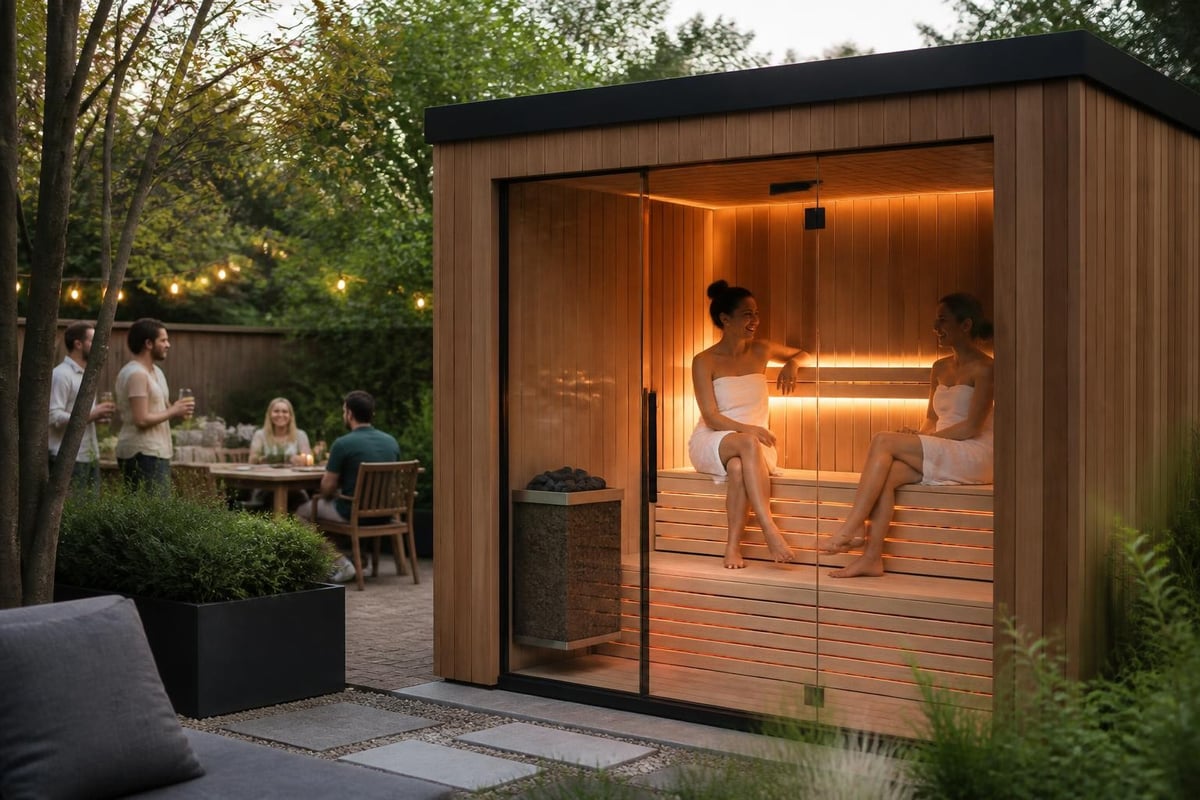
What to Ask About Winter Performance
If you live where temperatures drop below freezing, ask the sauna store how the model handles cold.
- Insulated vs. non-insulated construction: Premium models include insulated floors, walls, and roofs with vapor barriers. This keeps heat inside, shortens warm-up time, and prevents condensation damage.
- Vent design: Proper ventilation draws fresh air near the heater and exhausts stale air near the ceiling. In winter, this prevents drafts without sacrificing air quality.
- Changing-room benefits: A separate changing area acts as a thermal buffer. You can undress in a sheltered, slightly cooler space before entering the hot room, and you won't track snow directly into the sauna.
Non-insulated saunas work well in temperate zones. In climates with sub-zero winters, insulated construction pays back in comfort and efficiency.
Sauna Store vs. Big-Box Retailer: What You Gain
Big-box stores and online marketplaces list saunas alongside hot tubs and grills. The sauna store focuses on saunas. That focus brings specific advantages.
Curated Selection
A sauna store carries models it can support. You won't find cheaply made units that warp after one winter or heaters that fail within a year. The inventory reflects long-term performance, not impulse pricing.
Post-Purchase Support
Questions about heater wiring, vent placement, rock quantity, and seasonal maintenance come up after delivery. A specialist retailer answers those questions because it's part of the service. A big-box store hands you a phone number.
Regional Code Guidance
Sauna installation can trigger local building codes, especially if you're adding electrical service or a wood-burning chimney. A sauna store familiar with North American codes (often referencing NFPA standards) can point you toward licensed contractors and advise on permit requirements.
Access to Complementary Products
Many sauna stores also carry cold-plunge tubs, sauna buckets and ladles, thermometers, hygrometers, and sauna-specific lighting. Bundling these items with your sauna purchase streamlines setup and often saves on shipping.
How Changing Rooms and Terraces Expand the Sauna Experience
If budget and space allow, a changing room or terrace transforms an outdoor sauna from a functional amenity into a retreat.
Changing Rooms
A changing room adds privacy, convenience, and comfort. You step into a sheltered vestibule, hang your robe, store your towel, and transition gradually into the heat. After your session, you cool down without stepping directly outside in winter or exposing yourself to neighbors in summer.
The RecoSauna Comfort Square Sauna 3.0 × 2.3 m includes a dedicated 1-meter changing room with a bench and an internal glass door. This layout is especially practical for households that sauna year-round or live on smaller lots where privacy matters.
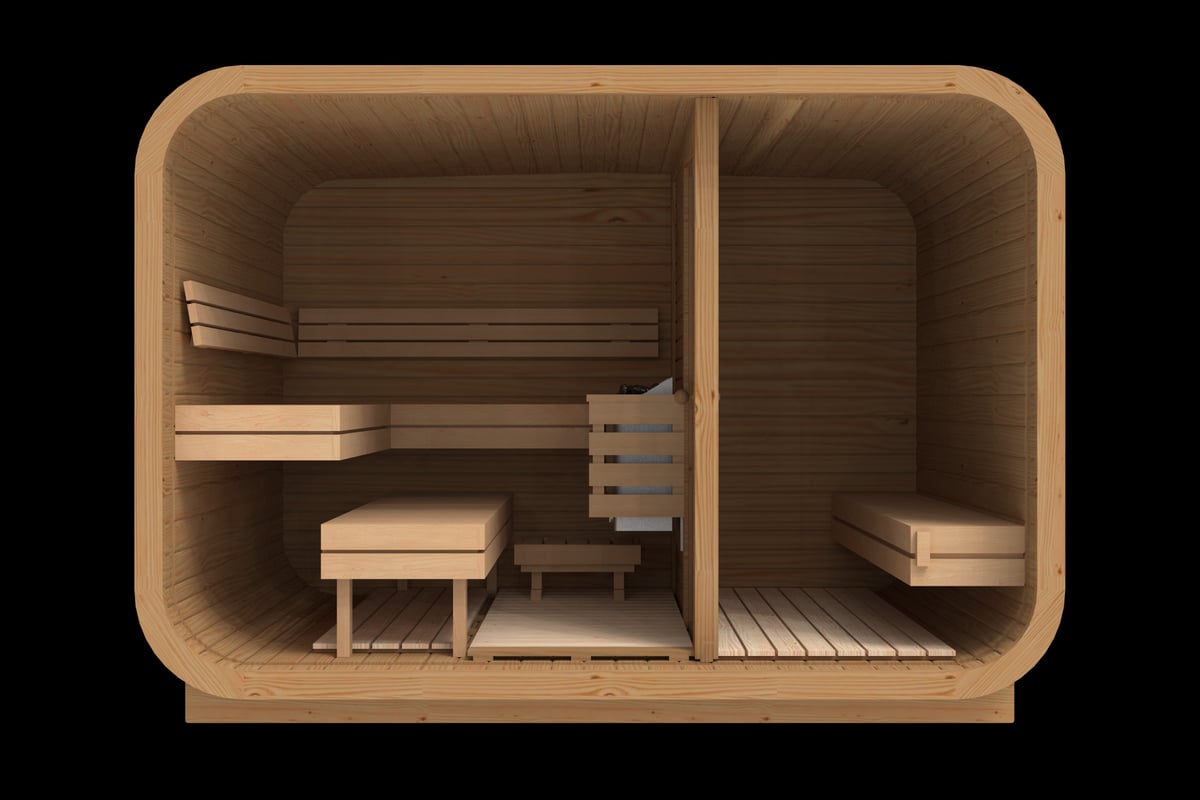
Terraces
A terrace extends your sauna's footprint into an outdoor transition area. It's a place to cool down between rounds, sip water, or simply sit wrapped in a towel under the stars. In the Finnish tradition, this pause between heat rounds is as important as the heat itself. A covered terrace also protects the sauna door and entryway from rain and snow, reducing wear.
Both features add upfront cost. But they also raise the sauna's daily usability, making it a space you visit for more than ten minutes at a time.
Electric vs. Wood-Burning Heaters: Guidance from a Sauna Store
Heater choice shapes your sauna's character, maintenance, and operating cost.
| Heater Type | Warm-Up Time | Operating Cost | Maintenance | Authentic Löyly |
|---|---|---|---|---|
| Electric | 30–45 minutes | Moderate (grid electricity) | Low (annual inspection) | Good with proper ventilation |
| Wood-burning | 45–90 minutes | Low (firewood) | Moderate (ash removal, chimney cleaning) | Excellent (natural humidity, radiant heat) |
Electric heaters offer push-button convenience. You set a timer, walk away, and return to a preheated sauna. They're quieter, cleaner, and easier to permit in suburban areas. Modern electric heaters can produce excellent steam when you throw water on the rocks, especially if the sauna is well-ventilated (ASHRAE ventilation standards apply here).
Wood-burning heaters deliver the traditional Finnish experience: crackling fire, radiant heat, and natural humidity from the wood combustion. You control heat intensity by feeding logs and adjusting the damper. The learning curve is steeper, and you'll clean ash weekly. But for buyers who value ritual and self-sufficiency, wood-burning is the clear choice.
A sauna store should stock compatible heaters for every model it sells. If they push you toward a single heater brand without explaining alternatives, ask why.
The Role of Finnish Sauna Culture in a North American Sauna Store
Authentic sauna culture is more than wood and steam. It's a rhythm: heat, steam, cooling, rest. It's UNESCO-recognized tradition rooted in generations of Finnish households.
A sauna store grounded in that culture will emphasize:
- Proper ventilation: Fresh air intake near the heater, exhaust near the ceiling
- Adequate bench spacing: Room to lie down, not just sit
- Quality wood on benches: Aspen or alder that stays cool to the touch
- Steam, not dry heat: Löyly created by throwing water on hot stones, not running the heater hotter
- Contrast therapy: Pairing sauna heat with cold plunges or outdoor cooling
These details don't appear in spec sheets. They come from experience. When you shop at a sauna store led by someone who grew up with saunas, you get that experience included.
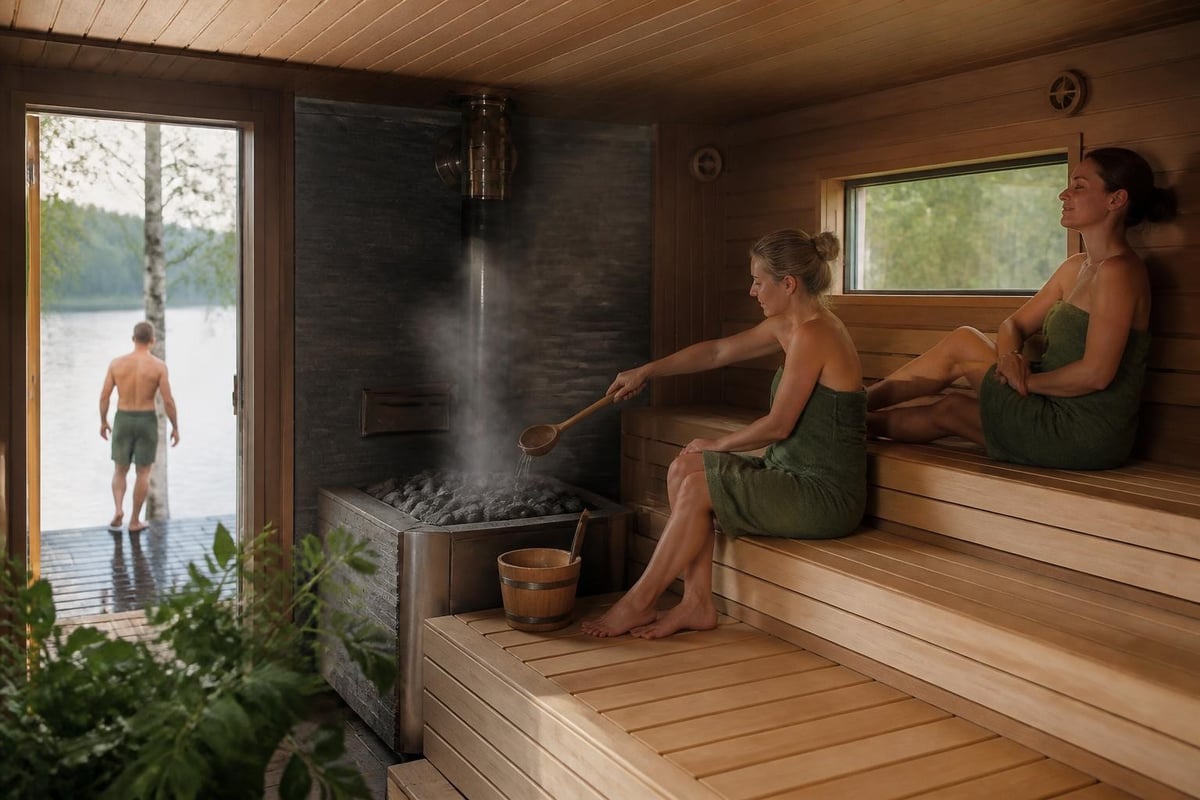
Common Mistakes Buyers Make at a Sauna Store
Even informed buyers make predictable mistakes. Here are the ones we see most often.
Choosing a Model That's Too Small
You envision solo sessions. Then friends visit, your partner joins, or your kids start asking to sauna with you. A sauna that seats two comfortably will feel cramped with three. If space and budget allow, choose one size larger than your minimum.
Ignoring Foundation Requirements
Outdoor saunas weigh between 800 and 1,500 kg when assembled. Placing one on soft soil or unlevel ground leads to door misalignment, floor sagging, and moisture intrusion. Plan your foundation before the sauna arrives. A sauna store should provide weight specs and foundation guidelines.
Underestimating Electrical Requirements
Electric heaters for a 6-person sauna typically draw 6–9 kW and require a dedicated 240-volt circuit. If your home's electrical panel is already near capacity, you'll need an upgrade. Budget for a licensed electrician and verify your local code requirements before ordering.
Skipping Ventilation Details
Poor ventilation creates stale air, uneven heat distribution, and premature wood degradation. Every sauna needs an intake vent near the heater and an exhaust vent on the opposite wall near the ceiling. If the sauna store doesn't mention ventilation, ask.
Prioritizing Price Over Durability
A cheap sauna will cost less in year one. A durable sauna will cost less over ten years. Thin walls, untreated softwood, and poorly sealed joints lead to warping, rot, and heat loss. Quality construction uses 46 mm walls, tongue-and-groove joinery, and weather-resistant wood species like Thermowood.
How to Prepare Before You Visit a Sauna Store
Walk in ready. You'll get better answers and leave with the right model.
- Measure your space: Know the maximum footprint your yard or patio can accommodate, including clearance for the door swing and ventilation.
- Research your climate: Understand your coldest winter temperature and summer humidity. Both affect material choice and insulation needs.
- Check local codes: Some municipalities require permits for accessory structures over a certain size or for any wood-burning appliance. Verify before you buy.
- Set a realistic budget: Include the sauna, heater, stones, delivery, foundation, electrical work, and accessories. Quality outdoor saunas start around mid-five figures.
- List your must-haves: Changing room? L-shaped bench? Compatibility with wood heat? Tinted windows? Write it down.
The sauna store can then match you to models that meet your criteria without wasting time on units that don't fit.
Why Thermowood Models Dominate Quality Sauna Stores
Thermowood is thermally modified softwood, heated to around 200°C in a low-oxygen kiln. The process removes moisture, sugars, and resins, creating a wood that resists rot, insects, and dimensional change.
For outdoor saunas in North America, Thermowood offers:
- Dimensional stability: Minimal warping or shrinking across seasonal temperature swings
- Rot resistance: Performs well in humid climates and winter freeze-thaw cycles
- Low maintenance: Ages naturally to a warm gray-brown without staining or sealing
- Longevity: Expected lifespan exceeds 20 years with basic care
Most premium sauna stores prioritize Thermowood models because they reduce long-term service calls and customer complaints. It's a material that performs reliably across diverse North American climates.
What Happens After You Order from a Sauna Store
Ordering is the beginning, not the end. Here's what to expect.
Delivery and Logistics
Outdoor saunas ship on pallets via freight carrier. Delivery to your curb or driveway is standard; liftgate service or inside delivery costs extra. You'll need help unloading (most kits weigh 600–1,200 kg). Coordinate with the sauna store on timing so you have labor and equipment ready.
Assembly
Most sauna kits are DIY-friendly if you're comfortable with basic carpentry. Expect 8–16 hours for two people to assemble walls, roof, benches, and trim. Instructions should include panel diagrams, hardware lists, and step-by-step photos. Some buyers hire a handyman or contractor. A sauna store can often recommend local installers familiar with their models.
Heater Installation
Electric heater installation requires a licensed electrician. Wood-burning heaters need chimney installation and often a building permit. Both involve code compliance, clearances, and venting. Don't skip this step. Improper installation voids warranties and creates fire risk.
First Burn or First Session
Before your first sauna session, run the heater at full temperature for at least one hour with ventilation open. This burns off manufacturing residues, cures the wood, and tests the heater's performance. You'll smell wood oils and potentially see light smoke. That's normal.
Health Benefits and Safety Considerations
Regular sauna use supports cardiovascular health, muscle recovery, and stress reduction. Clinical research on dry sauna bathing shows benefits for blood pressure, endothelial function, and all-cause mortality when practiced consistently. Comprehensive reviews of passive heat therapy document mechanisms for metabolic and neurological effects as well.
A sauna store should not make medical claims, but it should acknowledge the broader wellness context. Most buyers come to sauna for relaxation and recovery. The health benefits are a bonus, not a cure.
Safety reminders apply:
- Stay hydrated before and after each session
- Limit sessions to 15–20 minutes at a time, with cooling breaks between rounds
- Avoid alcohol before or during sauna use
- Consult a physician if you have cardiovascular conditions, are pregnant, or take medications that affect heat tolerance
Pairing Your Sauna with a Cold Plunge
Contrast therapy alternates heat and cold to stimulate circulation, reduce inflammation, and enhance recovery. Many sauna stores now carry cold-plunge tubs designed for outdoor use alongside their sauna inventory.
A simple setup includes:
- Your outdoor sauna
- A nearby cold-plunge tub (50–55°F / 10–13°C)
- A transition area (deck, patio, or terrace)
You sauna for 15 minutes, step into the cold plunge for 2–3 minutes, rest, then repeat. The combination amplifies the benefits of each modality. A sauna store familiar with contrast therapy can help you plan layout, plumbing, and seasonal operation.
How to Evaluate a Sauna Store's Online Presence
If you're shopping remotely, the sauna store's website reveals a lot.
Look for:
- Detailed product pages with dimensions, materials, capacities, inclusions, and high-resolution photos
- Clear heater compatibility information (electric-only vs. dual-compatible)
- Foundation and installation guidance (PDFs, videos, or support articles)
- Transparent pricing (no hidden fees, shipping costs listed or estimated)
- Customer reviews or case studies from buyers in similar climates
A sparse website with generic stock photos and vague descriptions signals a retailer who doesn't understand the product. Specificity builds confidence.
When a Sauna Store Becomes a Long-Term Partner
The best sauna stores stay involved after the sale. You'll have questions about:
- Seasonal maintenance (roof inspection, door adjustment, wood treatment)
- Replacement parts (hinges, vent covers, bench slats)
- Heater upgrades or repairs
- Adding accessories (lighting, backrests, sauna stones)
A specialist retailer keeps parts in stock, offers maintenance advice, and connects you with local service providers when needed. That ongoing relationship is what separates a sauna store from a one-time transaction.
Choosing an outdoor sauna is a long-term decision that touches your wellness routine, backyard design, and household rituals for years to come. Working with a sauna store that understands materials, climate, and authentic sauna culture makes that decision clearer and more confident. At RecoSauna, we bring Finnish sauna expertise to North American homeowners, guiding you through model selection, material trade-offs, and installation planning so you choose the outdoor sauna that fits your home, climate, and lifestyle.
Share:
Relax Sauna: Your Guide to Stress-Free Heat Therapy
Sauna Hot: Temperature, Safety & Authentic Heat in 2026