

Sauna flex describes the practice of using passive heat inside a traditional or infrared sauna to support stretching, mobility work and muscle warm-up. The elevated temperature raises core and surface body temperature, increases blood flow to soft tissue and may improve range of motion during gentle movement. North American homeowners now blend sauna bathing with yoga, foam rolling and dynamic stretching as part of backyard wellness routines. This guide explains what sauna flex is, how heat affects flexibility, when to stretch in the sauna, practical safety limits and how to integrate mobility work into your sauna sessions at home.
What Sauna Flex Means and Why Heat Matters
Sauna flex is not a branded product or formal training protocol. It refers to any combination of passive heat exposure and deliberate stretching or mobility drills performed before, during or immediately after a sauna session. The term captures a growing interest in using the sauna environment to enhance warm-up, recovery and flexibility work.
How Passive Heat Affects Soft Tissue
Heat raises tissue temperature, which temporarily reduces muscle viscosity and increases collagen extensibility. Warmer connective tissue stretches more easily under gentle tension. Blood flow to the skin and muscles increases during sauna bathing, delivering oxygen and nutrients that support tissue repair and adaptation.
A 2019 study published in the International Journal of Environmental Research and Public Health found that older adults who performed gentle yoga and stretching movements inside a warm sauna environment improved flexibility, strength and balance over 12 weeks. The combination of heat and movement appeared to amplify the benefits of each alone.
Key mechanisms during sauna flex:
- Elevated tissue temperature lowers resistance to passive stretch
- Increased circulation supports nutrient delivery and waste removal
- Muscle relaxation reduces protective tension during stretching
- Warm environment encourages slower, more mindful movement
Heat alone does not lengthen muscle or permanently change flexibility. Sustained gains require consistent stretching practice over weeks and months, with or without heat.
Traditional Sauna Versus Infrared for Flexibility Work
Traditional Finnish saunas heat the air to 75–90 °C (167–194 °F) and produce löyly (steam) when water meets hot stones. The high ambient temperature warms the body from the outside in. Infrared saunas use lamps or panels to deliver radiant heat that penetrates skin and tissue at lower air temperatures (typically 50–65 °C / 122–149 °F).
Both create a warm environment suitable for sauna flex. Traditional saunas offer a more intense heat experience and cultural ritual. Infrared saunas stay cooler and may feel more comfortable for extended stretching sessions. Choose based on your heat tolerance, session length and whether you value the sauna bathing tradition.
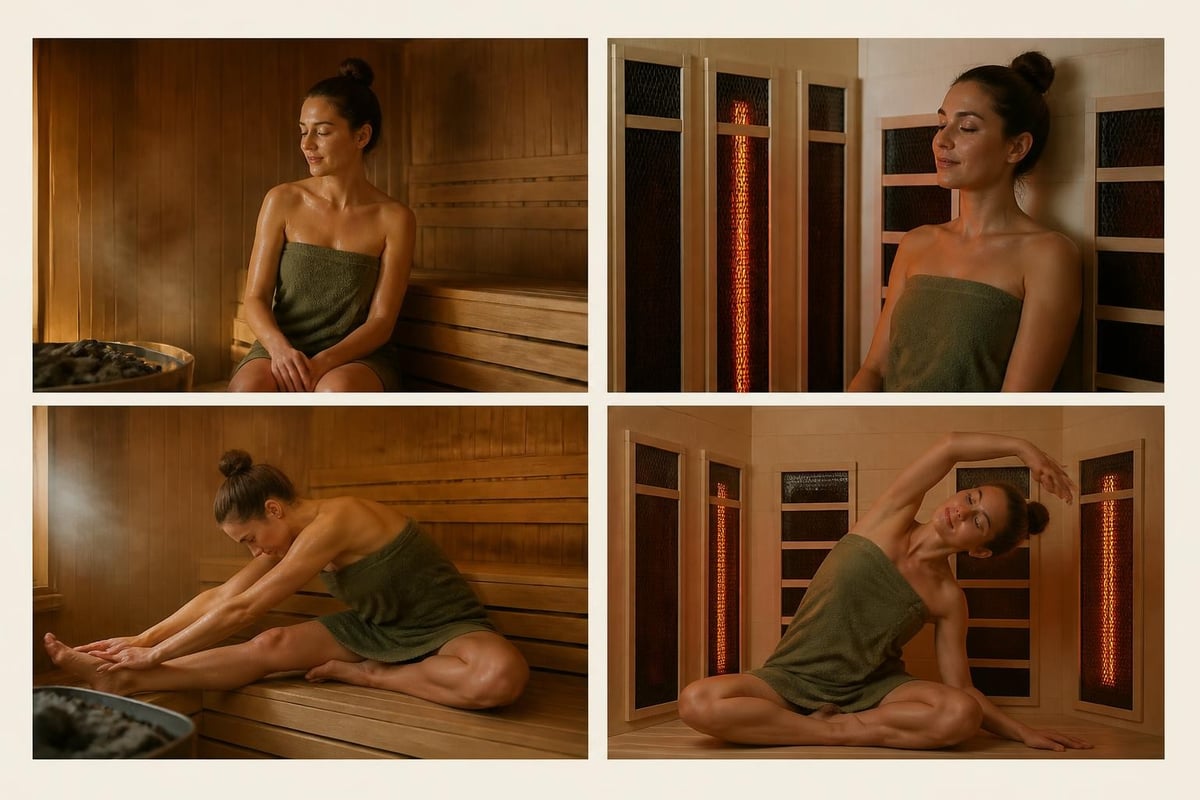
When to Stretch: Before, During or After the Sauna
Timing your flexibility work around sauna sessions affects both safety and effectiveness. Each approach serves a different purpose in your routine.
Pre-Sauna Warm-Up and Dynamic Movement
Light dynamic stretching or foam rolling before entering the sauna prepares joints and muscles for the heat. This is especially useful if you plan to sit still for most of the session. A short warm-up raises tissue temperature slightly and primes the nervous system.
Effective pre-sauna movements:
- Gentle arm circles and shoulder rolls
- Bodyweight squats and hip openers
- Slow spinal twists and cat-cow stretches
- Foam rolling major muscle groups (quads, hamstrings, back)
Keep the warm-up light. The goal is readiness, not fatigue. Save deeper stretching for when your body is fully warmed.
Stretching Inside the Sauna
Performing sauna flex during the session takes advantage of elevated tissue temperature and increased circulation. Move slowly and avoid pushing into painful ranges. The heat can mask discomfort signals, so restraint is important.
Practical tips for stretching in the sauna:
- Wait 5–10 minutes after entering to let your core temperature rise
- Sit on the lower bench or floor for stability during stretches
- Use gentle static holds (20–30 seconds) rather than ballistic bouncing
- Focus on hips, hamstrings, shoulders and spine
- Hydrate before the session and keep water nearby
- Exit immediately if you feel dizzy, nauseous or faint
Many sauna users prefer seated or supine stretches that require no balance or coordination. Examples include seated forward folds, supine spinal twists, hip flexor stretches and shoulder openers using a towel.
Post-Sauna Mobility and Cool-Down
Stretching immediately after the sauna, while tissue is still warm, may offer the best window for flexibility gains. Your muscles are relaxed, circulation remains elevated and you can transition to a cooler space where heat stress is no longer a concern.
After exiting the sauna, spend 5–10 minutes on focused stretching or mobility drills. This is also the ideal time for foam rolling, PNF stretching or assisted techniques that require more effort. Cool down gradually, rehydrate and allow your heart rate to return to baseline.
Safety, Hydration and Session Length for Sauna Flex
Heat stress and dehydration limit how long you can safely perform sauna flex. Understanding your physiological limits prevents injury and ensures consistent progress.
Managing Core Temperature and Heat Stress
Sauna bathing raises core temperature by 1–2 °C (1.8–3.6 °F). Adding movement or stretching increases metabolic heat production. The combination can accelerate sweating, elevate heart rate and shorten safe session duration.
| Factor | Traditional Sauna | Infrared Sauna |
|---|---|---|
| Air temperature | 75–90 °C | 50–65 °C |
| Typical session length | 10–20 minutes | 20–40 minutes |
| Stretching tolerance | Shorter holds, frequent breaks | Longer holds possible |
| Cardiovascular demand | Higher | Moderate |
Listen to your body. If you feel lightheaded, stop stretching and exit the sauna. Sit or lie down in a cool space and drink water. Never force movement through dizziness or nausea.
Hydration Before, During and After
Sweating during sauna bathing can exceed 500 mL per session. Adding stretching and movement increases fluid loss. Harvard Health recommends drinking water before and after sauna use to maintain hydration and support cardiovascular function.
Hydration checklist for sauna flex:
- Drink 250–500 mL of water 30 minutes before your session
- Keep a water bottle nearby and sip between stretches
- Rehydrate fully within one hour of exiting
- Monitor urine color; aim for pale yellow
- Avoid alcohol before or during sauna sessions
Dehydration reduces flexibility, impairs performance and increases injury risk. Consistent hydration supports both sauna bathing and mobility work.
Who Should Avoid Sauna Flex
Passive heat and stretching are generally safe for healthy adults. Certain conditions require caution or medical clearance.
Avoid sauna flex if you have:
- Uncontrolled high blood pressure or recent cardiac event
- Acute injury, inflammation or recent surgery
- Pregnancy (consult your healthcare provider first)
- Heat intolerance or autonomic dysfunction
Older adults and those new to sauna bathing should start with shorter sessions (5–10 minutes) and lower bench positions. Gradually increase duration and heat exposure as tolerance improves.
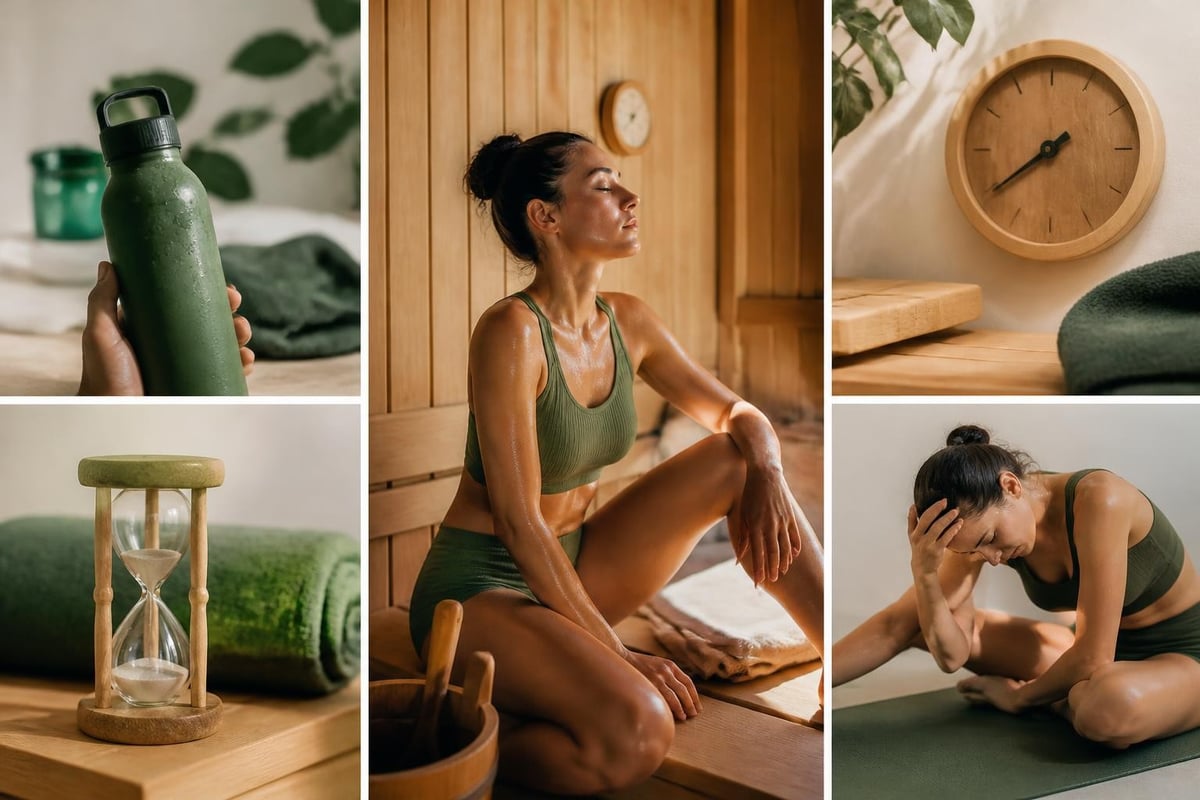
Practical Sauna Flex Routines for Home Use
Building a sauna flex routine depends on your goals, sauna type and available space. These examples fit outdoor saunas commonly installed in North American backyards.
Routine 1: Post-Workout Recovery and Flexibility
This routine follows strength training, running or cycling. The sauna accelerates muscle relaxation and supports range-of-motion work.
- Cool down from exercise for 5–10 minutes
- Enter the sauna, sit for 5 minutes to acclimate
- Perform 3–4 gentle stretches targeting worked muscles (30 seconds each)
- Rest for 5 minutes, add löyly if using a traditional sauna
- Repeat the stretching sequence once
- Exit, cool down gradually, rehydrate
Total session: 15–20 minutes. Recent research in Sports Medicine Open suggests post-exercise passive heat may enhance recovery markers and adaptation, though more work is needed to confirm long-term performance gains.
Routine 2: Gentle Mobility and Stress Relief
This session prioritizes relaxation and joint mobility rather than intense stretching. It suits rest days or evenings after sedentary work.
- Enter the sauna, sit for 3 minutes
- Perform slow neck rolls and shoulder shrugs
- Transition to seated hip circles and spinal twists
- Hold each position for 20–30 seconds, breathe deeply
- Rest, hydrate, repeat one more cycle
- Exit after 12–15 minutes total
The lower intensity and shorter holds reduce cardiovascular demand. Focus on breath, alignment and mindful movement rather than forcing deeper range.
Routine 3: Infrared Sauna Yoga or Floor Stretching
Infrared saunas maintain lower air temperatures, allowing longer sessions with more complex movement. This routine suits yoga practitioners or those comfortable with floor-based stretches.
Sample sequence (25–30 minutes):
- 5 minutes: seated breathing and light spinal twists
- 10 minutes: supine stretches (hip flexors, hamstrings, glutes)
- 5 minutes: gentle seated forward folds and side bends
- 5 minutes: rest in savasana (lying relaxation)
- Exit, cool down, hydrate
Keep movement slow and controlled. The extended session length allows deeper relaxation without the acute heat stress of a traditional sauna.
Choosing a Sauna for Flexibility Work at Home
If you plan to integrate sauna flex into your routine, sauna size, bench layout and changing-room space matter. A cramped interior limits movement; a spacious layout supports stretching, foam rolling and transitions.
Bench Height, Depth and Material
Lower benches are safer for stretching. You can sit or lie without risk of falling. Deeper benches (50–60 cm) allow supine positions and hip stretches. Bench material affects comfort during extended contact. Black alder and aspen stay cooler than spruce or cedar, reducing the risk of surface burns during floor work.
Many outdoor saunas designed for North American backyards offer L-shaped or straight bench configurations. Choose based on how you plan to move inside the space.
Sauna Size and Interior Layout
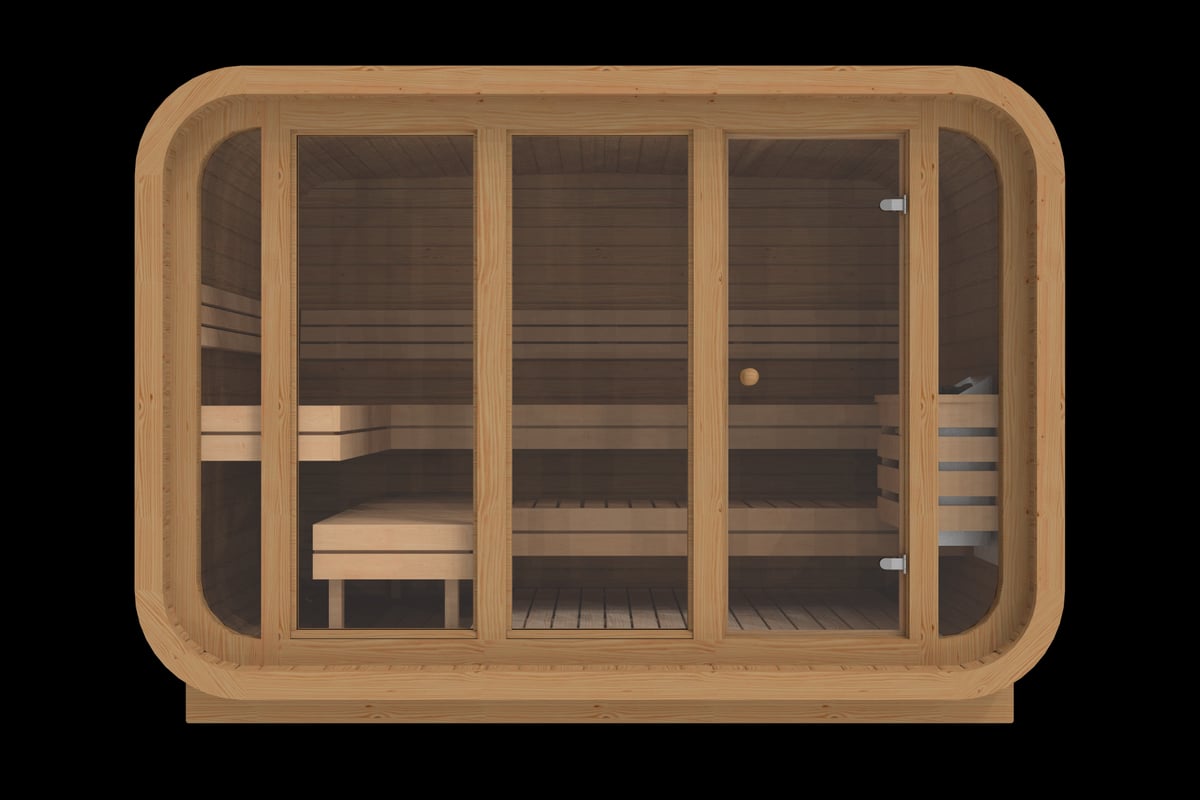
A 2.3 × 2.3 m sauna provides enough floor space for seated or kneeling stretches. A 3.0 × 2.3 m model adds room for supine positions, partner stretching or foam rollers. If sauna flex is a priority, consider the larger footprint.
The RecoSauna Sisu Square Sauna 3.0 × 2.3 m in Thermowood offers a spacious interior with four tinted windows, a choice of straight or L-shaped alder bench and 46 mm solid walls suited to year-round use. The layout supports both traditional sauna bathing and mobility work, with room to move safely during stretching sequences.
For smaller spaces, a 2.3 × 2.3 m model balances footprint and flexibility. You'll rely more on seated and kneeling stretches, but the environment still supports sauna flex effectively.
Electric Versus Wood-Fired Heat for Sauna Flex
Electric heaters deliver consistent, adjustable temperature, making it easier to tailor heat intensity for stretching sessions. Wood-fired heaters require active tending and produce variable heat, which may interrupt your routine.
If you plan frequent, predictable sauna flex sessions, electric heat simplifies the process. Wood heat suits those who value the ritual and enjoy the more dynamic sauna experience. Both work; choose based on your priorities.
| Heater Type | Temperature Control | Session Consistency | Maintenance During Stretching |
|---|---|---|---|
| Electric | Precise, adjustable | High | Minimal |
| Wood-fired | Variable, manual | Moderate | Requires tending |
Evidence, Limitations and Realistic Expectations
Sauna flex combines two well-studied practices: passive heat exposure and stretching. Understanding what the research does and does not support helps you set realistic goals.
What the Science Says About Heat and Flexibility
Heat temporarily increases tissue extensibility and may improve acute range of motion. A 2015 study in Nature Reviews Cardiology and later work from the Kuopio Ischemic Heart Disease Study link regular sauna use to cardiovascular and all-cause mortality benefits, but these studies focus on frequency and duration, not stretching or mobility.
The 2019 sauna yoga trial provides the clearest evidence that combining heat and movement improves flexibility outcomes. However, the study involved supervised sessions with structured progressions. Home-based sauna flex lacks formal protocols, so consistency and technique matter.
What Sauna Flex Cannot Replace
Sauna flex is a supplement, not a substitute for dedicated flexibility training. It will not correct postural imbalances, rehabilitate injury or replace skilled manual therapy. Passive heat enhances stretching sessions but does not drive adaptation on its own.
For serious flexibility goals, pair sauna flex with:
- Regular mobility drills and dynamic warm-ups
- Strength training through full ranges of motion
- Skilled coaching or physical therapy when needed
- Adequate sleep, nutrition and recovery time
Infrared Sauna Claims and Current Evidence
Infrared saunas are often marketed for flexibility, detoxification and recovery. Popular Science's 2025 review notes that while infrared heat raises tissue temperature and may support relaxation, evidence for unique benefits over traditional saunas remains limited. Both environments create passive heat; the physiological response is similar.
Choose infrared for longer sessions at lower air temperatures. Choose traditional for cultural experience, löyly and higher heat intensity. Both support sauna flex when used safely.
Integrating Sauna Flex Into Your Backyard Wellness Routine
Most North American homeowners install outdoor saunas for relaxation, family time and post-exercise recovery. Adding sauna flex requires minimal equipment and fits naturally into existing routines.
Pairing Sauna with Cold Exposure
Alternating heat and cold (contrast therapy) has a long history in Scandinavian wellness culture. After a sauna flex session, stepping into a cold shower, plunge pool or snow amplifies the recovery response and may reduce muscle soreness.
If you already own an outdoor sauna, consider adding a cold-plunge setup. The combination supports both flexibility work and broader recovery. Learn more about pairing saunas with cold plunge through RecoSauna's backyard wellness systems.
Consistency, Tracking and Progression
Flexibility improves slowly. Track your range of motion every few weeks using simple benchmarks: sit-and-reach distance, shoulder mobility or deep squat depth. Pair sauna flex with a training log to monitor trends.
Aim for 2–3 sauna flex sessions per week. Shorter, frequent sessions outperform infrequent marathons. Start with 10–15 minutes per session and increase as your heat tolerance builds.
Tools and Accessories for Sauna Flex
You can perform sauna flex with no equipment, but a few simple tools expand your options:
- Yoga mat or towel: provides cushioning for floor stretches
- Foam roller: for myofascial release before or after heat
- Resistance band: enables assisted stretching and PNF techniques
- Water bottle: keeps hydration within reach
Store accessories in a changing room or nearby shelf. Keep the sauna interior simple to preserve airflow and heat distribution.
Sauna flex blends passive heat with intentional stretching to support mobility, recovery and warm-up at home. Consistent practice, safe session design and realistic expectations produce steady flexibility gains over time. RecoSauna offers premium outdoor saunas designed for year-round North American use, with spacious interiors, Thermowood construction and flexible layouts that support both traditional sauna bathing and mobility work in your own backyard.
Share:
Heavenly Heat Sauna: A Buyer's Review & Comparison
Electric Sauna Guide: Heaters, Installation & Costs 2026