

When you're shopping for an outdoor sauna or tuning your existing setup, you'll eventually ask: what's the hottest sauna temperature that's safe and comfortable? The answer isn't a single number. It depends on humidity, bench height, your experience level, and how long you plan to stay inside. In this guide, you'll learn the practical upper limits for sauna heat, why the hottest sauna doesn't always mean the best sauna, and how to choose the right temperature for your backyard wellness routine.
What Qualifies as the Hottest Sauna Temperature?
Traditional Finnish saunas typically operate between 70°C and 90°C (158°F to 194°F) at bench level. The Finnish Sauna Society defines authentic sauna as a dry-heat room where temperature stays within this range and humidity can be controlled with steam from water thrown on hot stones (löyly).
But some saunas run hotter:
- Competition and record saunas have reached 110°C (230°F) or more, typically during short-duration endurance events monitored for safety.
- Public or commercial saunas sometimes advertise extreme heat as a feature, though most cap bench temperature at 100°C (212°F) for liability reasons.
- Home saunas can technically exceed 100°C if the heater is oversized or uncontrolled, creating serious burn and heat-stress risk.
The hottest sauna in routine use is generally around 100°C. Beyond that, you enter the range where skin burns, respiratory distress, and dangerous core-temperature rise occur quickly.
How Humidity Changes Perceived Heat
Dry air at 90°C feels tolerable for ten to fifteen minutes. Add steam, and the same air temperature can feel overwhelming in seconds.
Why this happens:
- Evaporative cooling is how your body sheds heat. Sweat evaporates from your skin, carrying warmth away.
- High humidity slows evaporation. Your sweat can't cool you efficiently, so your core temperature climbs faster.
- Wet-bulb temperature (a measure combining heat and humidity) better predicts stress than air temperature alone. The WHO heat-stress guidance explains that humid heat at 35°C wet-bulb is more dangerous than dry heat at 50°C.
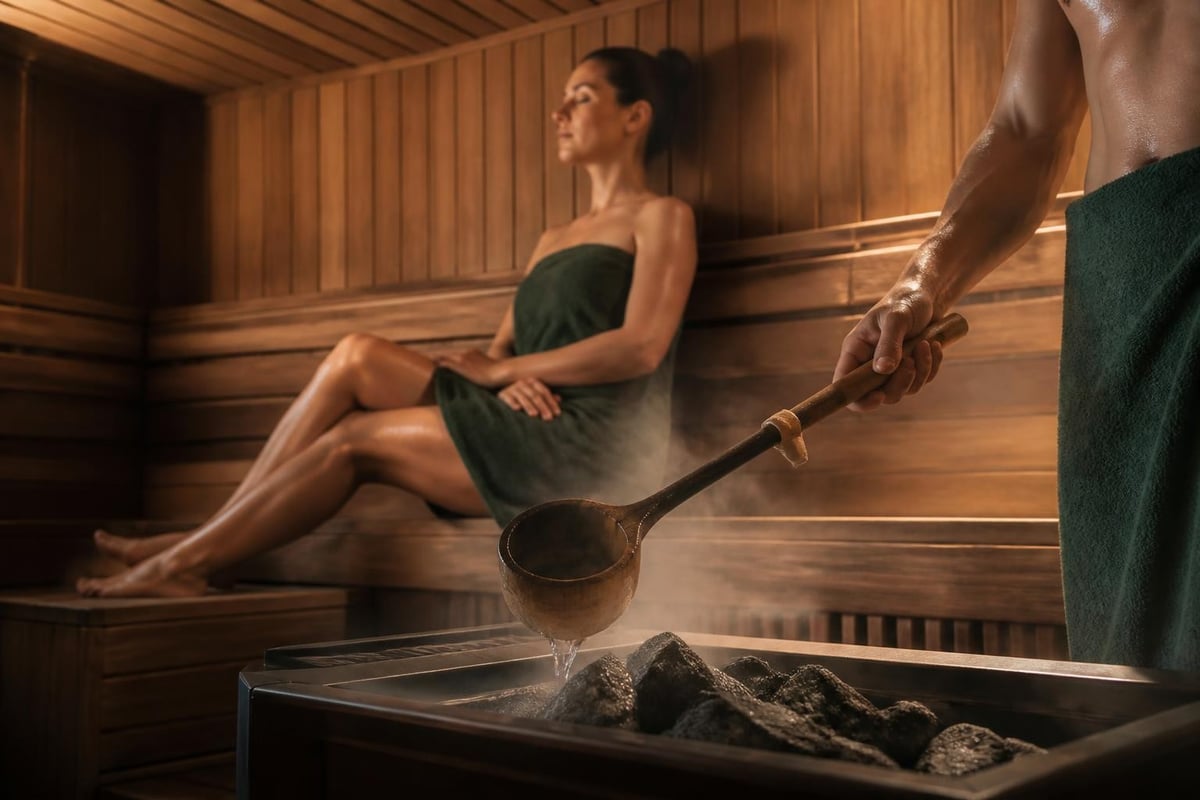
In a sauna, throwing a ladle of water on the rocks (löyly) briefly spikes humidity and radiant heat, making even 80°C feel like the hottest sauna you've experienced. This is normal and safe if you control how much water you add and how long you stay.
Safe Upper Limits for Sauna Temperature
Research and traditional practice point to a practical ceiling for routine bathing. A systematic review of passive heating shows that core body temperature, heart rate, and autonomic stress all rise sharply above 90°C, especially when paired with moderate humidity.
| Bench Temperature | Typical Use | Risk Level |
|---|---|---|
| 70–80°C (158–176°F) | Beginner-friendly; long sessions comfortable | Low |
| 80–90°C (176–194°F) | Traditional Finnish range; experienced bathers | Low to moderate |
| 90–100°C (194–212°F) | Advanced; short sessions only | Moderate to high |
| Above 100°C (212°F) | Extreme/competition; medical monitoring advised | High |
Key safety factors:
- Bench height: Hot air rises. Sitting on the top bench in a tall sauna can expose you to temperatures 10–15°C higher than floor level.
- Session length: The hottest sauna is safe only if you limit exposure. Ten minutes at 100°C can be tolerable; thirty minutes is dangerous.
- Health status: Cardiovascular conditions, medications that affect sweating or blood pressure, and alcohol all raise risk at high temperatures.
The National Fire Protection Association (NFPA) codes and CSA standards don't mandate a maximum sauna temperature, but they do require heaters to have adjustable thermostats and safety cutoffs to prevent uncontrolled overheating.
Documented Risks Above Safe Limits
A case report on fatal heat stroke in a sauna analyzed a death that occurred after prolonged exposure near 100°C combined with alcohol. Forensic markers showed core temperature had exceeded 41°C (106°F), the threshold for organ damage.
What can go wrong in the hottest sauna conditions:
- Heat exhaustion: Dizziness, nausea, rapid pulse. You can usually recover by cooling down and rehydrating.
- Heat stroke: Core temperature above 40°C, confusion, loss of consciousness. This is a medical emergency.
- Thermal burns: Direct contact with metal, hot benches, or steam plumes at very high temperature can burn skin in seconds.
- Respiratory distress: Breathing air above 100°C can scald airways, especially if you inhale deeply during a steam burst.
You don't need the hottest sauna to enjoy the benefits. Most of the cardiovascular, relaxation, and recovery effects happen comfortably between 75°C and 85°C.
Why the Hottest Sauna Isn't Always the Best Sauna
In Finnish sauna culture, heat is a tool, not a badge of honor. The goal is soft, enveloping warmth (lämpö) and the rhythmic pulse of steam (löyly), not just cranking the dial to the maximum.
Trade-offs at extreme temperatures:
- Shorter sessions mean less time to relax, stretch, meditate, or enjoy the ritual.
- Harsher breathing can make it hard to settle into calm, deep breathing.
- Higher injury risk discourages beginners and families from joining you.
- Faster wood deterioration in barrel or cabin saunas, as extreme heat and rapid humidity swings stress joints and wood fibers.
An experimental study comparing passive heating methods found that moderate sauna temperatures (80°C) produced similar heart-rate and core-temperature responses to hotter sessions (95°C), but with better subjective comfort and lower dropout rates.
Heater Size and Control Matter More Than Maximum Output
The hottest sauna often results from an oversized or poorly controlled heater. Choosing the right heater for your sauna volume ensures you can reach a comfortable range without overshooting.
Electric heater sizing:
- 1 kW per 1.5–2.0 m³ of interior volume is the standard guideline for outdoor saunas with good insulation.
- Adjustable thermostats let you fine-tune temperature and prevent runaway heating.
- Built-in timers and safety cutoffs are required by UL and CSA standards in North America.
Wood-burning heater control:
- Airflow adjustment (damper) lets you moderate burn rate and heat output.
- Thermal mass in the rock chamber smooths temperature swings, preventing hot spikes after adding logs.
- Experience required: Wood heat is harder to dial in precisely, so new users often start cooler and work up.
If you're comparing outdoor saunas for your backyard, ask whether the standard heater recommendation matches your climate, insulation level, and preferred bathing style. An undersized heater won't reach your target; an oversized one can create the hottest sauna conditions without enough control.
How to Set and Monitor Your Sauna Temperature Safely
Even if your heater can produce the hottest sauna temperatures, you control how you use it. Here's a practical process for dialing in the right heat.
Step-by-Step Temperature Setup
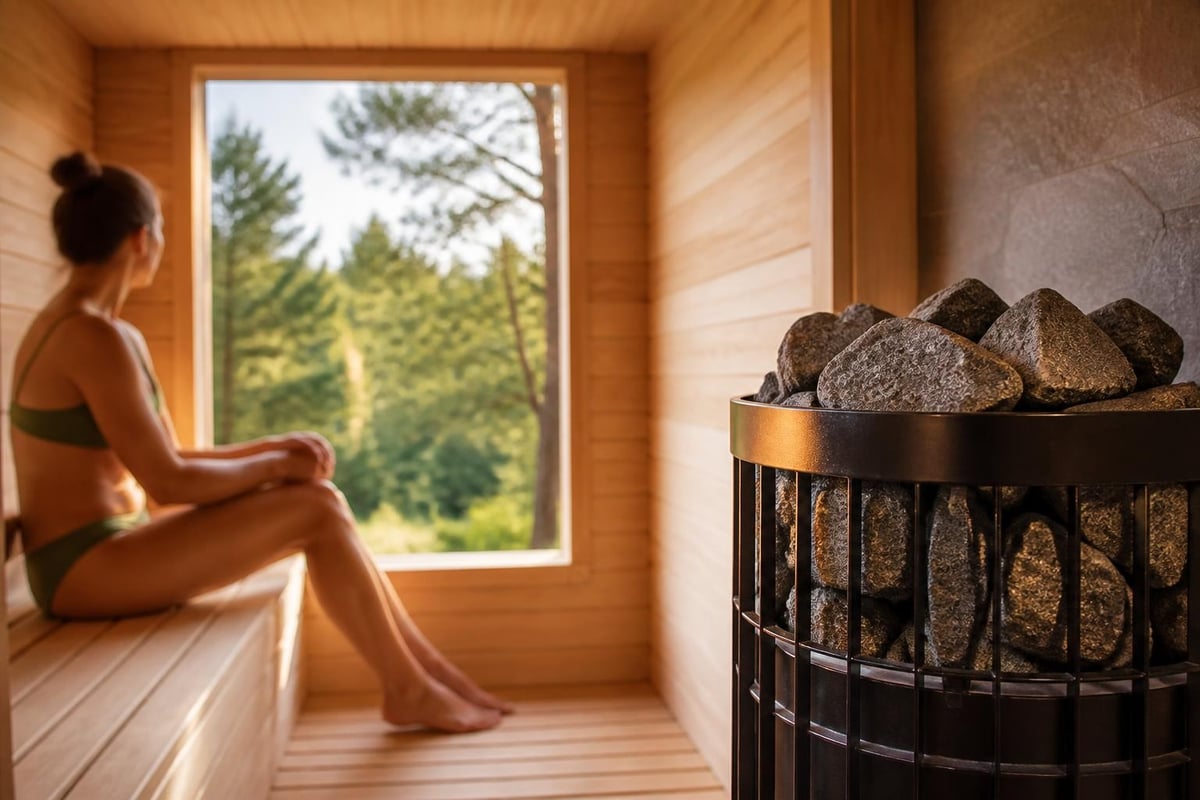
- Install a reliable thermometer at seated head height on the wall opposite the heater. Avoid placing it directly above the heater (reads too high) or near the door (reads too low).
- Preheat to your target range. For most backyard sessions, 75–85°C is comfortable. Allow thirty to forty-five minutes for a well-insulated outdoor sauna to stabilize.
- Test the heat on the top bench before inviting guests. Sit for two to three minutes. If you feel lightheaded or breathless, lower the thermostat.
- Add löyly in small doses. One ladle of water at a time. Wait thirty seconds between throws to let humidity disperse.
- Monitor your body. Rapid pulse, nausea, or dizziness mean it's time to step out, cool down, and hydrate. Don't push through discomfort.
Seasonal adjustments:
- Winter in cold climates: Your sauna may lose heat faster through walls and the door. You might set the thermostat 5°C higher to maintain the same felt temperature at the bench.
- Summer or mild weather: Lower the target slightly. The smaller temperature difference between inside and outside makes the sauna feel more intense.
Tools and Accessories That Improve Safety
| Tool | Purpose | Why It Helps |
|---|---|---|
| Analog or digital thermometer | Measure air temperature at head height | Gives real-time feedback; digital models can log peaks |
| Hygrometer | Track relative humidity | Helps you understand how löyly changes perceived heat |
| Sand timer or waterproof clock | Track session length | Prevents accidental overexposure in the hottest sauna conditions |
| Wooden bucket and ladle | Controlled water delivery to rocks | Avoids dumping too much water at once and spiking humidity dangerously |
Some advanced home sauna users also monitor heart rate with a waterproof chest strap or optical sensor. If your resting heart rate in the sauna exceeds 120–130 bpm and you're not doing contrast therapy intervals, consider lowering the temperature.
Real-World Examples: Competitive Sauna and Record Attempts
Public fascination with the hottest sauna has fueled competitions and endurance events. These spectacles offer lessons in what's possible under controlled conditions and what's dangerous without oversight.
The Guinness World Records sauna relay event held in Finland in 2026 saw teams rotating through a sauna held near 90°C for twenty-four consecutive hours. Organizers monitored temperature, humidity, and participant vital signs continuously. No one stayed longer than twelve minutes per session.
What these events show:
- Medical supervision is mandatory when pushing limits.
- Short intervals with full cooling between rounds allow the body to recover.
- Hydration and electrolyte replacement are critical. Competitors drank water and electrolyte solutions between rounds.
- Individual variation is huge. Some participants felt fine at 95°C; others struggled at 85°C.
For your backyard sauna, the takeaway is simple: the hottest sauna isn't a goal in itself. Sustainable, repeatable comfort beats one-time extremes.
Choosing the Right Sauna for Safe, Comfortable Heat
Not all saunas handle high temperatures equally well. Construction, insulation, ventilation, and heater placement all affect how heat feels and how safely you can operate near the upper range.
What to Look For in a High-Performance Outdoor Sauna
Wall thickness and material:
- 46 mm Thermowood or Nordic Pine walls provide good insulation and thermal mass, holding heat without extreme swings.
- Thinner walls (28–34 mm) lose heat faster, requiring a larger heater or higher thermostat setting to reach the same bench temperature.
Roof insulation:
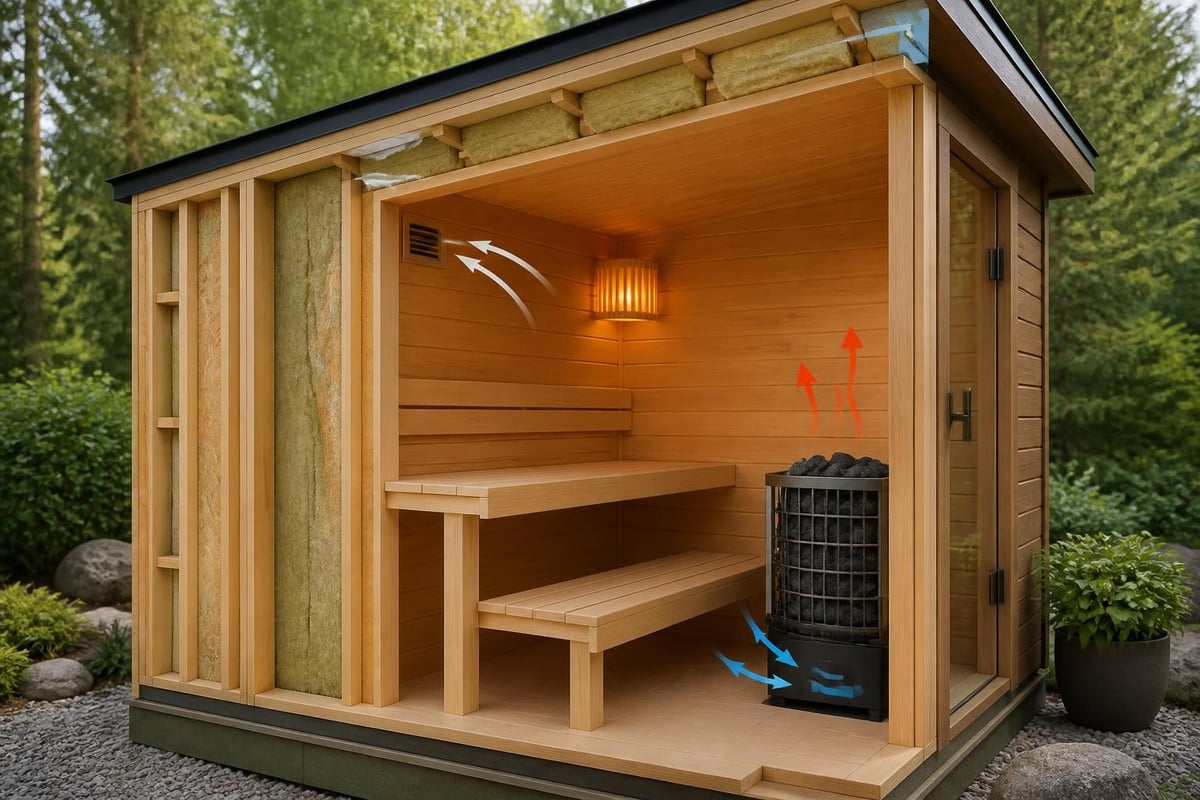
- Insulated roofs (mineral wool or foam between layers) trap rising heat and keep the ceiling from radiating cold back down in winter.
- Uninsulated roofs allow heat to escape, making it harder to reach the hottest sauna temperatures consistently.
Ventilation design:
- Adjustable intake vents near the floor and exhaust vents high on the opposite wall create steady airflow that removes stale air without dumping heat.
- Too little ventilation traps CO₂ and makes breathing uncomfortable even at moderate temperatures. Too much chills the sauna and wastes energy.
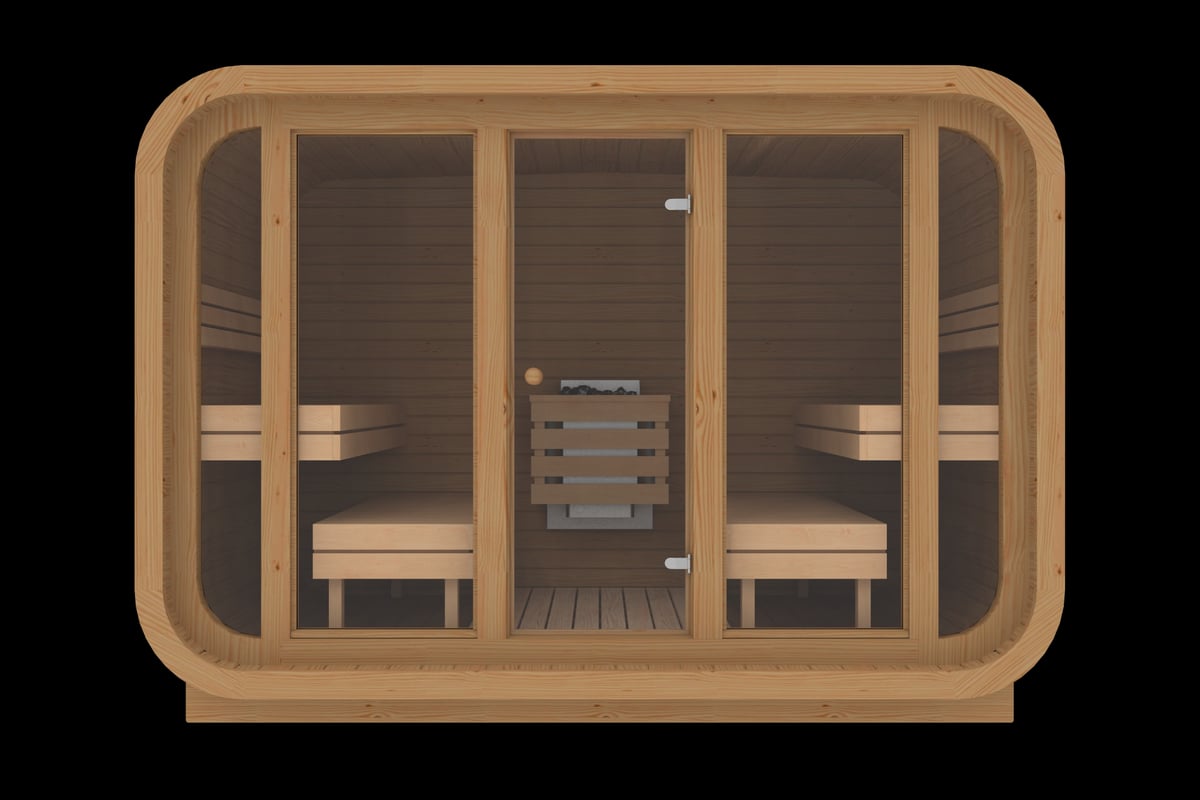
RecoSauna's Thermowood models balance these factors for year-round outdoor use in North American climates. The RecoSauna Sisu Square Sauna 3.0 × 2.3 m – Thermowood offers a spacious layout for two to six people, 46 mm solid walls, and flexible bench configurations that let taller bathers sit lower (cooler) or more experienced users sit higher (hotter) as preferred.
Comparing Temperature Performance: Electric vs. Wood-Burning Heaters
Both heater types can create the hottest sauna if sized correctly. The difference is in control and consistency.
| Feature | Electric Heater | Wood-Burning Heater |
|---|---|---|
| Temperature precision | ±2°C with digital thermostat | ±5–10°C; varies with fuel and airflow |
| Preheat time | 30–45 min for insulated outdoor sauna | 45–75 min; depends on wood type and draft |
| Ease of use | Turn dial, walk away | Requires fire-starting, log feeding, damper tuning |
| Peak output | Capped by wattage; stable max temp | Can exceed safe limits if overfed; requires attention |
| Best for | Consistent routine bathing; families; beginners | Ritual, traditional experience; off-grid; advanced users |
If you're new to sauna and want to avoid accidentally creating the hottest sauna conditions, electric heat with a thermostat and timer is the safer starting point.
Practical Tips for Managing Heat in Your Backyard Sauna
Once your sauna is installed and the heater is sized correctly, small adjustments make a big difference in comfort and safety.
Pre-bathing:
- Shower first to remove oils and dirt. Clean skin sweats more efficiently.
- Hydrate with water thirty to sixty minutes before your session. Don't rely on drinking during the sauna; it's harder to absorb fluids when your core temperature is elevated.
- Set a target temperature based on your experience. Beginners should start at 70–75°C. Experienced bathers can work up to 85–90°C over weeks.
During your session:
- Start on a lower bench. Spend five minutes acclimatizing before moving higher.
- Breathe slowly and deeply through your nose when possible. This warms and humidifies the air before it reaches your lungs.
- Add löyly sparingly. One ladle every few minutes. If the air feels harsh, wait longer between throws or skip a round.
- Exit when you feel the first sign of discomfort. Dizziness, rapid heartbeat, or nausea are signals to cool down, not badges to ignore.
After your session:
- Cool gradually. Step outside, sit or walk for two to three minutes, then rinse with cool (not ice-cold) water.
- Rehydrate with water or an electrolyte drink. Saunas cause significant fluid loss even at moderate temperatures.
- Rest for at least as long as you spent in the sauna before jumping back into activity.
Supplements supporting hydration and recovery can complement a regular sauna routine. DoseRank helps you compare electrolyte formulas, magnesium supplements, and adaptogens based on evidence, dose, and value, so you can choose options that fit your wellness goals.
Temperature Myths and Misconceptions
Separating fact from hype helps you make smarter decisions about how hot your sauna should run.
Myth: Hotter saunas burn more calories.
Elevated heart rate and sweating do increase energy expenditure slightly, but the difference between 80°C and 100°C is minimal. You're better off focusing on session frequency and consistency than chasing the hottest sauna.
Myth: The hottest sauna detoxifies better.
Sweat is mostly water and trace electrolytes. The liver and kidneys handle toxin removal. Extreme heat doesn't "purge" toxins; it just dehydrates you faster.
Myth: Traditional Finnish saunas always run above 90°C.
Traditional practice varies. Many Finns prefer 75–85°C with generous löyly. The hottest sauna isn't the most authentic; controlled heat and good steam are what matter.
Myth: You should stay until you can't take it anymore.
Pushing to your absolute limit increases risk without added benefit. Moderate sessions repeated regularly are safer and more sustainable.
Adapting Temperature for Different Users and Goals
Not everyone in your household will want the same heat. Flexibility is key.
Family and Mixed-Experience Groups
- Lower the thermostat to 70–75°C when kids, elderly relatives, or first-timers join you.
- Shorter sessions (five to eight minutes) let everyone enjoy the ritual without stress.
- Skip heavy löyly until everyone is comfortable with dry heat.
Athletes and Recovery-Focused Bathing
- 80–85°C is the sweet spot for post-workout relaxation. It's hot enough to boost circulation and ease muscle tension without triggering excessive cardiovascular strain.
- Pair with cold plunge for contrast therapy. Alternating heat and cold amplifies recovery benefits. Check the cold plunge collection if you're planning a full backyard wellness setup.
Experienced Bathers and Traditional Löyly
- 85–90°C with steam replicates the classic Finnish experience. This is the range where löyly transforms the sauna from hot air into enveloping heat.
- Top bench, eyes closed, slow breathing. This is where sauna becomes meditation.
How Climate and Installation Affect Safe Maximum Temperature
Where you live and how your sauna is installed both influence how hot it can run safely and efficiently.
Cold climates (northern USA, Canada):
- Well-insulated walls, floor, and roof are essential. Without insulation, you'll struggle to reach even 75°C in January.
- Weatherproof doors with magnetic seals prevent drafts that chill the sauna and create uneven heat.
- Higher heater output may be needed. A sauna that reaches 85°C in summer might need a 20% larger heater to hit the same temperature in winter.
Mild or warm climates (southern USA, coastal regions):
- Shade and ventilation matter more than insulation. Sitting in full sun, your sauna can preheat passively to 40°C or higher, making it easier to reach target temperature but harder to cool between sessions.
- Lighter construction (Nordic Pine, moderate insulation) can be sufficient if you're not battling freezing temperatures.
Foundation and placement:
- Concrete pads or gravel bases drain water and support the structure but can wick cold up through the floor in winter. Adding a thermal break (rigid foam under the floor joists) helps.
- Elevated decks improve airflow under the sauna and reduce ground moisture but require stronger insulation underneath.
If you're comparing sauna models, ask how each handles your local climate before assuming the hottest sauna in Texas will perform the same in Minnesota.
Maintaining Your Sauna for Consistent, Safe Heat
Regular upkeep keeps your sauna operating safely at your chosen temperature and prevents dangerous malfunctions.
Heater and thermostat:
- Inspect wiring and connections annually. Loose terminals can arc, overheat, or fail, leaving the heater uncontrolled.
- Test the safety cutoff. Most electric heaters have a high-limit switch that shuts power if temperature exceeds a preset ceiling (usually 110–120°C). Verify it trips correctly during your annual service.
- Replace thermostats if readings drift. A faulty thermostat can run the sauna hotter than you intend.
Rocks and steam:
- Replace heater rocks every one to two years. Cracked or crumbling rocks reduce heat storage and can block airflow, causing hot spots and uneven heating.
- Clean mineral buildup from the rock chamber if you use hard water for löyly.
Ventilation:
- Clear intake and exhaust vents of dust, leaves, and debris. Blocked vents reduce oxygen flow and make the sauna feel stuffier even at moderate temperatures.
Wood and seals:
- Check door seals and hinges. Gaps let heat escape and create drafts. Magnetic or silicone seals should compress fully when the door closes.
- Inspect interior wood for cracks, splinters, or discoloration. Extreme heat cycles can dry and stress wood; Thermowood resists this better than untreated pine, but all wood benefits from occasional treatment with sauna-safe oils.
A well-maintained sauna reaches target temperature consistently and safely. Neglect can turn even a moderate setting into an unpredictable, uncomfortable, or hazardous experience.
The hottest sauna isn't always the best sauna. Safe, enjoyable bathing happens when you balance temperature, humidity, session length, and your own body's signals. Whether you're drawn to the traditional Finnish range of 75–85°C or occasionally explore higher heat for a challenge, understanding the science and risks helps you make smarter choices for your backyard wellness routine. RecoSauna combines authentic Finnish design, proven Thermowood construction, and flexible heating options to help you create a sauna that fits your climate, space, and bathing style. Explore the collection and start building the ritual that works for you.
Share:
Outdoor Sauna Electric: Buyers Guide 2026
Wet Sauna Guide: Heat, Steam & Löyly Explained (2026)