

A 1 person sauna sounds like the ideal solution if you live alone, have limited yard space, or want to keep costs down. The reality is more nuanced. Most sauna manufacturers, including Finnish builders with generations of experience, design their smallest models for two people, and with good reason. A true single-occupancy sauna can feel cramped, limit your posture options, and hurt resale value. In 2026, North American homeowners weighing a 1 person sauna need to understand the practical trade-offs before they dig the foundation or wire the heater.
Why Most Outdoor Saunas Start at Two-Person Capacity
Walk into a traditional Finnish sauna, and you'll notice generous bench space. That's not luxury; it's function. Authentic sauna bathing involves shifting posture during the session. You sit upright to cool slightly, recline to maximize heat exposure, and move between bench levels as your body adapts. A 1 person sauna with a single narrow bench eliminates those options.
Practical challenges with single-occupancy designs:
- Restricted posture: Most 1 person sauna cabins measure 3 to 4 feet wide, barely enough to sit comfortably. Reclining requires 6 feet of bench length, which single-user models rarely provide.
- Heater proximity: Compact interiors place you closer to the electric or wood-burning heater, raising burn risk and making temperature control harder. Sauna heaters need clearance from combustible surfaces and bathers; NFPA electrical codes and manufacturer guidelines specify minimum distances.
- Ventilation limitations: Smaller air volume heats quickly but can feel stuffy. Proper ventilation, as outlined in ASHRAE air-quality standards, becomes more critical and harder to engineer in tight spaces.
- Resale concerns: A 1 person sauna appeals to a narrow buyer pool. Most families or couples prefer a sauna that accommodates two adults, even if they typically use it solo.
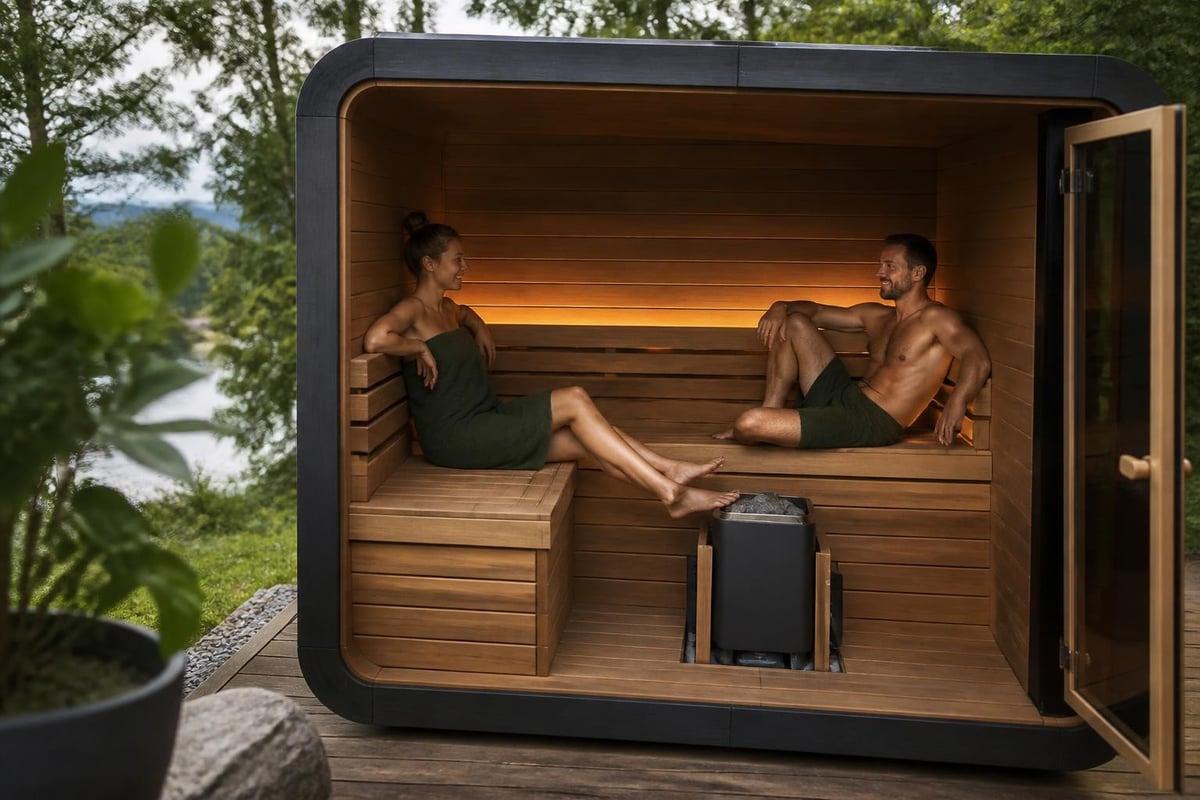
A 2-person outdoor sauna, by contrast, offers elbow room, flexible bench layouts (straight or L-shaped), and the option to share the experience when friends or family visit. It's the smallest size most Finnish sauna brands recommend.
Comparing 1 Person Sauna Dimensions and Layout
If you're determined to explore a 1 person sauna, dimensions matter more than marketing labels. Interior footprint, bench configuration, and ceiling height all affect how the sauna feels and performs.
| Feature | Typical 1 Person Sauna | Compact 2 Person Sauna | Notes |
|---|---|---|---|
| Interior width | 3 to 4 feet | 4.5 to 5 feet | Extra width allows L-shaped or deeper benches |
| Bench length | 3 to 4 feet | 5.5 to 6.5 feet | Reclining requires 6 feet minimum |
| Ceiling height | 6 to 6.5 feet | 6.5 to 7 feet | Higher ceilings improve air circulation |
| Heater placement | Wall-mounted, close | Corner or center, safer clearance | More space reduces burn risk |
| Bench levels | Usually one | Often two | Multiple levels let you adjust heat exposure |
Bench Layout and Comfort
A straight bench in a narrow 1 person sauna forces you to sit upright for the entire session. An L-shaped bench, common in 2-person models, gives you the option to lean back, prop your feet up, or lie down fully. That flexibility transforms a 15-minute sit into a relaxing 30-minute session.
Heat distribution also improves in slightly larger cabins. A 2-person sauna has enough interior volume to create gentle convection currents. Hot air rises to the ceiling, cooler air sinks near the floor, and you control your exposure by moving between bench levels. In a cramped 1 person sauna, that stratification is weaker, and temperature swings feel more abrupt.
Material and Construction Choices for Small Saunas
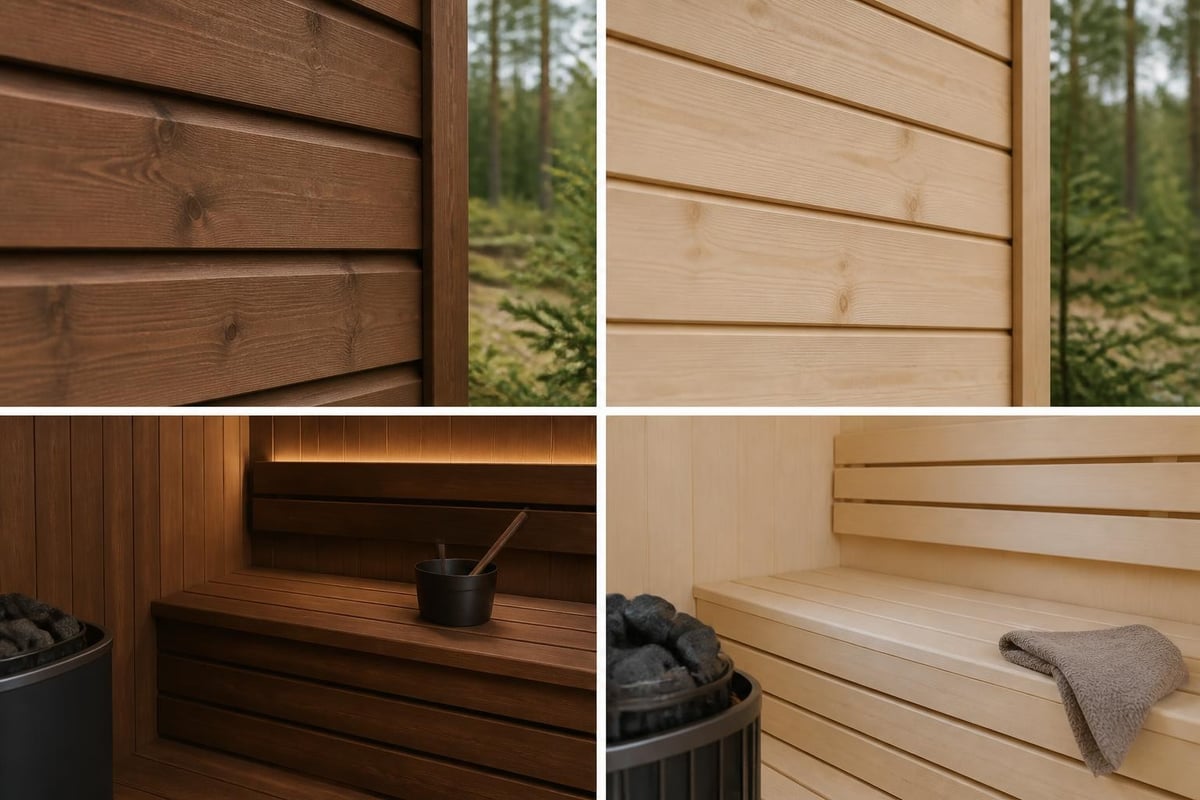
Whether you choose a 1 person sauna or a compact 2-person model, material quality determines durability, thermal performance, and maintenance over decades. Outdoor saunas face rain, snow, UV exposure, and temperature swings from -20°F to 195°F. Softwoods like Nordic Pine or Spruce are traditional, while Thermowood offers enhanced stability.
Thermowood vs. Nordic Pine
- Thermowood: Heat-treated at high temperatures to reduce moisture absorption, resist decay, and minimize warping. Darker, denser, and more stable in harsh climates. Requires less frequent sealing but costs 15 to 25% more than untreated pine.
- Nordic Pine: Lighter in color, traditional Finnish choice, and slightly easier to work with during assembly. Needs regular sealing (every 2 to 3 years) to maintain weather resistance, especially in wet or humid regions.
Both materials meet hydrothermal construction standards when properly sourced and kiln-dried. Wall thickness also matters. Look for 46 mm or thicker solid wood walls; thinner walls (28 to 34 mm) lose heat faster and feel less solid underfoot.
Bench and Interior Wood
Black Alder and Aspen are the dominant bench woods in premium saunas. Both resist splintering, stay cooler to the touch, and handle high humidity without significant movement. Alder has a reddish tint and slightly tighter grain; Aspen is paler and softer. Neither choice is wrong, but both need proper airflow underneath to dry after each session. A 1 person sauna with a single fixed bench can trap moisture; a 2-person model with a removable or slatted design dries faster.
Heater Options and Electrical Requirements
A 1 person sauna needs less heating power than a 4-person model, but undersizing the heater is a common mistake. Small cabins lose heat quickly when you open the door, and underpowered heaters struggle to recover temperature.
Electric sauna heaters dominate the North American market because they're easier to install, require no chimney, and offer precise temperature control. Most residential saunas use 240V heaters ranging from 4.5 kW to 9 kW. A true 1 person sauna (40 to 60 cubic feet interior volume) works fine with a 4.5 kW heater. A compact 2-person model (70 to 90 cubic feet) performs better with 6 kW or more.
Wiring and Permitting
All electric sauna heaters require a dedicated circuit wired to code. In the USA, that means compliance with the National Electrical Code. Most jurisdictions also require a building permit before you install an outdoor sauna, regardless of size. Budget $500 to $1,200 for electrical work (trenching, conduit, breaker panel upgrade) and $150 to $400 for permits and inspections.
Wood-burning heaters eliminate electrical costs but add complexity. You'll need a chimney, heat shields, and clearances that consume precious floor space. In a 1 person sauna, a wood stove often takes up a third of the interior. That's why electric heaters dominate small sauna installations.
Temperature, Humidity and the Finnish Löyly Experience
Authentic Finnish sauna culture centers on löyly, the steam and humidity created by throwing water on hot sauna stones. Traditional Finnish Sauna Society guidelines recommend 158°F to 194°F (70°C to 90°C) with moderate humidity (10 to 20%).
A 1 person sauna can absolutely reach those temperatures, but thermal mass and stone capacity affect how well it holds heat after each water throw. Smaller heaters hold fewer stones, which cool faster when you add water. That means weaker löyly and longer recovery times between rounds.
Health and Safety Considerations
Regular sauna bathing is associated with cardiovascular and metabolic benefits, including improved circulation, reduced blood pressure, and enhanced recovery after exercise. A comprehensive review of passive heat therapies highlights these effects and emphasizes consistent practice over sauna size.
Safety in a 1 person sauna requires extra attention:
- Ventilation: Smaller air volume means faster oxygen depletion. Install a passive vent near the ceiling and a low intake vent near the floor. Never seal the cabin completely.
- Hydration: Drink water before and after each session. Heat stress affects your body the same way in a 1 person sauna as in a larger one.
- Emergency exit: Test the door latch from the inside before your first session. Some compact sauna doors swing inward, which can jam if you faint and fall against them.
Installation, Foundations and Outdoor Placement
A 1 person sauna weighs 400 to 800 pounds when assembled (less than a compact 2-person model), but foundation requirements are identical. Outdoor saunas need a level, stable, well-drained base to prevent settling, rot, and structural stress.
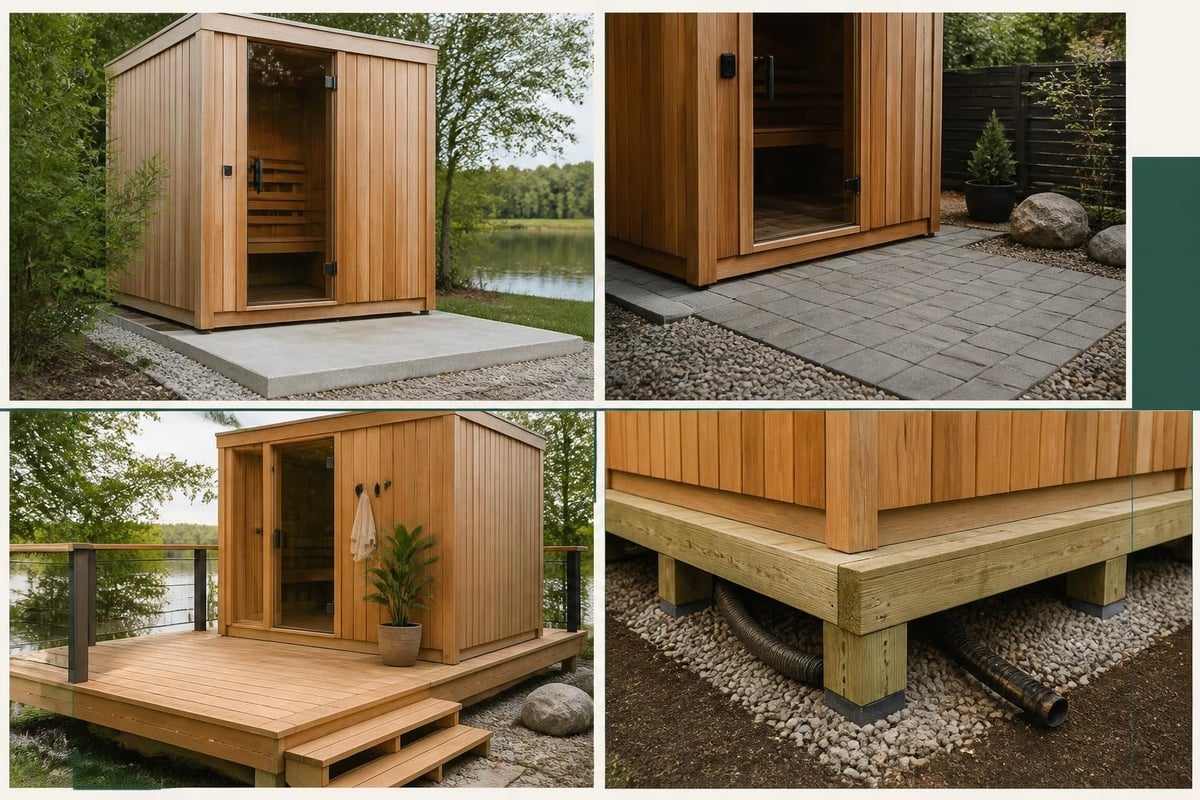
Common foundation options:
- Concrete slab: Most durable. Pour a 4-inch slab with rebar and proper drainage slope. Costs $800 to $1,500 for a small sauna footprint.
- Paver base: Compacted gravel (4 to 6 inches) topped with concrete pavers. Easier to DIY; costs $300 to $600. Ensure pavers are level within 1/4 inch.
- Deck integration: If you have an existing deck, verify it's rated for the sauna's weight plus snow load. Most need additional blocking or footings.
- Pressure-treated timber frame: Least expensive ($150 to $400) but requires annual inspection for rot and insect damage.
Site Selection
Place your 1 person sauna where it has:
- Electrical access: Keep wire runs under 100 feet to minimize voltage drop and trenching cost.
- Privacy: Even if you bathe alone, you'll want separation from neighbors' sight lines.
- Drainage: Avoid low spots where rainwater pools. Moisture under the sauna accelerates wood decay.
- Winter access: In snowy climates, you'll need a cleared path. A sauna 20 feet from your back door is more convenient than one tucked into a far corner.
Should You Buy a 1 Person Sauna or Go Bigger?
Most buyers asking about a 1 person sauna are really looking for the smallest comfortable outdoor sauna that fits their budget and yard. That's usually a compact 2-person model, not a true single-occupancy cabin.
When a 1 person sauna makes sense:
- You have an exceptionally tight space (less than 5 feet wide) and cannot accommodate a larger footprint.
- You're confident you'll never share the sauna and resale value isn't a concern.
- You're building a custom sauna and can design a narrow layout with a full-length reclining bench.
When a 2-person sauna is the better choice:
- You want the option to recline or shift posture during sessions.
- You value resale flexibility and broader market appeal.
- You occasionally host guests or want a partner to join you.
- You prefer safer heater clearances and better ventilation.
The price difference between a 1 person sauna and a compact 2-person model is often just 10 to 20%, but the comfort and usability gap is significant. For most North American homeowners, a 2-person outdoor sauna in Thermowood or Nordic Pine offers the best balance of size, cost, and long-term satisfaction.
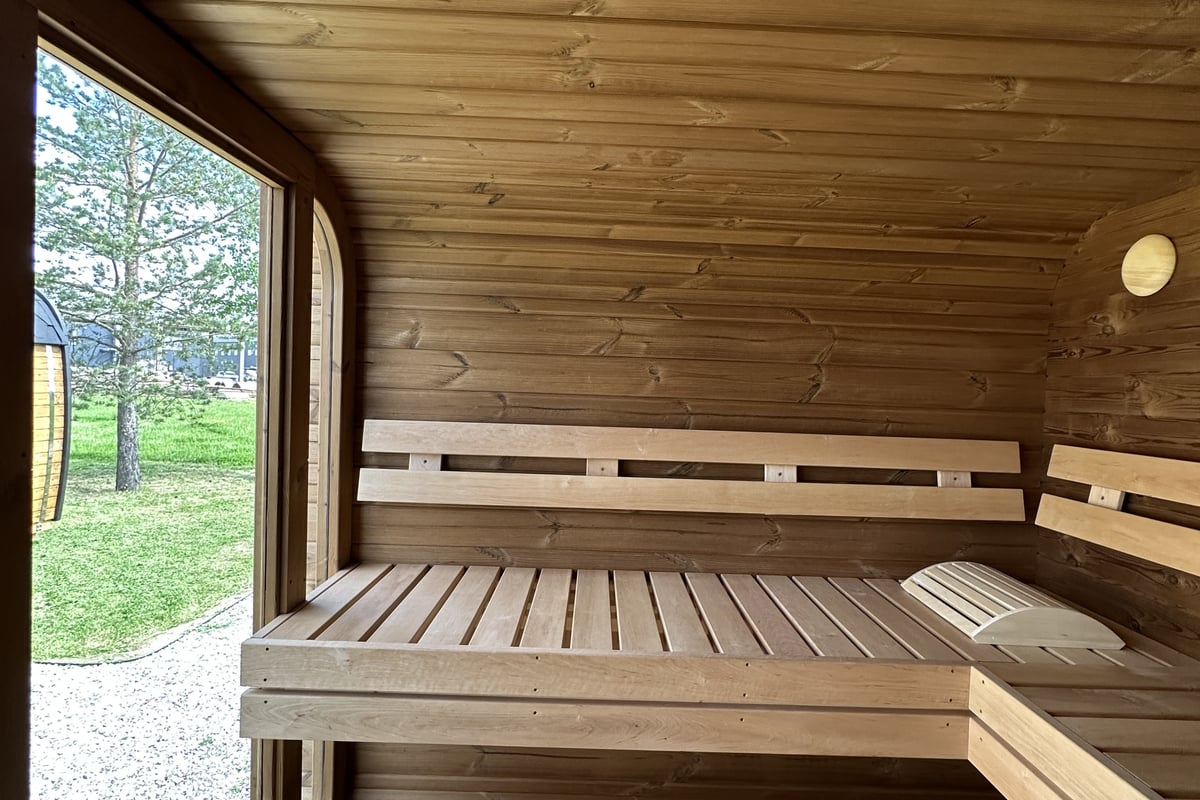
Choosing a sauna with a changing room adds even more value, especially in colder climates. A dedicated space to undress, store towels, and cool down transforms a simple sauna session into a complete backyard wellness ritual. RecoSauna Comfort Square Sauna 3.0 × 2.3 m in Thermowood includes a 1-meter changing room, an internal glass door, and space for up to six people, making it a premium choice for homeowners who want privacy and flexibility without sacrificing footprint efficiency.
Maintenance and Long-Term Ownership
A 1 person sauna requires the same maintenance as any outdoor wood structure. Thermowood exteriors need annual cleaning (mild soap, soft brush, rinse) and inspection for cracks or loose boards. Nordic Pine and Spruce saunas need sealing every 2 to 3 years with a breathable wood oil or stain. Benches benefit from occasional light sanding to remove splinters and minor discoloration.
Inside the sauna:
- Wipe benches after each session to remove sweat and oils.
- Leave the door and vents open after use to promote drying.
- Vacuum or sweep the floor weekly to remove dirt and debris.
- Inspect heater stones yearly; replace cracked or crumbling stones.
Outside the sauna:
- Clear leaves and debris from the roof to prevent moisture buildup.
- Check door seals and hinges; replace worn weatherstripping.
- Trim vegetation around the sauna to maintain airflow and reduce mildew.
- In snowy regions, brush heavy snow off the roof to prevent structural stress.
With routine care, a well-built outdoor sauna lasts 20 to 30 years. Thermowood models often outlast untreated pine in harsh climates, but both materials perform well when maintained.
Comparing Costs: 1 Person Sauna vs. Compact 2 Person Models
Price is a major factor when homeowners explore a 1 person sauna. Expect to spend $3,000 to $6,000 for a basic single-occupancy outdoor sauna kit (walls, roof, door, benches). Add $800 to $1,500 for the heater, $500 to $1,200 for electrical installation, and $300 to $1,500 for the foundation. Total installed cost: $4,600 to $10,200.
A compact 2-person outdoor sauna in Thermowood or Nordic Pine typically costs $4,500 to $8,000 for the kit, with similar heater, electrical, and foundation expenses. Total installed cost: $6,100 to $12,700. The premium is $1,500 to $2,500, but you gain usable space, better resale value, and more comfort.
| Expense Category | 1 Person Sauna | Compact 2 Person Sauna |
|---|---|---|
| Sauna kit | $3,000 – $6,000 | $4,500 – $8,000 |
| Electric heater (6 kW) | $800 – $1,500 | $800 – $1,500 |
| Electrical installation | $500 – $1,200 | $500 – $1,200 |
| Foundation | $300 – $1,500 | $400 – $1,800 |
| Permits/inspection | $150 – $400 | $150 – $400 |
| Total installed | $4,600 – $10,200 | $6,100 – $12,700 |
Financing options can spread the cost over 12 to 36 months, making a slightly larger sauna more accessible without straining your budget upfront.
Alternative Wellness Options: Saunas and Cold Plunge Combos
If you're considering a 1 person sauna primarily for solo wellness routines, pairing a compact 2-person sauna with a cold plunge tub creates a more complete experience. Contrast therapy (alternating heat and cold exposure) amplifies many of the benefits associated with sauna bathing, including improved circulation, faster recovery, and enhanced mental clarity.
Cold plunge setup options:
- Dedicated cold plunge tub: Insulated, temperature-controlled models maintain 39°F to 55°F year-round. Costs range from $3,000 to $8,000.
- Stock tank conversion: Galvanized steel livestock tanks (6 to 8 feet diameter) cost $300 to $600. Add a chiller ($800 to $1,500) for consistent temperature.
- Natural water source: If you have a pond, lake, or stream nearby, winter ice-water plunges require no equipment.
Place your cold plunge within 10 to 20 feet of the sauna. That distance is short enough to sprint between heat and cold but far enough to give each area its own character. Many North American homeowners anchor their backyard wellness setup around a sauna-plunge combo rather than investing in a single cramped sauna.
Cultural Context: Finnish Sauna Tradition and North American Adaptation
In Finland, saunas are deeply woven into daily life. Nearly every home has a sauna, and families bathe together multiple times per week. The Finnish Sauna Society preserves these traditions and offers guidance on temperature, humidity, and etiquette.
North American homeowners adapt these practices to fit larger yards, colder winters, and different building codes. A 1 person sauna is rare in Finland; even compact cottages typically include a 2-person sauna. The cultural emphasis is on shared experience and generous space, not minimalism.
That said, solo sauna bathing is entirely valid. Many people find their clearest thinking, deepest relaxation, and best recovery happen when they bathe alone. A compact 2-person sauna gives you that solitude while preserving the option to share the experience when you want company.
Choosing the Right Size for Your Needs
Sizing a sauna comes down to honest self-assessment. Ask yourself:
- Will I ever want to share this sauna with a partner, friend, or family member?
- Do I plan to recline during sessions, or am I comfortable sitting upright the whole time?
- How important is resale value if I move in 5 to 10 years?
- Do I have the budget for a slightly larger model, or is minimizing cost the priority?
If you answered yes to the first three questions, a compact 2-person outdoor sauna is almost certainly the better choice. If cost is the absolute driver and you're confident you'll never share the space, a 1 person sauna can work, but verify the interior dimensions support comfortable posture.
Most satisfied sauna owners, even those who bathe alone, choose a 2-person model. The extra square footage disappears once the sauna is in your yard, but the comfort difference is noticeable every time you step inside.
A 1 person sauna is a niche choice that works for a small number of buyers, but most North American homeowners find better long-term value in a compact 2-person outdoor sauna with Thermowood construction, flexible bench layouts, and room to grow. Whether you're drawn to authentic Finnish design, year-round outdoor wellness, or a complete sauna-and-cold-plunge setup, the right size and material choices make all the difference. RecoSauna brings Finnish sauna expertise to your backyard with clear product information, honest trade-off discussions, and premium Thermowood and Nordic Pine models designed for North American climates and lifestyles.
Share:
Wet Sauna Guide: Heat, Steam & Löyly Explained (2026)
Sauna Carpe Diem: Seize the Day with Authentic Heat