
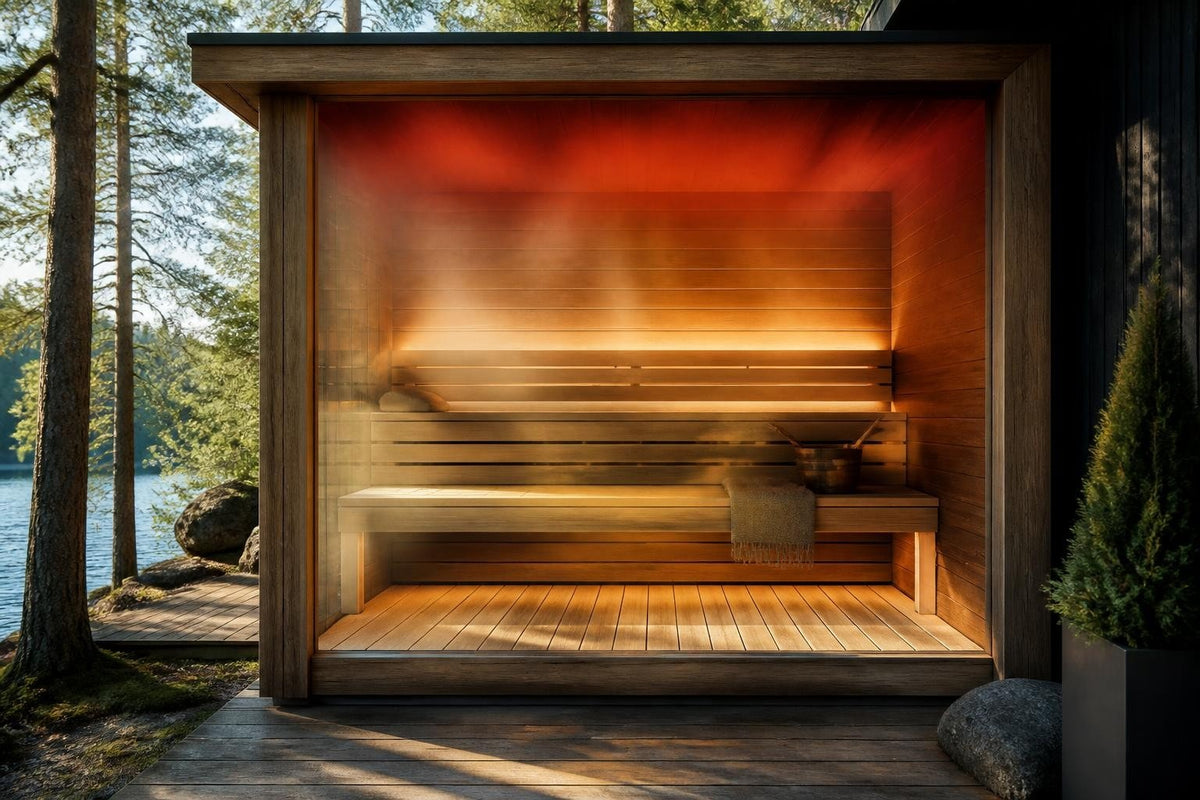
When shoppers search for "sauna hot," they're usually asking one of two questions: how hot should my sauna actually be, or why does my sauna not feel hot enough? Both questions matter when you're investing in an outdoor sauna for your backyard. The answer involves more than a single number on a thermometer. Proper sauna heat depends on air temperature, humidity, ventilation, heater placement, and how you create löyly (the steam that rises when water meets hot stones). Understanding these factors helps you choose the right sauna size, heater type, and design so your sauna delivers the authentic, enveloping warmth that defines the Finnish experience.
Understanding Sauna Temperature Ranges
A properly heated Finnish sauna typically runs between 70°C and 90°C (158°F to 194°F) measured at bench level. That's the zone where most bathers feel comfortable heat without strain.
Temperature varies dramatically by height inside the cabin. At floor level, the air may read 60°C (140°F), while the ceiling can reach 100°C (212°F) or higher. This stratification is normal and useful. You sit on the bench where the heat feels right, and you can adjust your exposure by moving higher or lower on the tiered seating.
Safe Operating Limits
Most home saunas settle into these practical ranges:
- Lower bench: 70–75°C (158–167°F)
- Upper bench: 80–90°C (176–194°F)
- Maximum ceiling temperature: 100–110°C (212–230°F)
Pushing beyond 90°C at sitting height doesn't improve the experience for most people. It increases risk without adding wellness benefit. The Finnish Sauna Society recommends 80–90°C as the standard target, with adjustments based on personal preference, humidity level, and session length.
How Humidity Changes Perceived Heat
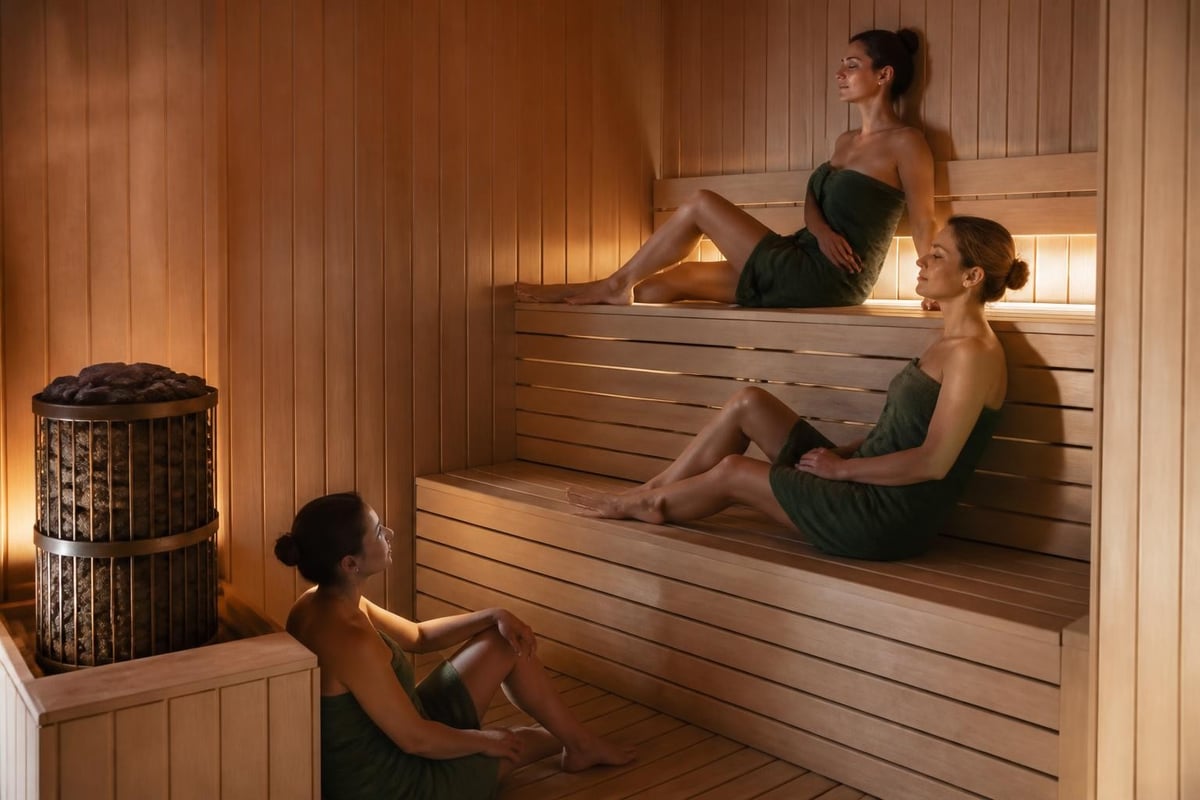
Dry heat and humid heat feel completely different, even at the same air temperature. A sauna hot enough at 80°C with low humidity may feel unbearable at the same temperature after a generous ladle of water hits the stones.
Relative humidity in a Finnish sauna typically ranges:
- Dry phase: 5–15% RH
- After löyly (steam): 15–30% RH
When you pour water on the sauna stones, the humidity spikes briefly, and the perceived temperature jumps. That burst of moist heat is what penetrates your skin and triggers the deep relaxation people associate with authentic sauna bathing. A recent study on thermoregulatory responses found that air temperature and relative humidity independently affect cardiovascular and thermal strain, meaning you can't evaluate "how hot" without also considering moisture.
Balancing Temperature and Steam
| Condition | Air Temp | Humidity | Feel |
|---|---|---|---|
| Too dry | 90°C | 5% | Harsh, drying, uncomfortable breathing |
| Balanced | 80°C | 15–20% | Enveloping warmth, relaxed breathing |
| Too humid | 75°C | 35%+ | Heavy, hard to breathe, sticky |
The goal is not maximum heat. It's the right combination of dry warmth and periodic steam that lets you sit comfortably for 10 to 15 minutes, cool down, and repeat.
What Makes a Sauna Feel Hot Enough
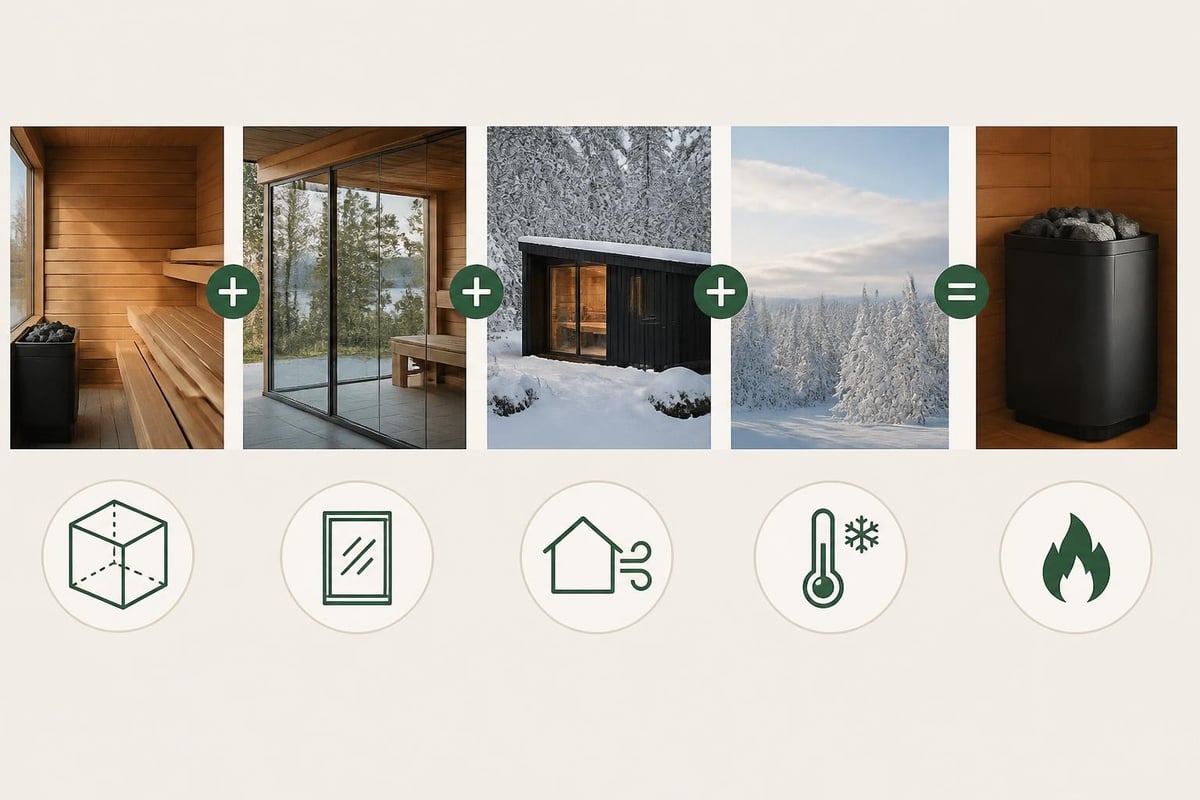
A sauna that struggles to reach or maintain proper temperature usually has one of five issues: undersized heater, poor insulation, excessive air leakage, incorrect ventilation, or outdoor conditions overwhelming the cabin's thermal envelope.
Common causes of inadequate heat:
- Heater too small for the cabin volume (underpowered by 1–2 kW)
- Thin walls without sufficient thermal mass (less than 40 mm solid wood)
- Gaps around doors, windows, or log joints
- Ventilation intake positioned too high, pulling warm air out
- Extreme cold (below -20°C) without insulated floor or roof
Outdoor saunas face harsher conditions than indoor units. A sauna hot in July may struggle in January if the construction isn't designed for year-round use. That's why 46 mm solid Thermowood or Nordic Pine walls, insulated roofs, and tight-fitting tempered glass doors matter in climates with real winters.
Heater Sizing Guidelines
Your heater must match the cabin's internal volume, measured in cubic meters, then adjusted upward for glass area, outdoor installation, and climate.
| Sauna Volume | Base Heater Size | Cold-Climate Adjustment |
|---|---|---|
| 6–9 m³ | 6 kW | +1–2 kW |
| 9–13 m³ | 8 kW | +2 kW |
| 13–18 m³ | 9 kW | +2–3 kW |
A 2.3 × 2.3 m sauna with a 2.0 m ceiling has roughly 10.6 m³ of interior volume. An 8 kW electric heater is appropriate for moderate climates; a 9 kW unit handles Canadian winters better. Undersizing by even 1 kW can add 15–20 minutes to preheat time and leave the upper bench lukewarm.
If you're comparing models and climates, outdoor saunas installed in Minnesota, Vermont, or Alberta benefit from upgraded heaters and insulated construction compared to milder regions like California or the Pacific Northwest.
Health Considerations and Safe Heat Exposure
Regular sauna use at appropriate temperatures has been studied extensively for cardiovascular and metabolic effects. A comprehensive meta-analysis of heat thermotherapy found that sauna bathing at 70–90°C, when practiced regularly, is associated with improved vascular function and reduced cardiovascular risk markers in healthy adults.
Harvard Health notes that while observational data from Finland is promising, randomized trials are still limited. Most evidence supports moderate, regular sessions rather than extreme heat or duration. A sauna hot enough to cause dizziness, rapid heartbeat, or nausea is too hot for safe use.
Guidelines for safe sessions:
- Start at 70–75°C if you're new to sauna bathing
- Limit initial sessions to 10 minutes
- Hydrate before and after, not during
- Exit immediately if you feel faint or uncomfortable
- Avoid alcohol before or during sauna use
- Consult your physician if you have cardiovascular conditions, are pregnant, or take medications affecting thermoregulation
The goal is sustainable heat that you can enjoy two to four times per week, not a single extreme session that leaves you exhausted.
Practical Tips for Consistent Sauna Heat
Once your sauna is properly sized and heated, small adjustments improve comfort and efficiency.
Preheat Time and Timing
Electric heaters typically need 30–45 minutes to bring a well-insulated outdoor sauna to 80°C. Wood-burning stoves may take 45–60 minutes but produce a deeper, more radiant heat. Plan your sauna session around preheat time, and avoid opening the door repeatedly while the cabin warms.
Ventilation Without Heat Loss
Fresh air is essential, but too much airflow cools the cabin. Position the intake vent low (near the floor, under the heater) and the exhaust vent high (opposite wall, near the ceiling). This creates gentle circulation without a drafty cross-breeze that strips warmth from the benches.
Löyly Technique
Pour 1–2 deciliters (about half a cup) of water onto the stones every few minutes. This keeps humidity in the 15–25% range and refreshes the heat without overwhelming the cabin. Overpouring floods the air with steam, making it hard to breathe and dropping perceived comfort.
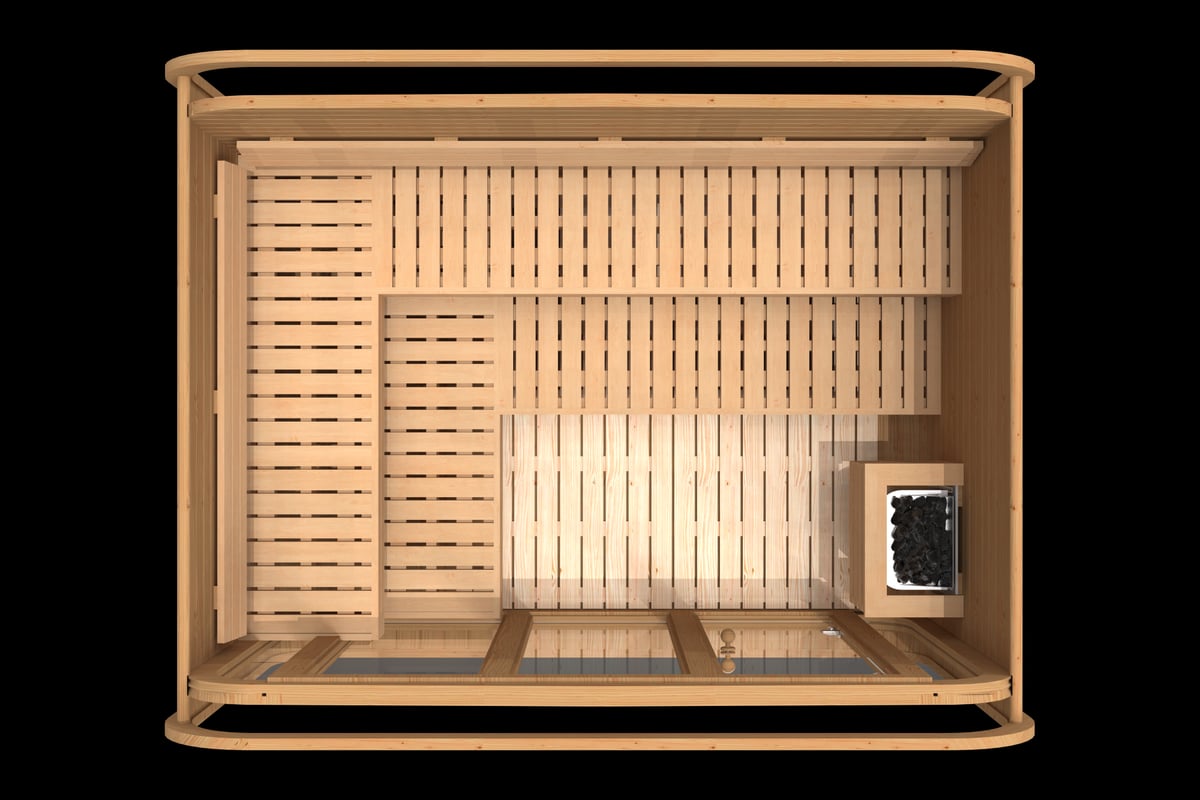
The RecoSauna Sisu Square Sauna 3.0 × 2.3 m in Thermowood gives you the interior volume and bench layout to support authentic löyly practice. Its 46 mm Thermowood walls hold heat efficiently, and the spacious floor plan accommodates either electric or wood-burning heaters without crowding the stones or limiting airflow.
Seasonal Adjustments
In winter, preheat 10–15 minutes longer and consider insulating the floor with rigid foam panels beneath the sauna structure. In summer, you may dial down the target temperature by 5°C to account for higher baseline outdoor air and radiant heat from afternoon sun.
Choosing the Right Sauna for Your Climate
A sauna hot enough year-round in Vermont requires different construction than one used only in mild California winters. Thermowood handles freeze-thaw cycles and moisture better than untreated pine. Insulated roofs prevent heat loss through the top of the cabin, where temperatures peak. Tempered glass holds up to thermal stress and seals tighter than single-pane alternatives.
Key design factors for cold climates:
- 46 mm minimum wall thickness (solid wood, not laminated panels)
- Thermowood or treated exterior for moisture resistance
- Insulated roof assembly (at least 50 mm insulation)
- Tight-fitting door with quality weatherstripping
- Upgraded heater (+1–2 kW over mild-climate baseline)
- Insulated or elevated foundation to prevent ground frost draw
If you plan to use your sauna through January and February, these details determine whether you reach 85°C in 40 minutes or struggle to hit 70°C after an hour.
Comparing Electric and Wood-Burning Heat
Electric heaters deliver precise, consistent temperature control and faster warm-up. You set the thermostat to 80°C, and the unit cycles to maintain that target. Wood-burning stoves create more radiant heat, deeper warmth, and a traditional experience, but require more attention and longer preheat.
| Feature | Electric Heater | Wood-Burning Stove |
|---|---|---|
| Preheat time | 30–45 min | 45–60 min |
| Temperature control | Thermostat, ±2°C | Manual, ±5–10°C |
| Heat character | Convection, even | Radiant, enveloping |
| Installation | 240V circuit, simple | Chimney, clearances, permits |
| Ongoing cost | Electricity per session | Firewood, chimney cleaning |
Both can make a sauna hot enough. Electric suits buyers who want convenience and predictable performance. Wood-burning appeals to those who value the ritual, the crackle of the fire, and the slower build of radiant warmth. Neither is better across the board; it's a question of what fits your routine and site.
When a Sauna Isn't Hot Enough
If your sauna struggles to reach target temperature, start by checking the heater output against the cabin volume. Then inspect the door seal, window glazing, and any gaps in the log joints. Even small air leaks compound in cold weather.
Troubleshooting checklist:
- Confirm heater kW rating matches or exceeds cabin volume + outdoor/glass adjustment
- Check thermostat calibration (compare wall reading to handheld thermometer at bench height)
- Inspect door weatherstripping and glass seal
- Verify ventilation vents are sized and positioned correctly
- Measure preheat time and compare to manufacturer baseline
- Test heater stones (replace if crumbling or undersized)
Sometimes the issue is expectation rather than equipment. A sauna that reaches 75°C in 40 minutes isn't broken; it may simply need a larger heater or longer preheat if you want 85°C in 30 minutes.
Maintaining Consistent Heat Over Time
Wood expands and contracts with seasonal humidity. Joints that seal tightly in summer may open slightly in winter as the logs dry. Regular inspection and minor adjustments keep the cabin airtight and the heat consistent.
Annual maintenance tasks:
- Tighten door hinges and latch hardware
- Replace worn weatherstripping
- Check heater stone condition and top up as needed
- Clean or replace ventilation screens
- Inspect roof insulation and flashing
- Apply wood treatment to exterior surfaces (Thermowood every 2–3 years, pine annually)
A well-maintained sauna holds its target temperature year after year. Neglect leads to drafts, longer preheat, and higher energy costs.
What "Sauna Hot" Really Means
Authentic sauna heat is not just a number. It's the combination of dry air, radiant warmth from the heater, the burst of humid löyly, and the quiet comfort of sitting on a properly positioned bench in a well-built cabin.
A sauna hot enough for one person may feel too intense or too mild for another. The Finnish approach is to build a cabin that can reach 80–90°C reliably, then let each bather adjust their exposure by choosing bench height, session length, and löyly frequency. That flexibility is why proper construction, heater sizing, and ventilation matter more than chasing a single "ideal" temperature.
When you step into a sauna that's been designed and built with attention to these details, you'll know immediately. The heat envelops you without harshness. Your breathing stays easy. The steam from the stones feels soft, not suffocating. That's the sensation buyers are really searching for when they type "sauna hot" into a search bar.
Proper sauna heat comes from thoughtful design, correct heater sizing, and attention to ventilation and thermal efficiency. When you're ready to bring authentic Finnish sauna warmth to your backyard, RecoSauna offers Thermowood and Nordic Pine models engineered for year-round North American climates, with practical guidance to help you choose the right size, layout, and heater for your home and wellness routine.
Share:
Sauna Store Guide: How to Shop & What to Expect in 2026
Saunas for Detoxification: Evidence, Benefits & Limits