

An outdoor sauna for cold climate use is more than a luxury-it's a practical wellness investment when designed correctly. From Minnesota to Alberta, homeowners discover that the contrast between icy air and authentic heat creates the most memorable sauna experience. The key is choosing construction and materials that perform reliably below freezing, protect against frost heave, manage moisture correctly and deliver consistent comfort throughout the harshest months.
Why Cold Climates Suit Outdoor Saunas
Winter is the natural season for sauna bathing. In Finland, where outdoor temperatures routinely drop below -20°C (-4°F), saunas have operated outdoors for centuries. The sharp temperature contrast between a properly heated sauna room and cold outdoor air creates the physiological response that defines authentic sauna culture.
Cold-climate benefits include:
- Stronger cardiovascular response from heat-cold cycles
- Easier humidity control in dry winter air
- Natural snow cooling after each session
- Year-round use without seasonal storage
- Lower ambient temperatures reduce heater workload in shoulder seasons
The challenge is not whether an outdoor sauna for cold climate works-it does-but rather selecting the right materials, foundation strategy and construction details so performance remains consistent when temperatures fall.
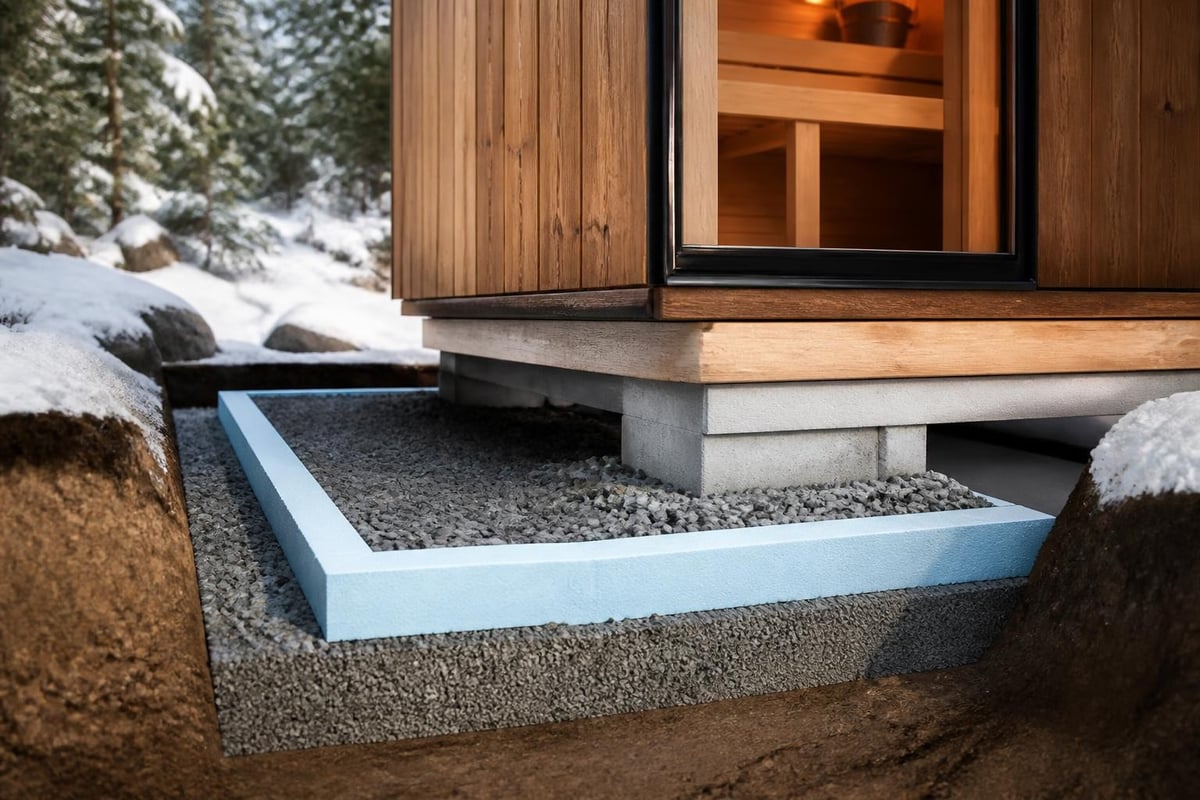
Foundation and Frost Protection
Frost heave destroys poorly planned foundations. When soil moisture freezes, it expands and lifts structures unevenly, cracking floors and misaligning walls. In cold regions, your outdoor sauna for cold climate must rest on a foundation designed to resist these forces.
Frost-Protected Shallow Foundation (FPSF)
A frost-protected shallow foundation uses rigid insulation around the perimeter to keep soil temperatures above freezing. This approach, detailed in frost-protected foundation guidelines, avoids deep excavation while preventing heave. Insulation boards extend horizontally from the foundation edge, trapping geothermal heat and maintaining stable soil conditions.
| Foundation Type | Frost Resistance | Cost | Installation Complexity |
|---|---|---|---|
| FPSF (insulated) | Excellent | Moderate | Medium |
| Concrete slab (deep) | Excellent | High | High |
| Gravel pad (uninsulated) | Poor in freeze zones | Low | Low |
| Helical piers + frame | Excellent | Moderate-High | Medium |
A properly executed FPSF combines a compacted gravel base, perimeter insulation rated for below-grade use (typically XPS or EPS foam), and a moisture barrier beneath the sauna floor. This system works across USDA zones 3–5 and supports structures up to several thousand pounds without frost-related movement.
Drainage and Ventilation Beneath the Floor
Water that pools under your sauna will freeze, expand and cause damage. Slope the gravel base away from the foundation, install a perimeter drain if your site holds water, and leave ventilation gaps beneath the floor structure. These steps keep the underside dry and prevent ice buildup that can lift or warp floor assemblies over winter.
Material Selection for Freeze-Thaw Cycles
Not all wood performs equally when exposed to freeze-thaw cycling, high moisture swings and ultraviolet exposure. Your outdoor sauna for cold climate should use timber that resists rot, minimizes movement and maintains structural integrity across temperature extremes.
Thermowood vs. Nordic Pine
Thermowood is Nordic pine or spruce heat-treated above 180°C (356°F) to remove moisture, sugars and resins. The process reduces hygroscopic movement, improves dimensional stability and increases natural resistance to decay. Thermowood weathers to a silver-gray patina and requires no chemical preservatives.
Nordic Pine (untreated) retains its natural amber color, accepts stains and oils readily, and costs less than Thermowood. It requires regular maintenance-typically annual cleaning and re-oiling-to prevent weathering and surface checking in cold climates.
Trade-offs:
- Thermowood: lower maintenance, better stability, higher upfront cost, distinctive gray aging
- Nordic Pine: warmer initial color, traditional appearance, requires consistent maintenance, moderate cost
Both materials perform well structurally in freezing conditions when properly detailed. The choice depends on your maintenance preference and aesthetic priorities. For more on outdoor sauna construction, see our overview of square outdoor sauna designs.
Wall Thickness and Insulation
Solid log construction offers thermal mass that moderates temperature swings, but in climates with sustained subzero temperatures, adding insulation improves comfort and reduces heating costs.
46 mm Solid Walls
A 46 mm (approximately 1.8 inches) solid wood wall provides moderate insulation and substantial thermal mass. In milder cold climates (zone 5 and warmer), this thickness performs adequately with an appropriately sized heater. It's common in traditional Finnish outdoor saunas and balances cost, construction simplicity and heat retention.
Insulated Panel Construction
Modern insulated sauna designs use cavity walls filled with mineral wool or rigid foam, achieving R-values between R-10 and R-20. This approach accelerates heat-up time, reduces fuel or electricity consumption and maintains stable interior temperatures even during severe cold snaps.
| Wall Type | Approx. R-Value | Heat-Up Time | Fuel Efficiency | Construction Cost |
|---|---|---|---|---|
| 46 mm solid Thermowood | R-2 to R-3 | Moderate | Moderate | Moderate |
| Insulated frame (mineral wool) | R-12 to R-15 | Fast | High | Higher |
| Double-wall log (air gap) | R-4 to R-6 | Slow | Moderate-Low | High |
Insulated construction is particularly valuable if you sauna frequently in winter, use electric heat (where operating cost matters) or face utility rates that penalize high consumption. If you sauna occasionally and burn wood, solid walls may suit your needs and budget better.
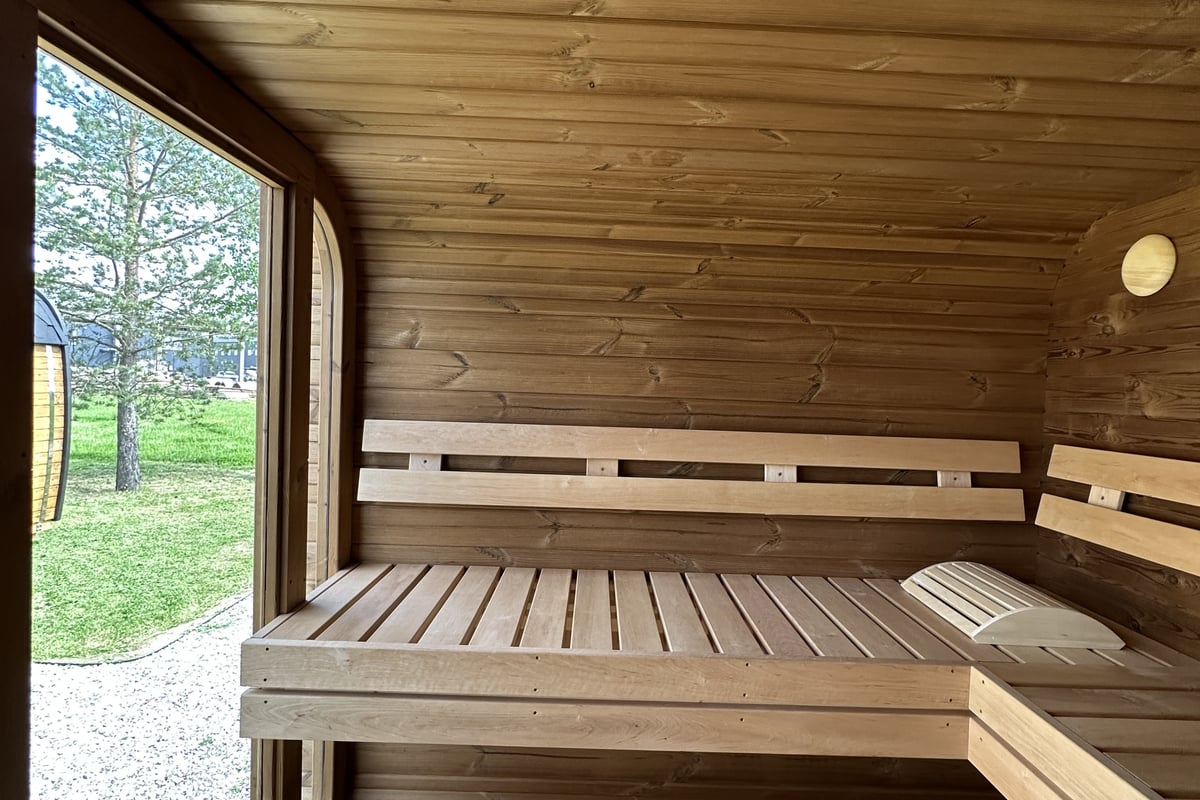
The RecoSauna Comfort Square Sauna 3.0 × 2.3 m – Thermowood combines 46 mm Thermowood walls with a dedicated changing room, offering a practical layout for cold-climate use without requiring full cavity insulation. Its dual-space design keeps outdoor gear and wet clothing separate from the hot room, a convenience that becomes essential when temperatures drop.
Ventilation and Moisture Management in Winter
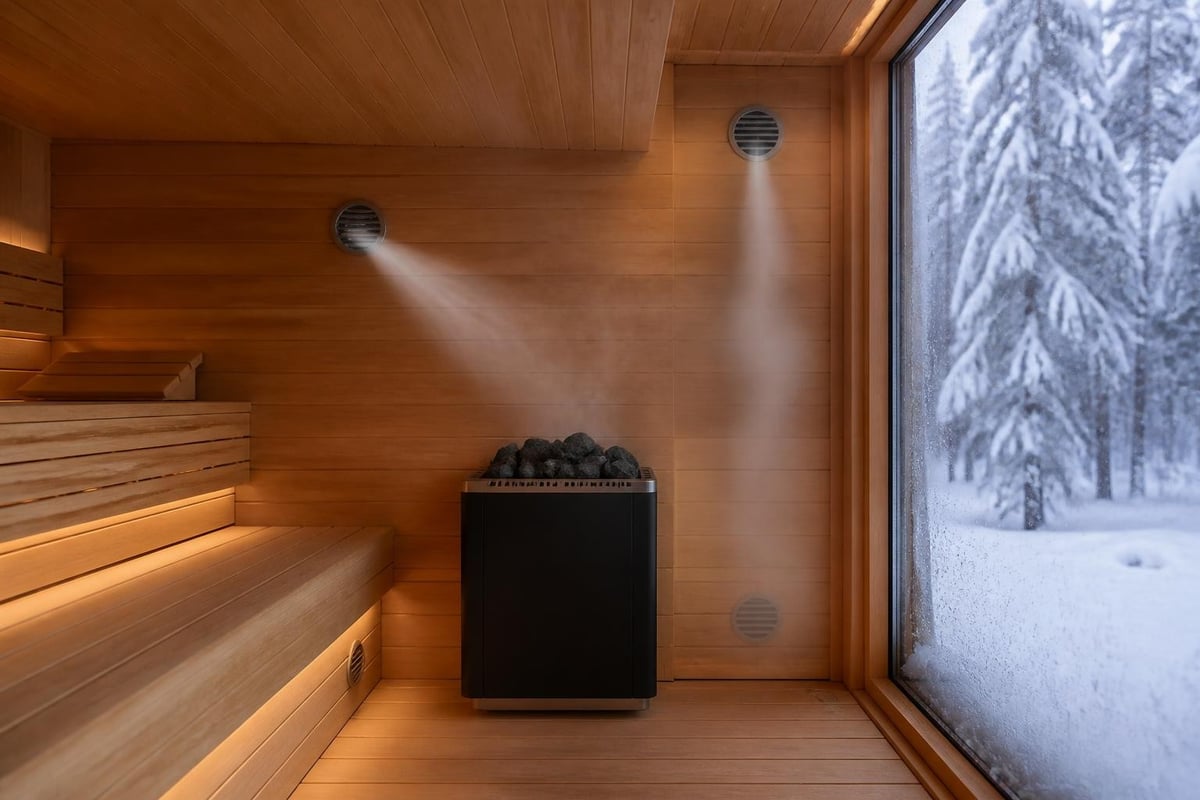
Proper ventilation is critical for indoor air quality, consistent heat distribution and preventing moisture damage. In an outdoor sauna for cold climate, ventilation also prevents condensation from freezing inside wall cavities or on exterior surfaces.
Intake and Exhaust Placement
Traditional Finnish sauna ventilation draws fresh air from a low vent near the heater, where incoming cold air is immediately warmed. Hot air circulates across bathers and exits through an upper vent on the opposite wall or through an adjustable roof vent. This cross-flow pattern maintains oxygen levels and removes excess humidity.
In freezing conditions, exhaust vents should be protected from snow accumulation and positioned to prevent backdrafts. Adjustable dampers let you fine-tune airflow without creating cold drafts across the bench.
Ventilation recommendations:
- Intake vent: 50–100 cm² per cubic meter of sauna volume
- Exhaust vent: equal or slightly larger than intake
- Install dampers on both vents for control
- Clear snow from vents before each session
- Follow ASHRAE ventilation guidance for occupant loads
Preventing Exterior Condensation
When warm, moist air contacts cold exterior surfaces, condensation forms. In subzero temperatures, this moisture freezes, creating ice buildup on walls, doors and vents. A vapor barrier installed on the warm side of insulated walls prevents interior moisture from migrating into wall cavities, while adequate ventilation keeps humidity levels within safe limits.
Non-insulated solid-wood saunas rely on the wood's natural permeability and lower indoor humidity to avoid condensation issues. Regular use and good airflow prevent moisture accumulation even in winter.
Heater Choices for Cold-Weather Performance
Your heater must overcome both the sauna's heat loss and the thermal mass of cold walls, benches and stones. In an outdoor sauna for cold climate, undersized heaters struggle to reach target temperature, waste energy and frustrate users.
Electric Heaters
Electric heaters offer precise control, fast heat-up and no venting complexity. Size the heater for 1.0–1.5 kW per cubic meter of interior volume in well-insulated saunas, or 1.5–2.0 kW per cubic meter in solid-log models used during winter.
Electric heater advantages:
- Consistent, adjustable temperature
- No chimney or outdoor venting required
- Lower fire risk and simpler permitting
- Works well with timer controls
Electric heaters require a dedicated 240V circuit and professional installation. Check local electrical codes and utility rates before committing.
Wood-Burning Heaters
Wood-fired sauna stoves create traditional heat, support off-grid use and operate independently of electricity. In severe winter storms that disrupt power, a wood stove keeps your sauna functional.
Properly sized wood stoves heat cold saunas faster than electric models of equivalent rated output, thanks to higher peak combustion temperatures. However, they require chimney installation, regular ash removal and compliance with EPA wood-burning appliance standards and NFPA fire-safety codes.
Wood heater considerations:
- Chimney must extend above roofline and clear snow
- Spark arrestor prevents ember escape
- Clearances to combustible walls (typically 450 mm minimum)
- Dry, seasoned firewood for clean combustion
- Ash disposal and creosote cleaning schedule
Wood stoves suit rural properties, areas with abundant firewood and buyers who value self-sufficiency. For more on heat choices, explore our guide to outdoor dry sauna setups.
Door and Window Details
Doors and windows are thermal weak points. In an outdoor sauna for cold climate, careful selection and weatherproofing prevent drafts, heat loss and ice formation.
Tempered Glass Doors
Full-glass or large-window sauna doors let you monitor conditions, enjoy views and create a sense of openness. Use tempered glass rated for sauna temperatures (typically up to 100°C or 212°F) and ensure the frame includes compression seals that remain flexible below freezing.
Weatherstripping and Thresholds
High-quality silicone or EPDM weatherstripping around door perimeters prevents air infiltration. In winter, check seals for compression set (permanent deformation) and replace as needed. A raised threshold with a sloped exterior surface sheds snow and ice, keeping the door operable in all conditions.
Window and door best practices:
- Tinted glass reduces UV fading of interior wood
- Double-pane glazing (where available) improves insulation
- Exterior-grade hinges and hardware resist corrosion
- Storm door or vestibule adds buffer zone in extreme climates
Changing Room and Vestibule Options
A changing room or enclosed vestibule serves multiple purposes in cold climates: it provides a heated transition space, stores outdoor clothing and boots, and acts as an airlock that reduces heat loss when entering or exiting the sauna.
Integrated Changing Room Layouts
Sauna models with a dedicated changing area-typically 1.0 to 1.5 meters of additional length-include a bench, hooks and sometimes a small window. This layout keeps snow, wet gear and cold air out of the hot room, improving comfort and extending the time you can spend outdoors before and after bathing.
Heated Vestibules
Adding a small electric heater or radiant panel in the changing room keeps the space above freezing, prevents ice on floors and makes dressing after a sauna session more comfortable. A 500–1000W heater is usually sufficient for a 2–3 m² vestibule.
Snow Load and Roof Design
Heavy snow accumulation on flat or low-slope roofs can exceed structural limits. In regions with significant snowfall, your outdoor sauna for cold climate should have a roof pitch steep enough to shed snow naturally or be engineered to carry expected loads.
Roof Pitch and Snow Shedding
Roofs pitched at 30° or steeper shed most snow without intervention. Shallower pitches (15–25°) may require occasional clearing in heavy-snowfall areas. Consult local building departments for design snow loads, measured in pounds per square foot or kilograms per square meter, and verify that your sauna's roof framing meets or exceeds those requirements.
Ice Dam Prevention
Ice dams form when heat escaping through the roof melts snow, which then refreezes at the eaves. Proper roof insulation, ventilation above the insulation layer and sealed penetrations prevent warm air from reaching the roof deck, keeping the entire surface cold and eliminating melt-refreeze cycles.
Winter Operation and Maintenance
Using an outdoor sauna for cold climate year-round requires a few seasonal adjustments and a consistent maintenance routine.
Pre-Session Preparation
- Clear snow from doorways, vents and around the foundation
- Verify chimney (if wood-fired) is free of ice and obstructions
- Preheat for an additional 15–30 minutes in subzero temperatures
- Check that water buckets and ladles are not frozen
Post-Session Care
- Wipe benches and walls to remove excess moisture
- Open vents and door slightly to promote drying
- Remove ashes (wood stoves) while still warm but manageable
- Inspect weatherstripping and door seals for ice buildup
Seasonal Inspections
- Fall: Clean roof, gutters and drains; inspect foundation perimeter insulation; reseal any exterior wood finishes
- Winter: Monitor snow accumulation; check for ice dams; ensure vents remain clear
- Spring: Inspect for frost heave movement; check door and window operation; clean and re-oil wood surfaces as needed
Regular care extends the lifespan of your sauna and prevents minor issues from becoming costly repairs. For detailed wood care, refer to USDA Forest Products Laboratory guidance on exterior wood finishing and weathering.
Energy Efficiency in Extreme Cold
Operating costs rise when outdoor temperatures fall. Strategic design and operational habits reduce energy consumption without compromising the sauna experience.
Insulation ROI
Adding roof insulation (R-30 or higher) and floor insulation (R-10 minimum) delivers measurable savings in electric or wood fuel consumption. In electrically heated saunas, insulation can cut operating costs by 30–50% compared to uninsulated models, with payback periods of two to four years depending on usage frequency and local utility rates.
For cold-climate building strategies, see U.S. Department of Energy guidance on envelope performance and heat-recovery techniques.
Heat-Up Timing and Scheduling
Preheating during off-peak utility hours (where time-of-use rates apply) reduces electricity costs. Programmable timers or smart plugs let you start the heater remotely, so the sauna reaches temperature exactly when you're ready.
Wood-fired saunas benefit from dry, dense hardwoods (oak, maple, birch) that burn hotter and longer than softwoods, reducing the frequency of refueling and overall wood consumption.
Sauna and Cold Plunge Combinations
The contrast between hot sauna and cold immersion amplifies the wellness benefits of both. In winter, natural snow, ice baths or a dedicated cold plunge adjacent to your sauna create an authentic Nordic experience.
Outdoor Cold Plunge Setup
A simple stock tank, insulated tub or purpose-built plunge pool placed near the sauna door provides immediate access to cold water. In freezing climates, unheated plunge water naturally stays near 0°C (32°F), offering intense contrast without mechanical chilling.
Cold plunge considerations:
- Locate within 3–5 meters of sauna door for convenience
- Install non-slip decking or pathway between sauna and plunge
- Provide handrails or steps for safe entry and exit
- Drain or cover the plunge during extended non-use periods to prevent ice damage
For more on integrated setups, see our article on sauna and cold plunge design.
Snow Rolling and Ice Swimming
Where natural snow or frozen lakes are accessible, traditional Finnish practice involves rolling in snow or plunging through ice holes after sauna sessions. These methods require no equipment but demand caution: test ice thickness, never go alone and limit exposure to avoid hypothermia.
Code Compliance and Permitting
Most jurisdictions classify outdoor saunas as accessory structures and regulate them under local building codes. Requirements vary by region, but common themes include setback distances, electrical inspections and fire-safety provisions.
Building Permits
Check with your municipal building department before starting construction. Permits typically require:
- Site plan showing sauna location and setbacks
- Foundation and framing details
- Electrical load calculations and panel specifications (electric heaters)
- Chimney height and clearance drawings (wood-fired heaters)
Processing times range from a few days to several weeks depending on jurisdiction and application completeness.
Electrical and Fire Safety
Licensed electricians should install all sauna wiring, breakers and heater connections. Inspections verify compliance with National Electrical Code (NEC) standards and local amendments.
For wood-burning installations, follow Finnish Sauna Society guidelines for heater placement, NFPA clearances for combustible surfaces and chimney installation standards to minimize fire risk.
Comparative Costs: Cold-Climate Features
Enhanced cold-weather performance adds cost, but the investment pays back through lower operating expenses, greater comfort and extended usable life.
| Feature | Cost Impact | Performance Gain | Best For |
|---|---|---|---|
| FPSF foundation | +$800–$1,500 | Eliminates frost heave | Zones 3–5 |
| Roof and floor insulation | +$600–$1,200 | 30–50% heating cost reduction | Frequent users |
| Integrated changing room | +$1,200–$2,500 | Improved comfort, less heat loss | Severe climates |
| Larger electric heater | +$300–$800 | Faster heat-up, stable temps | Well-insulated saunas |
| Thermowood cladding | +15–25% material cost | Low maintenance, superior stability | Long-term ownership |
Prioritize features that match your climate severity, usage frequency and maintenance preferences. A well-planned outdoor sauna for cold climate delivers decades of reliable service with thoughtful upfront investment. As you explore additional backyard wellness ideas, consider how features like custom home cinema setups from specialists such as ANR media can complement your outdoor retreat spaces, creating a holistic environment for relaxation and entertainment.
Real-World Performance Across North American Climates
Outdoor saunas operate successfully from coastal British Columbia (mild, wet winters) to interior Manitoba (dry, extreme cold). Performance varies with local conditions, but the underlying principles remain consistent.
Pacific Northwest (Zones 7–8)
Mild winters with frequent rain and occasional snow. Prioritize drainage, moisture-resistant finishes and ventilation to manage high humidity. Solid Thermowood walls perform well; insulation is optional unless energy costs are a concern.
Great Lakes and Northeast (Zones 4–6)
Moderate to heavy snowfall, freeze-thaw cycles and cold snaps to -20°C (-4°F). FPSF foundations, roof insulation and adequate heater capacity are essential. Changing rooms add comfort during shoulder seasons.
Northern Plains and Prairie Provinces (Zones 2–4)
Severe cold, low humidity and long winters. Full insulation, oversized heaters and wind-protected siting maximize usability. Wood-burning heaters provide backup during power outages common in rural areas.
Mountain West (Zones 3–5)
High altitude, intense UV, extreme temperature swings. UV-resistant finishes, robust weatherstripping and steep roof pitches handle heavy snow loads and prevent ice dams.
Consult Natural Resources Canada energy-efficiency resources for additional climate-specific building guidance applicable to small outdoor structures.
Choosing the right outdoor sauna for cold climate use means balancing construction quality, thermal performance and your local weather realities. Thoughtful material selection, proper foundation design and correctly sized heating ensure year-round comfort and long-term value. RecoSauna brings Finnish sauna expertise and premium Thermowood construction to North American backyards, helping you select the model, layout and features that suit your climate, space and wellness goals. Explore our collection and start planning your cold-weather sauna retreat today.
Share:
Outdoor Sauna Installation: Expert Planning & Setup Guide
Wood Burning Outdoor Sauna: Choosing the Right Heater Setup