

An outdoor sauna electric setup brings authentic Finnish sauna culture into your backyard without the daily ritual of splitting wood or tending a fire. Electric heaters deliver consistent, controllable heat in any season, making them the practical choice for homeowners who value convenience alongside tradition. If you're comparing outdoor sauna electric options in 2026, you're likely weighing heater size, electrical requirements, installation costs and how different models perform during winter. This guide walks through what matters when choosing an electric outdoor sauna, from heater capacity and wiring to cabinet design and long-term operating costs.
Why Choose an Outdoor Sauna Electric Heater
Electric sauna heaters eliminate the need for firewood, chimney maintenance and fire-starting skills. You turn a dial or tap a control panel, and the sauna reaches temperature in 30 to 45 minutes.
Key advantages of electric heating:
- Consistent temperature control - digital or analog thermostats hold your target heat within a few degrees
- No smoke or ash - cleaner for neighbors, easier on your sauna's interior wood
- Year-round reliability - no concern about wood supply or wet firewood in winter
- Lower fire-insurance scrutiny - many insurers treat electric heat as lower risk than wood-burning stoves
Electric heaters do require dedicated electrical service. Most outdoor sauna electric installations call for a 240-volt circuit and a qualified electrician to run the line from your main panel to the sauna. That upfront cost is real, but once in place, you simply flip a switch.
Trade-Offs to Consider
Electric heat lacks the crackling ritual and wood-smoke aroma that some sauna purists treasure. Operating cost depends on your local electricity rate; in regions with expensive power, a 6 kW heater running for an hour may cost $1.50 to $2.50, adding up over weekly sessions.
If you sauna often and electricity is pricey, wood heat can be more economical over time. If you value simplicity, speed and a set-it-and-forget-it experience, electric wins. Neither choice is wrong; it's about matching the heater to your routine and climate.
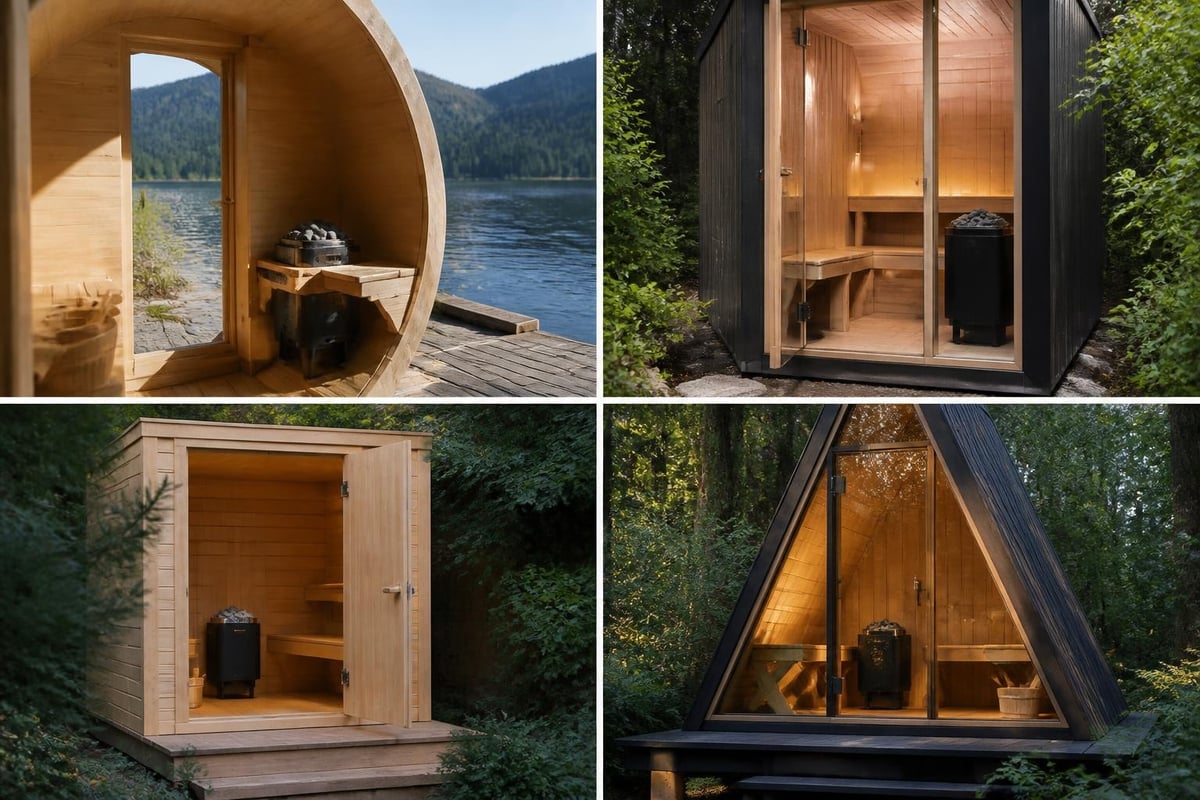
Sizing Your Outdoor Sauna Electric Heater
Heater capacity is measured in kilowatts (kW) and must match your sauna's interior volume, wall thickness and insulation. Undersized heaters struggle to reach proper sauna temperature (typically 160–195°F); oversized units waste energy and cost more upfront.
| Sauna Interior Volume | Recommended Heater Size | Typical Application |
|---|---|---|
| Up to 150 cubic feet | 4.5 kW | Compact 2-person cabins |
| 150–250 cubic feet | 6 kW | Standard 2–4 person saunas |
| 250–350 cubic feet | 8 kW | Larger 4–6 person models |
| 350–450 cubic feet | 9 kW | Spacious 6+ person cabins with changing rooms |
Calculate interior volume by multiplying length × width × ceiling height in feet. A RecoSauna Sisu 3.0 × 2.3 m (approximately 10 × 7.5 feet) with a standard 6.5-foot ceiling yields roughly 490 cubic feet, so an 8 kW or 9 kW heater is appropriate. Smaller models like the Mini Square sauna fit comfortably with a 4.5 kW unit.
Wall Material and Insulation Impact
Solid 46 mm Thermowood walls provide natural insulation and thermal mass, reducing heater demand. Thinner walls or uninsulated cabins need more power to hold temperature, especially in cold climates. If your sauna includes a changing room or terrace, heat only the hot room; the heater size is based on that space alone, not the entire structure.
Manufacturers publish heater-sizing charts. UL Solutions lists certified electric sauna heaters under UL 875, confirming they meet safety and performance standards. Always verify your chosen heater carries UL or similar certification before purchase.
Electrical Requirements and Installation
Every outdoor sauna electric heater needs a dedicated electrical circuit run from your home's main panel to the sauna. Heater wattage determines wire gauge, breaker size and whether you need a disconnect switch near the sauna.
Typical electrical specifications:
- 4.5 kW heater - 240 volts, 20-amp breaker, 12-gauge wire
- 6 kW heater - 240 volts, 30-amp breaker, 10-gauge wire
- 8 kW heater - 240 volts, 40-amp breaker, 8-gauge wire
- 9 kW heater - 240 volts, 50-amp breaker, 6-gauge wire
Consult a licensed electrician for your specific installation. Electrical codes vary by municipality; some jurisdictions follow the NFPA National Electrical Code closely, others adopt regional amendments. Your electrician will pull a permit, route the wire (often underground in conduit for outdoor runs), install the appropriate disconnect and connect the heater per the manufacturer's wiring diagram.
Budget $800 to $2,500 for this work, depending on the distance from your panel to the sauna, local labor rates and whether trenching or boring is required. Factor this cost into your total project alongside the sauna cabin and heater purchase.
Choosing the Right Outdoor Sauna Electric Cabinet
The sauna cabinet itself must be designed for outdoor use, with weather-resistant wood, proper ventilation and a layout that accommodates an electric heater safely. Not all sauna models are created equal.
Material: Thermowood vs. Nordic Pine
Thermowood undergoes a high-temperature treatment that reduces moisture absorption and increases dimensional stability. It weathers to a silver-gray patina outdoors and resists rot better than untreated wood. Thermowood is the premium choice for year-round outdoor sauna electric installations in climates with freeze-thaw cycles, heavy rain or high humidity.
Nordic Pine offers a lighter Scandinavian aesthetic and costs slightly less. It performs well in moderate climates but requires more frequent maintenance (annual oil or stain) to protect against moisture and UV damage. Pine remains a solid choice if you prefer the natural honey tone and are prepared to maintain it.
Wall Thickness and Insulation
Outdoor sauna electric cabins typically feature 46 mm (approximately 1.8 inches) solid wood walls. This thickness provides thermal mass and natural insulation, helping the sauna hold heat efficiently. Thinner walls lose heat faster, forcing the heater to cycle more often and driving up electricity costs.
Some modern designs, like the Havu and Lumi collections, incorporate additional insulation in the roof and walls, boosting winter performance. Insulated floors prevent heat loss into the ground, especially on concrete pads in cold regions.
Bench Layout and Capacity
Electric heaters require clearance from benches and walls, detailed in the heater manual. Most manufacturers specify minimum distances (often 4 to 8 inches) to combustible materials. Plan your bench layout to accommodate the heater and still provide comfortable seating.
Common bench configurations:
- Straight bench - single-tier seating along one wall, works well in narrow saunas
- L-shaped bench - two tiers meeting at a corner, maximizes capacity in square footprints
- Changing-room integration - dedicates space outside the hot room for dressing, towels and a cool-down bench
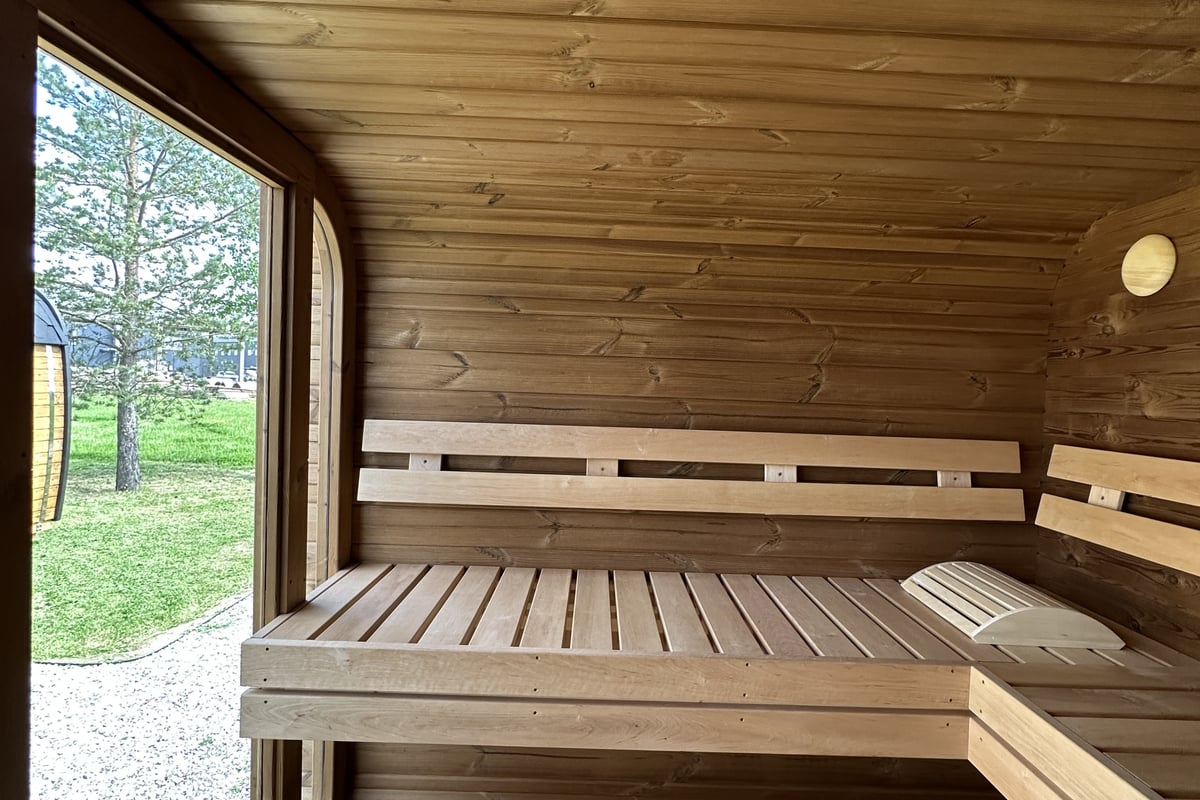
The RecoSauna Comfort Square Sauna 3.0 × 2.3 m includes a 1 m changing room, separating the transition area from the sauna proper. That added convenience pairs naturally with electric heat, since you're not tracking ash or wood chips through the space.
Operating Costs and Energy Efficiency
Electricity rates in North America range from $0.08 per kWh in parts of the Pacific Northwest to $0.30+ per kWh in Hawaii or parts of New England. Your outdoor sauna electric operating cost depends on heater wattage, session duration and your local rate.
| Heater Size | Power Draw | Cost per Hour (@ $0.12/kWh) | Cost per Hour (@ $0.20/kWh) |
|---|---|---|---|
| 4.5 kW | 4.5 kW | $0.54 | $0.90 |
| 6 kW | 6 kW | $0.72 | $1.20 |
| 8 kW | 8 kW | $0.96 | $1.60 |
| 9 kW | 9 kW | $1.08 | $1.80 |
A typical sauna session runs 60 to 90 minutes, including heat-up time. If you preheat for 30 minutes and sauna for 45, you're consuming energy for 75 minutes, or 1.25 hours. An 8 kW heater at $0.15/kWh costs about $1.50 per session.
Reducing Energy Use
- Preheat efficiently - close doors and vents to trap heat; don't leave the sauna door open while heating
- Use a timer - modern heater controls let you schedule preheat, so the sauna is ready when you arrive home
- Insulate well - thicker walls, insulated roofs and weather-stripped doors cut heat loss
- Lower target temperature slightly - 175°F instead of 190°F still delivers authentic löyly and saves 10–15% energy
Electric saunas are more energy-efficient than most people assume. The U.S. Department of Energy notes that well-insulated electric heating systems can match or exceed the efficiency of gas or oil, especially when paired with renewable electricity sources like rooftop solar.
Installation and Permitting
Most outdoor sauna electric cabins arrive as pre-cut kits with detailed assembly instructions. You'll need a level, stable foundation: a concrete slab, gravel pad with paving stones or a timber deck frame.
Foundation options:
- Concrete slab - permanent, level, ideal for heavy snow loads; requires excavation and forming
- Gravel and pavers - lower cost, adjustable, drains well; needs careful leveling
- Timber deck - integrates sauna into an existing deck; verify load capacity and ventilation underneath
Assembly typically takes two people one to two days, depending on model size and experience. The sauna walls interlock with tongue-and-groove or log-style joinery; roof panels bolt or screw into place. Once the structure is up, your electrician connects the heater.
Permits and Code Compliance
Building permits for outdoor structures vary widely. Some municipalities classify a sauna under 120 square feet as an accessory structure that requires only electrical and mechanical permits. Larger cabins may trigger full building permits, setback rules and inspections.
The International Code Council publishes the International Building Code (IBC) and International Mechanical Code (IMC), which many jurisdictions adopt. Your local building department will clarify which codes apply and what drawings or documentation they need. Electrical work nearly always requires a permit and inspection, regardless of sauna size.
Start this process early. Permit approvals can take two to six weeks. This Old House offers a practical overview of home sauna installation, including code and safety considerations.
Winter Performance and Year-Round Use
A quality outdoor sauna electric setup performs beautifully in winter, even when ambient temperatures dip below freezing. Solid wood walls, an insulated roof and a properly sized heater overcome cold-weather challenges.
Key winter considerations:
- Heat-up time - expect an extra 10–15 minutes in sub-zero weather; plan accordingly
- Heater capacity - if you live where January lows reach 0°F or below, size up one heater tier (choose 9 kW instead of 8 kW)
- Moisture management - crack the door or vent briefly after each session to let steam escape; prevents frost buildup inside
- Electrical reliability - ensure your disconnect switch and wiring are rated for outdoor, freezing conditions
Thermowood handles freeze-thaw cycles without cracking or warping. Nordic Pine can too, but benefits from a protective oil coat applied before winter. Neither material requires winterization; you simply keep using your sauna through the cold months.
Snow on the roof is rarely a problem if your cabin is properly built. Standard RecoSauna Square and Havu models feature sloped roofs that shed snow naturally. Heavy, wet snow in regions like the Sierra Nevada or coastal British Columbia may warrant a roof rake or periodic clearing.
Electric vs. Wood-Burning Heaters: A Direct Comparison
Choosing between an outdoor sauna electric heater and a wood-burning stove shapes your daily sauna experience, operating costs and maintenance routine.
| Factor | Electric Heater | Wood-Burning Stove |
|---|---|---|
| Heat-up time | 30–45 minutes | 45–90 minutes |
| Temperature control | Precise, thermostat-controlled | Manual, requires tending |
| Operating cost | $0.50–$2.00 per session (varies by rate) | Firewood cost or free if self-sourced |
| Maintenance | Clean stones annually; check wiring | Clean chimney, remove ash, inspect flue |
| Installation cost | $800–$2,500 electrical work | Chimney install, permits, clearances |
| Ambiance | Quiet, clean, convenient | Crackling fire, wood smoke, traditional |
| Neighbor impact | Minimal | Smoke may be an issue in dense areas |
Neither option is universally better. Electric heat suits homeowners who sauna frequently, value consistency and prefer low-maintenance systems. Wood heat appeals to those who enjoy the fire ritual, have access to firewood and live where wood smoke is accepted.
Some buyers install both: an electric heater for quick weeknight sessions and a wood stove for leisurely weekend bathing. Dual-heater installations require careful planning and additional cost, but they offer maximum flexibility.
Choosing the Right Outdoor Sauna Electric Model
Your ideal cabin balances footprint, capacity, design and heater compatibility. RecoSauna's Square, Havu and Lumi collections each serve distinct buyer needs.
Compact Models for Smaller Yards
The RecoSauna Mini Square Sauna in Thermowood seats two people comfortably in a tight footprint, making it a strong fit for urban lots or patios. Designed exclusively for electric heating, it pairs with a 4.5 kW heater and requires minimal yard space. Two tinted windows and an L-shaped bench maximize the interior.
Mid-Size Cabins for Families
The RecoSauna Sisu Square Sauna 2.3 × 2.3 m offers a balanced footprint for 2–6 people. Its three front windows bring natural light into the hot room, and the straight bench layout works well with a 6 kW or 8 kW electric heater. Available in both Thermowood and Nordic Pine, this model suits moderate climates and buyers who want Scandinavian design without a sprawling footprint.
Spacious Designs with Changing Rooms
For homeowners who value added privacy and a dedicated changing area, the RecoSauna Comfort Square Sauna 3.0 × 2.3 m in Thermowood includes a 1 m changing room with a bench and an internal glass door separating it from the hot room. This layout works naturally with an outdoor sauna electric setup, since you're not dragging firewood or ashes through the changing space. Four tinted windows and the option for L-shaped benches make the sauna feel open and welcoming.
Pair this model with an 8 kW or 9 kW heater, depending on your climate and how quickly you want the sauna to reach temperature.
Modern Insulated Collections
The Havu Eco Modern Sauna and Lumi Terrace Luxury Modern Sauna bring panel-based construction, insulated walls and expansive glazing to the outdoor sauna electric category. These models feature contemporary Scandinavian lines, double-glazed windows and integrated benches. Insulated floors and roofs boost winter performance, making them a smart choice for northern climates or buyers who sauna year-round.
Maintenance and Long-Term Care
Electric outdoor saunas require less maintenance than wood-fired units, but they're not entirely hands-off.
Annual tasks:
- Inspect sauna stones - electric heaters hold 40 to 80 pounds of igneous rock; replace cracked or crumbled stones to maintain heat output and prevent damage to the heating elements
- Check electrical connections - verify terminals are tight, wires are intact and the disconnect switch operates smoothly
- Clean benches and walls - wipe down interior wood with a damp cloth; avoid harsh cleaners or soaps
- Treat exterior wood - if you chose Nordic Pine, apply a UV-protective oil or stain annually; Thermowood can be left natural or oiled for color retention
Seasonal checks:
- Clear roof and gutters - remove leaves, pine needles and debris to prevent water pooling
- Test heater controls - ensure thermostats, timers and safety cutoffs function correctly before heavy use seasons
Electric elements typically last 5 to 10 years, depending on use frequency and water quality (if you throw water on the stones for steam). Replacement elements are available from the heater manufacturer and can be swapped in a few hours by an electrician.
Pairing Your Sauna with Cold Plunge
Contrast therapy, alternating between hot sauna and cold water immersion, amplifies the wellness benefits of both. An outdoor sauna electric setup pairs naturally with a cold plunge tub placed a few steps away.
Cold-plunge options:
- Dedicated cold tubs - insulated tubs with chillers hold water at 38–50°F year-round
- Stock tanks - affordable, unheated; rely on ambient temperature in winter, ice packs in summer
- Natural water - if you have a pond, lake or stream nearby, it's the traditional Finnish approach
RecoSauna offers several cold-plunge models designed to complement outdoor saunas. The Orivon Frost Cold Plunge Tub and Baltic Plunge Tub both feature easy-clean interiors and simple setup, pairing well with electric sauna installations where you want minimal fuss and maximum benefit.
Position your plunge tub within 10 to 20 feet of the sauna exit. That short walk heightens the contrast without letting you cool down too much. Some homeowners build a small deck or gravel path connecting the two, creating a dedicated wellness zone in the backyard.
Safety and Certifications
Outdoor sauna electric heaters must meet rigorous safety standards to prevent fire, electrical shock and overheating hazards.
Look for these certifications:
- UL 875 - UL Solutions standard for electric sauna heaters, covering construction, wiring, thermal protection and safe operation
- CSA approval - Canadian Standards Association certification, required for installations in Canada
- CE marking - European Conformity mark, common on imported heaters; verify it's backed by test reports
Never install a heater that lacks recognized certification. Uncertified units may void your homeowner's insurance and create genuine fire risk.
Clearances and Ventilation
Electric heaters generate intense radiant heat. Manufacturers specify minimum clearances to walls, benches and combustible materials. A typical 8 kW heater requires 4 inches from side walls, 6 inches above and 8 inches from the bench edge.
Proper ventilation brings fresh air into the sauna and exhausts stale air, supporting comfortable breathing and even heat distribution. Most outdoor cabins include an adjustable floor vent (fresh air intake) and a roof or wall vent (exhaust). Building Science Corporation provides detailed guidance on managing moisture and airflow in high-humidity enclosures, principles that apply equally to saunas.
Buyer Checklist: What to Ask Before You Buy
Before committing to an outdoor sauna electric installation, verify the following details with your retailer or manufacturer:
- Heater capacity and compatibility - does the recommended heater match your sauna's interior volume and your climate?
- Electrical specifications - what voltage, amperage and wire gauge does the heater require?
- Certification - does the heater carry UL, CSA or equivalent safety approval?
- Warranty coverage - what's covered, for how long, and who handles repairs?
- Installation support - does the retailer provide assembly instructions, wiring diagrams and access to technical support?
- Permit assistance - can they supply drawings or specifications your building department needs?
- Delivery and logistics - how is the sauna shipped, and what equipment do you need on-site to unload it?
- Operating cost estimate - based on your local electricity rate and typical use, what's the monthly cost?
Reputable sellers answer these questions clearly and provide documentation. If a retailer dodges specifics or pressures you to buy immediately, walk away.
For a deeper look at the financial side, including foundation work and long-term operating expenses, explore our guide on outdoor sauna cost.
An outdoor sauna electric installation delivers consistent, convenient heat and integrates smoothly into North American backyards and wellness routines. Match heater size to your sauna's volume, plan for professional electrical work and choose a cabinet built for year-round outdoor use. RecoSauna offers a curated collection of Thermowood and Nordic Pine saunas designed for electric heating, backed by Finnish sauna expertise and clear guidance through every step of your purchase and installation.
Share:
Small Outdoor Sauna: Planning, Sizing & Setup Guide 2026
Hottest Sauna: Safe Limits, Risks & How to Set Yours