

A small outdoor sauna delivers authentic Finnish heat therapy without demanding a sprawling backyard or oversized budget. Homeowners across the USA and Canada are discovering that compact doesn't mean compromised; the right small outdoor sauna can accommodate up to six bathers, support year-round use in harsh climates, and preserve the genuine löyly experience that larger models offer. The key is understanding how bench layout, wall thickness, material choice and heater type combine to maximize both comfort and longevity within a limited footprint.
What Qualifies as a Small Outdoor Sauna
A small outdoor sauna typically ranges from 2.0 × 2.0 m (roughly 43 square feet) up to 3.0 × 2.3 m (75 square feet). Anything below 2.0 m is usually a 1–2 person solo pod; anything above 3.0 m enters mid-size territory.
Capacity matters more than raw dimensions. A 2.3 × 2.3 m footprint with a single straight bench may fit four adults comfortably, while a poorly planned 3.0 m model with an awkward layout feels cramped. Bench height, depth, and the distance from the heater to the seat determine whether a small outdoor sauna delivers authentic heat or simply checks a wellness box.
Wall thickness and insulation also shape the practical definition. A 46 mm solid log wall retains heat better than a thin panel, reducing energy costs and improving performance in cold climates. That extra thermal mass transforms a small outdoor sauna into a year-round asset rather than a seasonal amenity.
Key Sizing Decisions for Compact Saunas
Two-Person Layouts
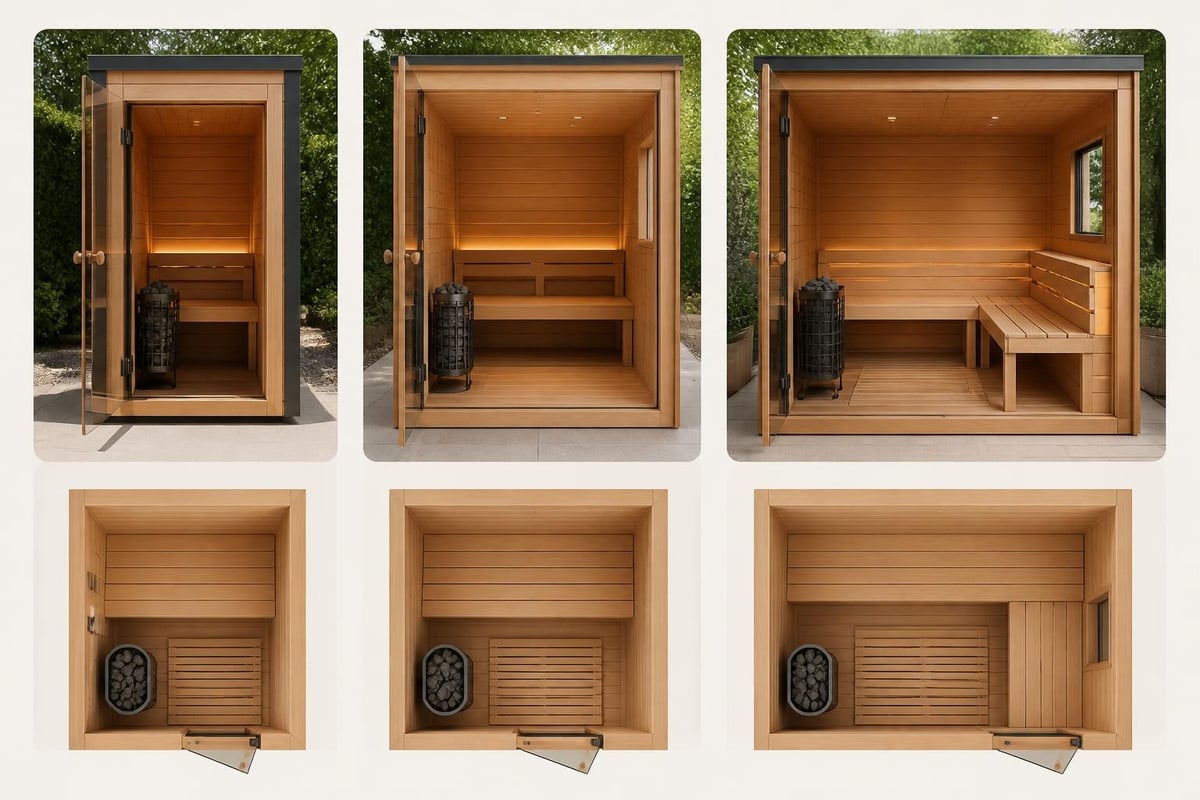
The smallest viable traditional sauna is about 2.0 × 2.0 m, featuring an L-shaped bench and one bather lying down while a second sits upright. This layout prioritizes solo bathing but accommodates a partner for shorter sessions.
A slightly larger 2.3 × 2.3 m footprint with a straight bench offers more flexibility: two adults can lie down (one at a time) or four can sit. That extra 0.3 m in width or depth makes a surprising difference in comfort and heat circulation.
Bench configuration determines real capacity. An L-shaped layout in a 2.3 × 2.3 m sauna seats four but restricts reclining; a straight bench along one wall preserves the full reclining experience while seating fewer upright bathers. If you plan to use the sauna mostly alone or as a couple, the straight bench wins. Families or frequent group sessions favor the L-shaped arrangement.
Four to Six Bathers
A 3.0 × 2.3 m small outdoor sauna comfortably seats six upright or four with space to recline. The longer 3.0 m wall accommodates a full-length bench, which is the hallmark of authentic Finnish sauna bathing. You pour water on the stones, feel the wave of heat, and lie back for a full-body löyly.
This size also supports an internal changing room, carved from the same 3.0 m length. A 1.0 m changing area plus a 2.0 m sauna chamber preserves room for four bathers while adding privacy, bench storage and a buffer zone to manage snow, rain or wet gear.
Adding a changing room does reduce the sauna interior's footprint, so carefully compare models. A 3.0 × 2.3 m Comfort sauna with a changing room offers about 4.6 m² of sauna space, versus roughly 6.9 m² in the same-footprint Sisu model without a changing room. Both work; the trade-off is privacy and convenience versus maximum seating.
Material and Construction Trade-Offs
| Feature | Thermowood | Nordic Pine |
|---|---|---|
| Weather resistance | Exceptional; heat-treated for stability | Good; requires routine maintenance |
| Color | Warm chocolate-brown, ages silver-gray | Golden honey, darkens to amber |
| Density | Lower resin, less expansion | Higher resin, more seasonal movement |
| Aesthetic | Contemporary, Scandinavian minimalism | Traditional, warm Nordic character |
| Price | Premium tier | Entry premium tier |
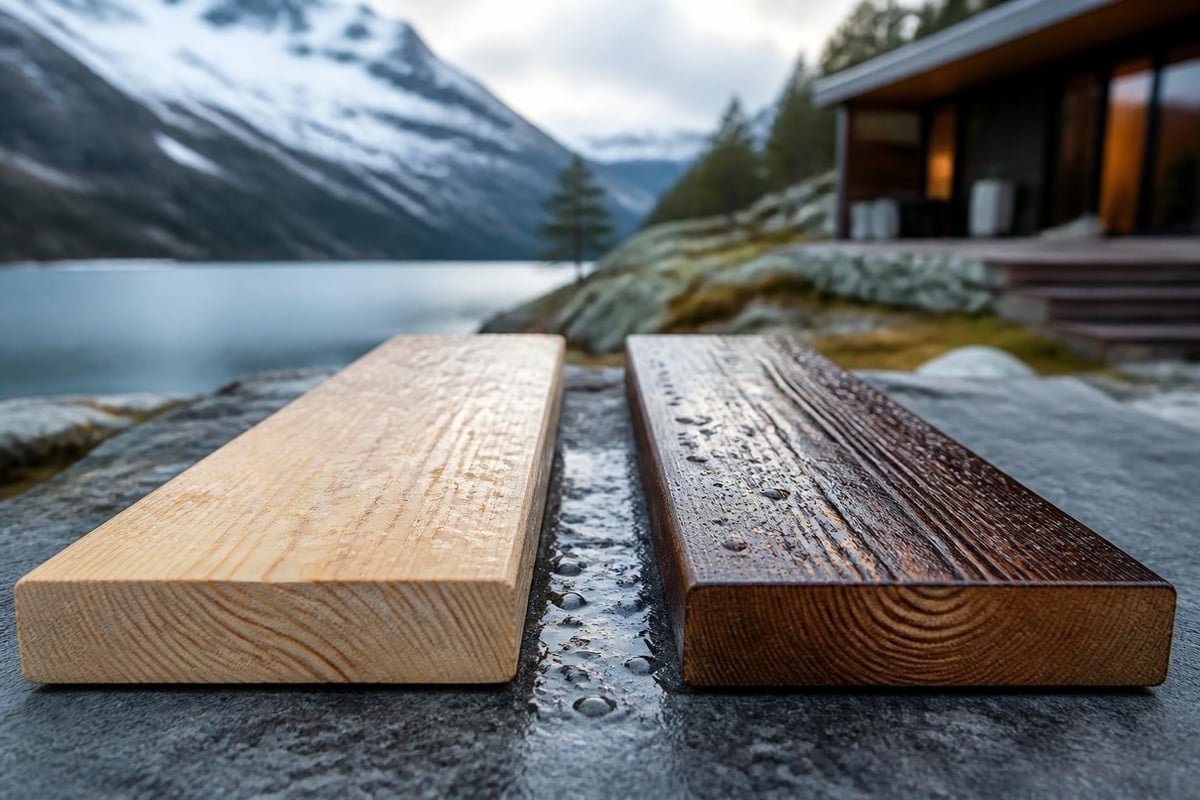
Thermowood is the first-choice material for a small outdoor sauna in North America. The heat treatment process modifies the cellular structure of Nordic spruce or pine, reducing moisture absorption by up to 50 percent and virtually eliminating rot, fungus and insect damage. A Thermowood sauna withstands Minnesota winters, Pacific Northwest rain, and Texas summer sun with minimal upkeep.
Nordic Pine offers a lighter, more traditional appearance at a slightly lower cost. It performs well in temperate climates and suits homeowners who prefer the classic sauna look. Pine does expand and contract more than Thermowood, so expect tighter seasonal maintenance: checking fasteners, resealing joints, and applying occasional exterior treatment.
Both materials benefit from 46 mm solid log construction. Thinner panel walls (20–30 mm) may look similar but lack the thermal mass to hold consistent heat. A 46 mm wall also contributes structural rigidity, which matters on uneven terrain or areas subject to freeze-thaw cycles.
Bench Material: Black Alder vs Aspen
Black Alder and Aspen are the two premium bench woods for traditional saunas. Alder is denser, resists dents and scratches, and develops a rich patina over time. Aspen is lighter in color, softer underfoot, and stays cooler to the touch at high temperatures.
For a small outdoor sauna, Alder is often the better long-term choice. The limited bench area sees concentrated use, and Alder's durability means the surface ages gracefully rather than showing wear marks. Aspen suits buyers who prioritize a light Scandinavian aesthetic and don't mind refinishing benches every few years.
Heater Choice: Electric vs Wood-Burning
Electric heaters dominate small outdoor sauna installations in 2026. They deliver consistent heat, require no chimney, comply with local air-quality rules, and integrate seamlessly with digital controls and timers.
Wood-burning stoves offer a different experience. The crackle of birch logs, the scent of wood smoke, and the ritual of tending the fire appeal to purists. A wood-fired sauna can operate off-grid, which matters in rural settings or areas prone to power outages.
Trade-offs are real:
- Permitting: Many municipalities restrict outdoor wood combustion due to air quality. Check local EPA guidelines and NFPA clearance requirements before committing to wood heat.
- Chimney installation: A wood stove demands a vertical flue, roof penetration, and proper clearance from combustibles. Installation costs often exceed the heater itself.
- Maintenance: Ash removal, chimney sweeping, and fire management add recurring tasks.
- Heat control: Wood stoves require more skill to manage temperature. Electric heaters reach target temperature reliably and hold it.
For a first-time small outdoor sauna buyer in a suburban or urban lot, electric is the pragmatic starting point. If you later add a cold plunge or expand to a second sauna, a wood-burning model makes a compelling second-phase addition.
Foundation and Site Preparation
A level, stable foundation is critical. A small outdoor sauna weighs 1,500–2,500 pounds empty; adding a heater, water bucket, and six adults pushes total load past 3,000 pounds. Foundation options include:
- Concrete pad: Poured 4-inch slab on compacted gravel. Permanent, level, and virtually maintenance-free.
- Concrete pavers: Modular, easier to adjust, and suitable for rental properties or future relocation.
- Gravel base with timber skids: Lowest cost; works well on stable soil but requires annual leveling checks.
- Deck integration: Possible if the deck structure meets load requirements. Verify joist spacing and support before placement.
Regardless of foundation type, ensure positive drainage. Water should flow away from all four walls. In freeze-thaw climates, that means grading the site and adding perimeter drainage if necessary.
Clearance to structures matters. Even electric saunas generate radiant heat. Maintain at least 1 m (3 feet) from wood fences, siding, or overhanging branches. Wood-burning saunas require greater clearance, as detailed in UL standards and local building codes.
Electrical and Ventilation Essentials
Electrical Requirements
Most electric sauna heaters in the 2–6 person range draw between 4.5 kW and 9 kW. A 6 kW heater requires a dedicated 240V circuit with 30-amp service; a 9 kW unit needs 40 amps.
Hire a licensed electrician. Running a new 240V circuit from your main panel to the sauna involves conduit, trenching, weatherproof boxes, and inspection. Budget $800–$2,000 for a typical 50-foot run in 2026, depending on local labor rates and whether the run is above-ground or buried.
Exterior outlets, lighting, and control panels must meet outdoor NEMA ratings. Skimping on electrical work introduces both safety hazards and warranty risks. Reputable sauna brands void coverage if installation doesn't meet code.
Ventilation and Air Quality
Proper ventilation ensures fresh air circulates without creating drafts. A small outdoor sauna typically includes:
- Intake vent: Low on the wall near the heater, allowing cool air to enter and flow over the stones.
- Exhaust vent: High on the opposite wall or near the ceiling, allowing warm, humid air to escape.
The intake should be roughly twice the cross-sectional area of the exhaust. This creates gentle, positive airflow that refreshes the oxygen without chilling bathers.
Avoid sealing the sauna too tightly. North American buyers sometimes treat saunas like insulated hot boxes. A true Finnish sauna breathes. You want thermal mass and weather resistance, not an airtight chamber. Fresh air supports longer, more comfortable sessions and better löyly.
Winter Performance and Year-Round Use
A well-built small outdoor sauna operates comfortably in temperatures as low as -20°F. Thick walls, a quality heater, and proper ventilation are the foundation. Two upgrades improve cold-weather performance:
Insulated roof panels reduce heat loss through the ceiling, where warm air naturally collects. Standard builds include basic roofing; insulated options add fiberglass batts or rigid foam under the shingles. The added cost is modest, and payback in heating efficiency is measurable within one winter.
Tempered glass doors and windows resist thermal shock. When exterior air is -10°F and the sauna interior hits 185°F, cheap glass can crack. Tinted, tempered glass maintains clarity, safety, and insulation performance.
Snow load is rarely an issue for a small outdoor sauna; the roof pitch and rafter spacing in premium models handle typical North American snow depth. If you live in an area that sees 4+ feet of accumulation, confirm the manufacturer's snow-load rating before purchase.
Adding a Changing Room or Terrace
A changing room transforms a basic sauna into a private retreat. You step inside, remove outdoor clothing, store towels and robes, then enter the sauna chamber through an interior glass door. After your session, you cool down in the changing area before heading back into winter air or summer sun.
Changing rooms suit buyers who value privacy and convenience over maximum sauna capacity. If your small outdoor sauna sits near a neighbor's yard or a busy patio, the changing room offers a modesty buffer and a practical staging area for gear.
A terrace extends the sauna experience outward. A 1.0–1.5 m covered deck provides space for a bench, cold-water bucket, or a small plunge tub. You step out after a round of heat, sit on the terrace, breathe cool air, then return for another round.
Terraces work especially well when paired with a cold plunge. The terrace becomes the transition zone, a sheltered spot to dry off, hydrate, and prepare for the next contrast cycle. Sauna and cold-plunge setups are increasingly popular among North American wellness enthusiasts who want the full Scandinavian experience at home.
If you're designing a complete backyard wellness area, think beyond the sauna alone. A thoughtfully integrated entertainment system from specialists like ANR media can elevate the entire environment, adding ambient lighting, music zones and climate-coordinated controls that make your small outdoor sauna part of a seamless retreat.
Installation: DIY vs Professional Assembly
Premium small outdoor saunas arrive as pre-cut kits. Walls, roof panels, benches, door, and trim are numbered and ready to assemble. Two adults with moderate carpentry skills can complete installation in one to three days, depending on foundation prep and electrical work.
What you'll need:
- Level foundation (concrete pad, pavers, or skids)
- Basic tools: drill, level, ladder, saw, socket set
- Electrical hookup (licensed electrician recommended)
- Roofing materials (shingles, felt, flashing)
- Two to four helpers for wall assembly and roof lifting
Manufacturers provide detailed manuals, and video walkthroughs are common in 2026. The process is methodical: assemble walls, secure corners, install benches, mount the roof, add shingles, hang the door, and wire the heater.
Professional installation costs $1,500–$4,000 depending on region, site complexity, and whether you're also adding electrical service or a custom foundation. For first-time buyers or those without carpentry experience, professional assembly reduces errors and ensures warranty compliance.
Maintenance and Long-Term Care
A Thermowood small outdoor sauna requires minimal upkeep. Plan on these annual tasks:
- Exterior rinse: Hose down walls once or twice per year to remove pollen, dust, and debris.
- Bench cleaning: Wipe benches with a damp cloth after each use; deep-clean with mild sauna soap quarterly.
- Heater stones: Rearrange or replace stones every 12–18 months to maintain even heat distribution.
- Roof inspection: Check shingles, flashing, and gutters (if installed) each spring.
- Hardware check: Tighten door hinges, latch, and vent covers as needed.
Nordic Pine models add one step: exterior wood treatment every two to three years. A UV-resistant oil or stain preserves color and protects against moisture. Thermowood can be left untreated; it will silver naturally, or you can apply a finish to maintain the original brown tone.
Interior wood should never be varnished or painted. Bare wood absorbs and releases moisture, which is essential for authentic löyly. Varnish traps moisture, leads to mold, and ruins the sauna experience.
Cost Expectations and Budget Planning
| Sauna Model | Approximate Cost (USD) | Capacity | Footprint |
|---|---|---|---|
| Mini 2-person Thermowood | Entry premium tier | 2 | 2.0 × 2.0 m |
| Sisu 2.3 × 2.3 Thermowood | Mid premium tier | 2–6 | 2.3 × 2.3 m |
| Sisu 3.0 × 2.3 Thermowood | Mid-high premium tier | 2–6 | 3.0 × 2.3 m |
| Comfort 3.0 × 2.3 Thermowood | High premium tier | 2–6 + changing room | 3.0 × 2.3 m |
Heaters, electrical work, foundation, and shipping add to the base price. A realistic all-in budget for a small outdoor sauna in 2026 ranges from mid-to-upper four figures for a Mini model to higher premium pricing for a Comfort build with professional installation and upgraded features.
Avoid cheap imports that advertise suspiciously low pricing. Thin walls, poor joinery, and inadequate heater capacity lead to drafts, uneven heat, and early failure. Research from Harvard Health and PubMed studies on cardiovascular benefits assume saunas that reach and maintain proper temperature. A bargain sauna that struggles to hit 160°F delivers none of those wellness outcomes.
For homeowners serious about regular use, investing in verified construction and proven materials pays dividends in comfort, durability, and resale value. A quality small outdoor sauna can last 20+ years with basic care.
Choosing the Right Model for Your Needs
Start by answering three questions:
- How many people will use the sauna regularly? Solo or couple use favors a 2.3 × 2.3 m model; families or frequent entertaining push toward 3.0 × 2.3 m.
- Do you want a changing room or maximum sauna space? Comfort models with changing areas suit privacy-focused buyers; Sisu models maximize interior room.
- What's your climate and site exposure? Year-round use in cold or wet climates strongly favors Thermowood over pine.
The RecoSauna Sisu Square Sauna 2.3 × 2.3 m in Thermowood strikes a compelling balance for many North American buyers. Its compact 2.3 × 2.3 m footprint fits smaller yards, the straight Black Alder bench preserves full reclining comfort, and 46 mm Thermowood walls deliver winter performance without ongoing maintenance. This model supports up to six seated bathers, works with both electric and wood-burning heaters, and offers three tinted front windows that bring light and views into the sauna experience.
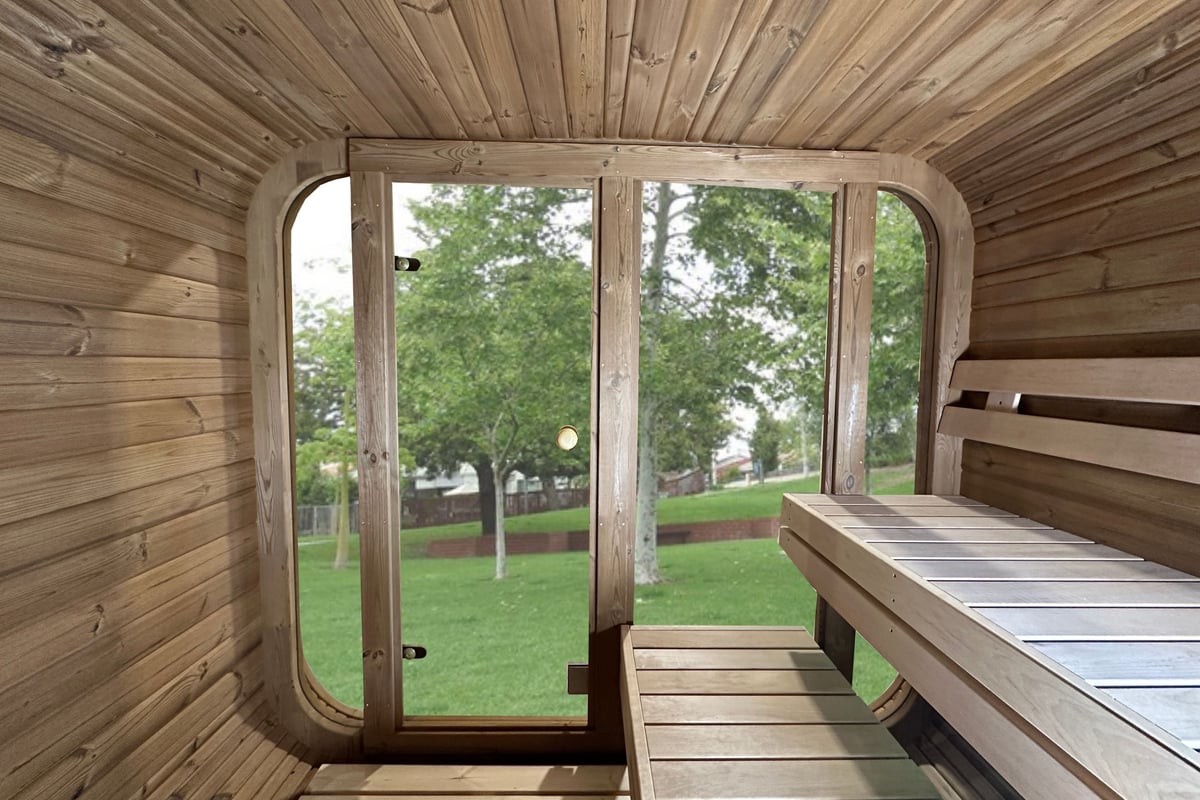
If you need a changing room and value the privacy it provides, the Comfort 3.0 × 2.3 m adds a dedicated 1 m entry space with bench and internal glass door. The total footprint is only 0.7 m longer than the Sisu 2.3 × 2.3 m, but the changing area transforms how you use the sauna before and after sessions.
For buyers with very limited space or a strict budget, the Mini Square Sauna in Thermowood delivers authentic heat in a true 2-person layout. It's the smallest viable traditional sauna, and it suits couples, solo wellness routines, or urban lots where every square meter counts.
Common Mistakes and How to Avoid Them
Underestimating electrical requirements. Many buyers assume a small outdoor sauna can run on a standard 120V outlet. Most quality heaters require 240V and a dedicated circuit. Confirm electrical needs before you pour a foundation or finalize placement.
Skipping the foundation. Placing a sauna directly on grass or loose gravel invites settling, moisture intrusion, and structural stress. Even a simple gravel base with level pavers is better than raw ground.
Ignoring local codes. Setback requirements, electrical permits, and combustion-appliance rules vary by municipality. A quick call to your building department can save costly corrections later. For wood-burning models, verify compliance with EPA best practices and local air-quality ordinances.
Over-sizing the heater. Bigger is not always better. An oversized heater in a small sauna cycles on and off rapidly, reducing lifespan and creating uneven heat. Match heater capacity to interior volume; manufacturers provide clear sizing charts.
Forgetting ventilation. Sealing every gap to "save heat" creates a stuffy, oxygen-poor environment. Proper intake and exhaust vents improve comfort, extend session length, and produce better löyly.
Lifestyle Integration and Wellness Routines
A small outdoor sauna becomes a cornerstone of a daily or weekly wellness routine. Many North American users follow this pattern:
- Pre-heat the sauna: Turn on the heater 30–45 minutes before your session. Electric models with timers can start automatically.
- Shower or rinse: Enter the sauna clean and dry for the best experience.
- First round: 10–15 minutes at moderate heat (150–170°F). Pour water on the stones periodically to generate steam.
- Cool down: Step outside, rinse with cool water, or sit on a bench for 5–10 minutes.
- Second and third rounds: Increase heat slightly, extend time, and adjust water-pouring frequency to taste.
- Final cool-down and hydration: End with a cold rinse or plunge, then hydrate thoroughly.
Regular sauna bathing, according to research summarized in cardiovascular health studies, may support heart health, improve circulation, and enhance mental relaxation when practiced consistently over time. A small outdoor sauna makes that consistency easier by eliminating the need to travel to a gym or spa.
Pairing sauna sessions with cold exposure amplifies the contrast experience. A dedicated cold plunge tub, outdoor shower, or even a garden hose provide the cooling element. The hot-cold cycle stimulates circulation, reduces muscle soreness, and delivers the invigorating sensation that Scandinavian wellness culture has championed for generations.
A small outdoor sauna delivers authentic Finnish heat therapy, year-round durability, and genuine wellness benefits without monopolizing your backyard or budget. Thoughtful choices around sizing, materials, bench layout and heater type ensure the sauna you install today serves your household well into the next decade. RecoSauna offers premium Thermowood saunas engineered for North American climates, backed by Finnish expertise and practical guidance to help you choose, install, and enjoy the right model for your home and lifestyle.
Share:
In House Sauna: Indoor vs Outdoor Sauna for Your Home
Outdoor Sauna Electric: Buyers Guide 2026